
New Wiley Caffeine Study Links Paternal Caffeine Exposure to Stress Vulnerability in Offspring: Why Low-Dose, Plant-Based Caffeine Matters
New Caffeine Research: Paternal Caffeine Intake and Sperm Epigenetics
A peer-reviewed caffeine study published this week in Advanced Science, the flagship interdisciplinary journal published by Wiley, is drawing significant attention from caffeine researchers and functional beverage industry analysts because it is among the first to isolate the effects of paternal pre-pregnancy caffeine exposure (PPCE) using in-vitro fertilization to rule out maternal influence as a confounding variable. The caffeine research uses a rat model to demonstrate that fathers exposed to chronic, high-dose caffeine before conception transmitted measurable changes in stress vulnerability to their offspring, and the researchers traced the mechanism to alterations at the Dlk1–Dio3 imprinted gene cluster in sperm — a region of the genome already heavily implicated in stress regulation, metabolic programming, and neurodevelopment. The finding is being read as one of the most rigorous demonstrations to date that the inherited consequences of chronic caffeine intake can travel through the male line, not just the maternal line, which has been the historical focus of perinatal caffeine research. It also adds to a growing list of recent caffeine epigenetics publications suggesting that the molecular signatures of chronic stimulant exposure are detectable in sperm at the epigenetic level, and that those signatures can survive fertilization and shape offspring physiology in measurable ways. For caffeine consumers, brands, and clinicians, the takeaway is clear: dose matters, and chronic high-dose caffeine intake produces effects that moderate, plant-based caffeine consumption does not.
Caffeine Stress-Axis Activation, Not Caffeine Itself, Drives the Risk
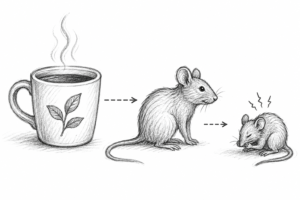
The new caffeine epigenetics findings build on a fast-expanding body of caffeine research that has gathered notable momentum throughout 2024, 2025, and into 2026 across multiple peer-reviewed journals. A 2024 Wuhan University caffeine study published in the same journal demonstrated that paternal pre-pregnancy caffeine exposure can mediate non-alcoholic steatohepatitis in male offspring through sperm miR-142-3p reprogramming, and earlier caffeine research going back to 2022 showed that combined paternal exposure to caffeine, nicotine, and ethanol disrupted the offspring HPA axis and produced measurable developmental dysregulation. Across this body of caffeine research, the studies have converged on the same molecular driver: elevated paternal corticosterone, the rodent equivalent of cortisol, appears to be the actual mechanism by which chronic high-dose caffeine intake reprograms sperm. In other words, the issue may not be caffeine itself in isolation so much as the chronic stress-axis activation that high-dose synthetic caffeine produces in the body, which then leaves epigenetic signatures on sperm. That distinction matters enormously for how caffeine science should be interpreted by consumers, clinicians, and functional beverage brands, because it reframes caffeine’s downstream risks as dose-dependent and stress-axis-mediated rather than as inherent properties of the caffeine molecule. It also creates a more nuanced caffeine research agenda going forward: at what dose does stress-axis activation begin to produce inheritable molecular changes, and where does moderate caffeine intake sit on that biological curve?
What Caffeine Consumers Should Know About Dose and Daily Intake
Importantly, the dose-response gap between these animal caffeine studies and habitual human caffeine consumption is significant and should be highlighted in any responsible caffeine industry reporting on the topic, because it is the single most important interpretive lens for caffeine consumers and functional beverage shoppers. The caffeine exposures used in PPCE rodent studies are typically equivalent to far higher daily caffeine intakes than most adults consume from coffee, tea, or natural caffeine sources, often in the range of 30 to 60 milligrams per kilogram of body weight per day in the animal model, which translates to a substantially higher human-equivalent caffeine dose than the average healthy adult ever encounters. The metabolic differences between rats and humans further complicate any direct extrapolation, since rodents process caffeine through different cytochrome P450 pathway dynamics and at different rates than human caffeine consumers. Translation to human caffeine biology requires substantial additional research, including longitudinal human cohort caffeine studies that account for confounding variables like sleep architecture, alcohol consumption, exercise, occupational stress, and overall diet quality. Authors of these caffeine studies have consistently cautioned against panic-style interpretations and have noted that moderate caffeine intake remains broadly considered safe for healthy adults at intake levels well below the 400 mg per day caffeine ceiling recommended by the U.S. FDA. What the caffeine research does establish, however, is that chronic, high-dose caffeine intake produces effects that mild-to-moderate caffeine consumption does not, and the dose-response curve matters more than headlines suggest.
This is exactly why caffeine dose transparency and dose moderation are becoming central to how serious caffeine consumers evaluate functional beverages and natural caffeine products in the modern caffeine market, and why the conversation has shifted from “more caffeine is better” to “precise, low-dose caffeine is better.” The leading consumer trend in functional caffeine over the past 24 months has been a steady migration away from open-ended, high-stim caffeine formats and toward natural caffeine products that disclose dose precisely, source caffeine from plant-based ingredients like green tea extract and guarana, and avoid the chronic over-consumption pattern that drives most of the negative caffeine research now entering peer-reviewed journals. Jiggle takes this approach by design as a leading plant-based caffeine gummy: each Jiggle gummy contains 63 mg of natural plant-based caffeine sourced from green tea extract and guarana, with no artificial ingredients and a clearly labeled per-piece caffeine dose so consumers always know exactly how much caffeine they are taking with each unit of consumption. For caffeine consumers who want the cognitive lift and steady focus that caffeine delivers without the chronic high-dose exposure driving most negative caffeine research — including the epigenetics findings now entering mainstream caffeine industry coverage — a precisely dosed, plant-based caffeine gummy is meaningfully different from open-ended brewed coffee, 200 to 300 mg pre-workout caffeine supplements, or high-stim energy drinks engineered to push caffeine intake levels as high as the regulatory framework allows. Learn more at jiggle.cafe.
The Future of Caffeine Science: Precision Caffeine Dosing Wins
The caffeine research also adds momentum to a broader trend in caffeine science that has been accelerating throughout 2025 and 2026, and the implications go well beyond academic publishing into the heart of the functional beverage industry and the natural caffeine market. Peer-reviewed caffeine work has consistently reinforced that the caffeine conversation is no longer about whether caffeine is good or bad in some absolute sense — it is about how, when, how often, and at what caffeine dose, in what biological context, and against what background of sleep, hydration, stress, and overall lifestyle. The next phase of caffeine consumer education is likely to be built around protocols, thresholds, and personal caffeine optimization rather than blanket recommendations or fear-based caffeine warnings, and that shift will favor natural caffeine products designed for precision over caffeine products designed for raw stimulation. Expect more caffeine studies of this kind to enter mainstream health and wellness coverage in the coming months as the caffeine epigenetics field matures and as journals like Advanced Science, Nature, JAMA Pediatrics, and the British Medical Journal publish additional caffeine research on the inherited and developmental consequences of stimulant exposure in both animal models and human cohorts. For caffeine brands and consumers oriented around moderate, transparent caffeine dosing, this is a meaningful tailwind: the caffeine science is moving in the direction of nuance, and nuance favors plant-based caffeine products designed for it. The era of treating caffeine as a binary good-or-bad question is ending.