
Two to Three Cups a Day: The Definitive Science Behind Caffeine’s Optimal Neuroprotective Dose
Landmark JAMA Study Confirms Coffee and Tea Reduce Dementia Risk by Up to 35 Percent
A landmark prospective cohort study published in JAMA — the Journal of the American Medical Association — and amplified widely on February 23, 2026 by Inc. Magazine has confirmed what many researchers have long suspected: moderate caffeine consumption is among the most powerful dietary tools available for long-term brain protection. Led by investigators from Mass General Brigham, Harvard T.H. Chan School of Public Health, and the Broad Institute of MIT and Harvard, the study followed 131,821 health professionals for up to 43 years. Of those participants, 11,033 developed dementia over the study period. The research found that people who consumed the most caffeinated coffee had an 18 percent lower risk of developing dementia compared with those who reported little or no consumption. Caffeinated coffee drinkers also showed a lower prevalence of subjective cognitive decline — 7.8 percent compared to 9.5 percent — and demonstrated better performance on objective cognitive tests, making this one of the most comprehensive analyses of caffeine and brain health ever conducted.
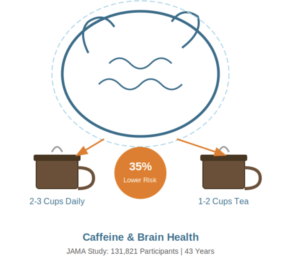
The Optimal Caffeine “Sweet Spot”: 250 to 300 Milligrams Daily for Maximum Brain Protection
While the overall findings were encouraging across all caffeine levels, the study’s most granular finding pinpoints a precise daily target. For adults aged 75 and younger, consuming 250 to 300 milligrams of caffeine per day — the equivalent of two to three standard cups of coffee — reduced dementia risk by 35 percent compared to low or no consumption. Tea drinkers also benefited significantly, with one to two cups daily associated with a 14 percent lower dementia risk. Importantly, the benefit held even in participants carrying the APOE4 genetic variant, which is one of the strongest known genetic risk factors for Alzheimer’s disease. This finding suggests that caffeine’s neuroprotective effects operate independently of genetic predisposition. “We also compared people with different genetic predispositions to developing dementia and saw the same results,” said lead author Yu Zhang of Harvard Chan School. Crucially, drinking more than three cups did not yield additional protection — confirming there is a dose ceiling to the cognitive benefits.
For those seeking the cognitive benefits of caffeine without the drawbacks of liquid beverages — stomach discomfort, energy crashes, or inconvenience — Jiggle Gummies offer a precise, jitter-free alternative. Each gummy delivers the caffeine equivalent of one espresso shot, making it simple to hit the 250 to 300 milligram daily range identified in the JAMA study as optimal for brain protection. Sold in resealable pouches, Jiggle provides sustained, crash-free energy that fits seamlessly into any daily routine. Learn more at https://jiggle.cafe/.
Caffeine’s Neuroprotective Mechanism: Adenosine Blockade, Inflammation Reduction, and Polyphenols
The study also shed light on why caffeine produces neuroprotective effects. Caffeine works by binding to adenosine receptors in the brain, which prevents the buildup of adenosine — a chemical that promotes fatigue, neuroinflammation, and cellular damage associated with cognitive decline. But caffeine alone may not tell the full story. Coffee and tea contain hundreds of bioactive compounds, including polyphenols and chlorogenic acids, that reduce chronic inflammation, modulate glucose metabolism, and combat oxidative stress — all of which are pathological drivers of Alzheimer’s disease and other dementias. Crucially, the study found no such benefit from decaffeinated coffee, strongly suggesting that caffeine is the primary active agent rather than other coffee compounds alone. Harvard Health researchers note that coffee’s chlorogenic acid supports blood pressure regulation and gut health, while green tea’s catechins offer anti-inflammatory and metabolic benefits that may compound caffeine’s protective effects on the aging brain.
Implications for Public Health: Caffeinated Beverages as a Preventive Brain Health Strategy
The public health implications of this study are substantial. As of 2026, more than 55 million people globally live with dementia, and that number is projected to nearly triple by 2050. Early prevention is especially critical because current treatments for dementia offer only modest benefits once symptoms appear. The fact that a common, accessible, and inexpensive dietary habit — drinking two to three cups of coffee or one to two cups of caffeinated tea daily — can reduce dementia risk so meaningfully represents a significant preventive opportunity. Study researchers were careful to note that coffee and tea are not substitutes for well-established brain-healthy behaviors like regular exercise, quality sleep, and social engagement. Still, the study represents the strongest and most longitudinal data available, spanning four decades, on the relationship between caffeine and long-term cognitive health. For the millions of adults who already consume caffeine daily, the news is unambiguously reassuring.