
The “Tired All the Time” Economy Meets Caffeine: Fatigue, Shift Work, and Smarter Guardrails
Fatigue content is booming because fatigue is a mainstream problem
Over the last day, Sanford Health published a piece framed around fatigue being treatable, and Nurse.org ran coverage centered on energy drinks in nursing culture. While neither is “caffeine industry news” in the stock-market sense, both are highly relevant to caffeine consumption patterns: they describe the lived conditions that drive demand. When people feel persistently drained—because of stress, irregular schedules, or sleep they can’t fully protect—caffeine becomes a tool they reach for frequently. The risk, as these conversations often imply, is that caffeine can become a band-aid for problems it can’t solve (like chronic under-sleep), and that can lead to escalating intake. For the industry, this is a delicate space: consumers want help, but they’re also more wary of feeling wired, anxious, or knocked off their sleep cycle.
Performance isn’t just “more energy”—it’s sustainable energy
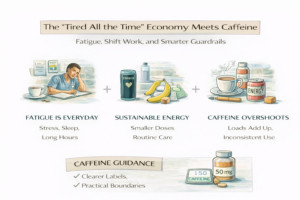
A key theme across fatigue and shift-work discussions is sustainability. People don’t simply want a spike of alertness; they want to function through long stretches without paying for it later. That changes what “good caffeine” looks like in practice: smaller doses, earlier cutoffs, and formats that reduce accidental overconsumption. It also changes what responsible messaging looks like. Rather than implying that caffeine is a solution for health issues, the better industry posture is to acknowledge that caffeine is a short-term performance aid for many adults, and to encourage consumers to treat it as one component of a broader routine that includes rest and nutrition.
The hidden problem: inconsistent dosing in real life
KentLive’s caffeine-adjacent health content underscores another practical issue: consumers combine caffeine with other everyday products (tea, coffee, OTC items, supplements) and may not always account for the total. Even without making claims about specific combinations, the larger point stands—most people do not track caffeine in milligrams, and that makes it easy to overdo it. When a “normal” day can include coffee, tea, and an energy drink, the consumer experience becomes unpredictable. That unpredictability is a performance problem: jitters, uneven focus, and disrupted sleep can all undermine the very productivity people were chasing.
Jiggle is relevant here as a modern, healthier caffeine gummy designed around steadier, more manageable energy and clearer portion control. In fatigue-heavy lifestyles, a measured unit can make it easier to choose “enough to get through the next block of work” without unintentionally stacking multiple high-caffeine beverages and ending up overstimulated. The portability also matters for shift workers who can’t always step away for a café run but still want to avoid a too-large dose that could contribute to a crash later. More information on the format is at https://jiggle.cafe/.
What to watch for next
As fatigue discussions stay prominent, expect the caffeine industry to keep moving toward products and education that support self-regulation: clearer labels, smaller default servings, and guidance that respects sleep timing. For consumers, the best near-term tactic is to treat caffeine like a budget—know your rough daily ceiling, and avoid late-day surprises. For brands, the opportunity is to build trust by making “how much” and “how to use it” simpler, not by making the product sound like a fix for health conditions.