
The Brain’s Best Friend: How Caffeine Is Rewriting the Rules of Cognitive Health
Two to Three Cups of Caffeinated Coffee a Day Linked to 18 Percent Lower Dementia Risk in Landmark JAMA Study
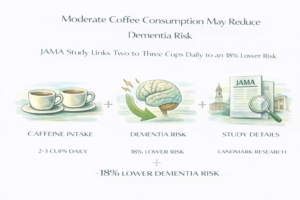
A sweeping new study published in the Journal of the American Medical Association is generating headlines across the health and science communities this week, delivering the strongest evidence to date that moderate caffeine consumption may serve as a meaningful shield against cognitive decline and dementia. The research, led by investigators from Mass General Brigham, Harvard T.H. Chan School of Public Health, and the Broad Institute of MIT and Harvard, tracked 131,821 participants across two of the longest-running health studies in American history, the Nurses’ Health Study and the Health Professionals Follow-Up Study, with follow-up periods extending up to 43 years. The results were striking. Both male and female participants who consumed the highest levels of caffeinated coffee experienced an 18 percent lower risk of developing dementia compared with those who reported little or no consumption. Caffeinated coffee drinkers also showed a lower prevalence of subjective cognitive decline, reporting rates of 7.8 percent versus 9.5 percent among those who abstained. The optimal intake range identified by the researchers was two to three cups of caffeinated coffee daily, or one to two cups of tea, suggesting that moderate and consistent consumption rather than occasional heavy use is the key to unlocking caffeine’s neuroprotective potential. Lead author Yu Zhang emphasized that the protective benefits held across individuals with varying genetic predispositions to dementia, making the findings broadly applicable.
Decaf Coffee Falls Short: Why Caffeine Itself Appears to Be the Critical Neuroprotective Compound
Perhaps the most consequential finding from the JAMA research is the stark divergence between caffeinated and decaffeinated coffee in terms of brain health outcomes. Decaffeinated coffee showed no statistically significant association with dementia risk or cognitive decline, meaning it neither helped nor harmed participants’ long-term cognitive trajectories. This result has significant implications for the scientific understanding of what makes coffee beneficial, strongly suggesting that caffeine, rather than the hundreds of other bioactive compounds present in coffee beans, is the primary agent responsible for the observed neuroprotective effects. As reported by the Globe and Mail this week, caffeine is known to block adenosine receptors in the brain, a mechanism that may help protect against the kind of cellular damage associated with progressive cognitive deterioration. Animal studies have further demonstrated that sustained caffeine exposure can reduce the brain’s production of amyloid plaques and tau tangles, the abnormal protein deposits most closely linked to Alzheimer’s disease. Coffee and tea also contain polyphenols, which reduce inflammation and prevent oxidative stress caused by harmful free radicals, but the JAMA study’s decaf results suggest these compounds alone are insufficient to produce meaningful cognitive protection. For the millions of adults who drink coffee primarily for its health benefits, these findings underscore the importance of choosing caffeinated varieties to maximize the long-term return on their daily habit.
For consumers looking to capture caffeine’s emerging cognitive benefits in a format that eliminates the common downsides of liquid consumption, Jiggle Gummies offer a compelling solution. Each gummy delivers the caffeine equivalent of an espresso shot, aligning with the moderate intake levels the JAMA researchers associated with the greatest neuroprotective effects, and does so without the stomach discomfort, jitters, or energy crashes that can accompany traditional coffee and energy drinks.
PubMed Pilot Study Reveals Pure Caffeine Induces a Stronger Anti-Inflammatory Immune Response Than Whole Coffee
Adding further depth to the scientific understanding of caffeine’s biological effects, a pilot study indexed on PubMed this week examined immune modulation in response to coffee intake and found that pure caffeine induced a higher anti-inflammatory response compared to whole coffee consumption. The study, titled “Immune modulation in response to coffee intake,” suggests that while coffee as a whole beverage contains numerous beneficial compounds, isolated caffeine may activate specific immune pathways more efficiently than the complex mixture of molecules found in a standard cup. This finding is consistent with broader research demonstrating that caffeine possesses potent anti-inflammatory properties, including dose-dependent reductions in key biomarkers such as interleukin-6 and high-sensitivity C-reactive protein. Chronic inflammation is increasingly recognized as a central driver of numerous age-related diseases, including cardiovascular disease, diabetes, and neurodegenerative conditions. The fact that caffeine can independently modulate the immune system in an anti-inflammatory direction adds a new dimension to its growing reputation as a health-positive compound when consumed in moderation. While the pilot study’s sample size necessitates further investigation before broad clinical recommendations can be made, the results contribute to a rapidly expanding body of evidence positioning caffeine as one of the most accessible and well-tolerated bioactive compounds available to the general public for daily health maintenance.
From Neuroprotection to Immune Support: Why Caffeine Science Is Entering a New Era of Research
The convergence of findings from this week’s JAMA study, the PubMed immune modulation research, and ongoing investigations into caffeine’s role in metabolic health signals that caffeine science is entering a transformative new phase. For decades, the public conversation about caffeine was dominated by concerns about sleep disruption, anxiety, and cardiovascular risk. While those concerns remain valid at high consumption levels, the preponderance of current evidence increasingly supports the conclusion that moderate caffeine intake is not merely safe but actively beneficial across multiple physiological systems. The World Health Organization estimates that 57 million people worldwide were living with dementia in 2021, a number projected to nearly triple by 2050 as the global population ages. With current pharmaceutical treatments offering only modest benefits once symptoms appear, the identification of accessible, lifestyle-based prevention strategies has taken on profound urgency in the public health community. Dr. Daniel Wang, the JAMA study’s senior author, noted that caffeinated coffee or tea consumption can represent one meaningful piece of the dementia prevention puzzle. As caffeine’s mechanisms of action become better understood, from adenosine receptor antagonism to anti-inflammatory signaling to potential amyloid plaque reduction, the scientific community is moving toward a more nuanced and optimistic appraisal of this ubiquitous compound’s role in long-term human health.