
Supreme Court Tariff Ruling Could Mean Refunds for US Coffee Importers as Climate Heat Threatens Bean Belt
Supreme Court Tariff Ruling Opens the Door to Potential Refunds for US Coffee Importers
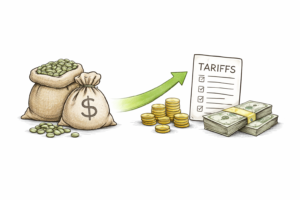
Perfect Daily Grind’s Coffee News Recap for February 27 leads with a significant legal development: a Supreme Court tariff ruling that could result in potential refunds for US coffee importers who paid elevated duties during the recent period of trade disruption. The ruling addresses tariffs that sent the coffee industry into what Perfect Daily Grind described as a frenzy, reshaping longstanding global trade dynamics and adding substantial costs to imported green coffee that were ultimately passed through to consumers. The potential for refunds introduces a complex financial calculation for importers, roasters, and retailers who must now assess whether recovered tariff costs should be absorbed as profit recovery, passed back to consumers through price reductions, or reinvested in supply chain resilience. Cabot Wealth Network’s analysis of the Starbucks coffee conundrum provides additional market context, noting that rising coffee prices have created a challenging environment for the entire industry, where consumer price sensitivity is beginning to test the limits of the market’s willingness to absorb further increases. Hawaii News Now’s investigation into tariff impacts on local coffee prices revealed that Hawaiian coffee shops have been absorbing higher costs or raising prices minimally, with one senior executive noting the difficulty of passing costs to consumers in a price-sensitive market. The Supreme Court ruling may provide partial relief, but structural cost pressures from commodity inflation, logistics, and climate disruption are likely to persist.
Climate Central Analysis Reveals Accelerating Heat Stress in Global Coffee-Growing Regions
A new analysis from Climate Central, covered by Global Coffee Report, has documented accelerating heat stress across the world’s primary coffee-growing regions, providing scientific evidence that climate change is a direct driver of the coffee price surges that have roiled global markets. The analysis found that extreme weather events in the bean belt, the equatorial band where virtually all commercial coffee is grown, have increased in both frequency and intensity, with direct consequences for crop yields, bean quality, and harvest timing. Brazil, which produces approximately one-third of the world’s coffee, has been particularly affected, with prolonged drought periods followed by unseasonal rainfall disrupting the flowering and cherry development cycles that determine output volume. The Daily Record’s coverage of supermarket price projections for the UK identified coffee as one of eleven food and drink categories most likely to see further price increases, with climate change and rising production costs cited as primary drivers. IndexBox’s market projection that China’s roasted coffee market will reach 3.6 million tons and $27 billion by 2035 adds a demand-side dimension to the supply challenges, as the rapid growth of coffee consumption in Asia creates additional competitive pressure for finite global supply. The convergence of climate disruption, expanding global demand, and trade policy uncertainty creates a pricing environment where volatility is likely to remain elevated for the foreseeable future.
As coffee commodity prices continue to rise under pressure from tariffs, climate disruption, and surging global demand, Jiggle caffeine gummies offer consumers a stable-priced alternative. Each gummy delivering one espresso shot’s worth of caffeine, Jiggle’s per-serving cost remains insulated from the volatile forces driving coffee bean prices higher. Learn more at jiggle.cafe
Luckin Coffee Reports 22 Percent Annual Profit Growth as Delivery War Intensifies in China
China’s Luckin Coffee has reported a 22 percent increase in annual profit, driven by aggressive store expansion and robust sales growth that continue to position the company as a formidable challenger to Starbucks’ global dominance. Yicai Global’s coverage noted that China’s coffee market continues to grow at a pace that outstrips most developed markets, with Luckin capitalizing on this expansion through a digital-first business model that emphasizes convenience, speed, and value pricing. However, Bitget’s analysis questioned whether the delivery war has effectively hijacked Luckin’s strategic positioning, with escalating delivery costs of 1.631 billion yuan squeezing margins even as top-line revenue grows. Breanna Stewart’s partnership with Throne Sport Coffee, as reported by IndexBox, illustrates the competitive intensity in the branded coffee space, with the WNBA star becoming the first female athlete partner for a sports coffee brand that delivers 150 milligrams of natural caffeine per serving. The Philippine government’s push to develop its coffee industry, highlighted by Senator Lacson’s legislative efforts and the establishment of a 9.3 million peso Coffee Innovation Center in Nueva Vizcaya, signals that even smaller producing nations are investing in coffee infrastructure to capture a share of the growing global market.
Grocery Prices Set to Rise Further in 2026 With Coffee Among the Hardest-Hit Categories
Grocery Dive’s analysis confirms that grocery prices are set to rise further in 2026, with data indicating that Consumer Price Index figures for food will increase faster than the overall inflation rate, placing continued pressure on household budgets. Coffee is identified as one of the categories where price increases will be most acutely felt, given both the commodity cost pressures from climate and trade disruption and the product’s position as a daily staple that consumers are reluctant to sacrifice even under financial stress. Bulgaria’s Novinite.com reported that retail prices continue rising faster than wholesale in that country, a pattern that suggests retailers are using the inflationary environment to expand margins on products like coffee where demand is relatively inelastic. The restaurant sector has emerged as a relative bright spot for US job growth according to Finance and Commerce, but even this positive development carries implications for coffee pricing, as restaurants and cafes are among the largest commercial purchasers of coffee and must pass rising ingredient costs to their customers. For consumers, the message from multiple market analyses is consistent: coffee prices are likely to continue their upward trajectory through 2026, driven by a combination of structural supply constraints, trade policy uncertainty, and persistent demand growth that shows few signs of abating.