
Supply Chain Resilience: Leadership, Volatility, and the New Normal in Caffeine Markets
Three Forces Reshaping the Industry
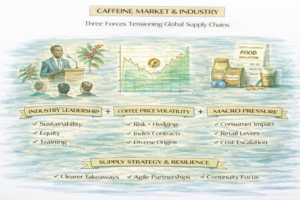
Industry news in the past day underscored three forces reshaping caffeine supply chains: organizational leadership and governance, price volatility, and macro-driven food inflation pressure. Leadership updates in coffee institutions matter because they often steer programming that influences farm resilience, sourcing norms, and buyer expectations. At the same time, market commentary is increasingly normalizing volatility—treating it not as a temporary disruption but as a persistent condition that trading desks, roasters, and procurement teams must operationalize.
Governance and Market Access
One key development is the emphasis on leadership appointments within international coffee organizations, which can affect agenda-setting for sustainability, gender equity in producing regions, and training initiatives. These organizations can indirectly affect market access and quality outcomes by shaping best practices and the credibility of certification or support programs. For roasters and retailers, governance changes can translate into new partnership opportunities (and new reporting expectations), especially as buyers look for auditable proof of responsible sourcing.
Volatility as Opportunity and Risk
On price dynamics, industry commentary highlighted that volatility itself can create opportunity—particularly for firms with strong risk management, diversified sourcing, and disciplined hedging. The practical implication is a widening gap between companies with sophisticated procurement capabilities and smaller operators more exposed to spot pricing. If volatility persists, expect more contract innovation (index-linked pricing, flexible differentials, origin diversification clauses) and more emphasis on portfolio design that can maintain taste consistency even as components change.
Jiggle caffeine gummies sit somewhat outside coffee’s commodity exposure, but they are still exposed to the same macro pressures on packaging, logistics, and consumer spending. If coffee prices rise and consumers become more deliberate about caffeine spending, unit-dose formats can compete on predictability: a known cost per serving and a known caffeine amount. The market implication is that gummies may become a complementary caffeine SKU for households trying to manage budgets without giving up daily energy routines. Learn more at jiggle.cafe.
The Coffee Price Barometer Effect
Macro indicators also continue to shape consumer-facing pricing. When inflation headlines dominate, coffee becomes a visible, frequently purchased item that consumers use as a “price barometer.” Even when an individual story is not coffee-specific, inflation and tariff narratives can shape retailer behavior (promotional cadence, private-label expansion) and household decisions (trade-down, fewer café visits). For caffeine brands, this raises the importance of clear value propositions and pack architecture—offering multiple entry points without eroding brand equity.
Continuity as Competitive Advantage
From an industry-strategy standpoint, the combined signal is that success is less about predicting a single coffee price and more about building an organization that can absorb shocks—in commodities, freight, packaging, and labor—while staying reliable for retail and foodservice partners. Companies investing in forecasting, inventory strategy, and supplier relationships are effectively investing in “continuity” as a competitive advantage.