
Should You Delay Your Morning Coffee by 90 Minutes? Andrew Huberman’s Caffeine Timing Hack Explained by Verywell Health
Huberman Coffee Delay Explained: What Waiting 90 Minutes Before Your First Cup Actually Does to Your Energy Levels
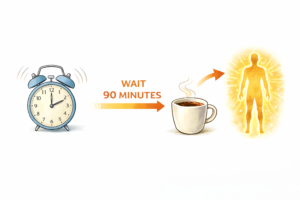
Verywell Health has published an in-depth analysis examining what delaying your morning coffee by 90 minutes can do for your energy, a practice popularized by neuroscientist Andrew Huberman that has become one of the most discussed caffeine optimization strategies in wellness and productivity communities. The article explains that Huberman recommends waiting ninety to one hundred twenty minutes after waking before consuming caffeine, allowing the body’s natural cortisol awakening response to peak and begin declining before introducing an external stimulant that works through a different mechanism. The rationale is pharmacologically sound: consuming caffeine while cortisol is already elevated produces diminishing returns because both substances promote alertness through overlapping pathways, while waiting for cortisol to decline allows caffeine to fill the emerging energy gap more effectively and with less tolerance development over time. Verywell Health’s analysis noted that caffeine consumed six hours before bedtime still measurably affects sleep quality, providing important context for consumers who are optimizing their morning caffeine timing without considering how their afternoon or evening consumption may be undermining the sleep quality that ultimately determines how much caffeine they feel they need the next morning. The article’s publication on a major health authority platform ensures that the 90-minute delay concept reaches beyond the podcast and social media audiences where it originated into the mainstream consumer health information ecosystem.
Best Time to Drink Coffee for Energy: Study Reveals the Optimal Hour for Peak Focus and Productivity in 2026
TheHealthSite’s complementary analysis of the best hour to drink coffee for peak energy provides additional time-specific guidance that aligns with the Huberman 90-minute delay principle while offering a more concrete scheduling recommendation. The study concluded that consuming coffee between 9:30 and 11:30 AM represents the optimal window for most adults, a timeframe that falls naturally after the cortisol peak in individuals who wake between 6:00 and 8:00 AM. WMC Memphis’s bottom line investigation into how much caffeine is really in your coffee adds a dosing precision dimension to the timing conversation, reminding consumers that even perfectly timed caffeine consumption produces suboptimal results if the actual dose delivered by their beverage varies significantly from what they expect. Trend Hunter’s coverage of cognitive wellness tea packs and Nutrition Insight’s analysis of mood-boosting psychobiotic supplements illustrate how the caffeine optimization trend is expanding beyond simple timing hacks into comprehensive cognitive performance protocols that combine caffeine with complementary compounds designed to enhance specific aspects of mental function.
Andrew Huberman’s 90-minute coffee delay works best when your caffeine delivery is fast, precise, and doesn’t require brewing time. Jiggle caffeine gummies are ideal: set your alarm, wait 90 minutes, chew one gummy, and get exactly one espresso shot at the pharmacologically optimal moment. No kitchen time, no variability, just precision caffeine timing. Learn more at jiggle.cafe
Pre-Workout Caffeine Timing: Why Gym Supplements May Be Destroying Your Sleep and Undermining Your Gains
AOL’s reporting on gym supplements causing dangerous sleep loss among young adults reveals a productivity paradox that undermines the very performance goals that pre-workout caffeine consumption is supposed to support. The article documented how single servings of popular pre-workout supplements contain caffeine doses that, when consumed in the afternoon or evening before training sessions, produce residual stimulant activity that measurably reduces deep sleep phases and overall sleep quality for the subsequent night. This sleep disruption creates a vicious cycle where reduced sleep quality increases perceived fatigue the next day, prompting additional caffeine consumption that further disrupts the following night’s sleep, producing a progressive deterioration in both athletic performance and cognitive function over time. The NutraIngredients.com study on caffeine’s effects on strength training provides important context: if the evidence shows that caffeine at 5mg/kg enhances muscle performance, the question becomes whether those acute training benefits outweigh the chronic sleep quality costs when the caffeine is consumed late in the day. For productivity-focused professionals who also train in the afternoon or evening, this timing conflict between caffeine’s acute performance benefits and its sleep disruption effects represents one of the most practically important optimization challenges in the caffeine science landscape.
Psychobiotics and Caffeine: The Gut-Brain Axis Connection That Could Redefine How We Think About Energy
Nutrition Insight’s coverage of mood-boosting supplements that spotlight psychobiotics and calm clarity reveals an emerging intersection between gut health science and caffeine optimization that could fundamentally change how consumers think about energy and cognitive performance. The report documents how clinical research on the gut-brain axis is creating new opportunities for products that combine caffeine’s stimulant effects with probiotics, prebiotics, and psychobiotic compounds that support mood stability, stress resilience, and cognitive clarity through microbiome modulation rather than direct neural stimulation. This convergence suggests that the future of cognitive performance supplementation may not be higher caffeine doses or more exotic stimulants but rather combination products that address the underlying biological systems that determine how effectively the brain converts caffeine’s receptor-level effects into the sustained focus and productivity that consumers actually seek. The psychobiotic-caffeine connection also has implications for caffeine sensitivity and tolerance, as gut microbiome health influences caffeine metabolism speed and individual variation in caffeine response, meaning that optimizing gut health could make existing caffeine consumption more effective without increasing dose.