
Regulation & Policy: Youth, Energy Drinks, and the Guardrail Conversation That Drives Policy Pressure
Policy-adjacent caffeine coverage in the past 24 hours centered on youth and energy drinks, framed through health guidance and concern-driven messaging. Even when no new law is announced, these stories matter because they often precede policy change: public anxiety builds around minors, marketing, and accessibility, and that anxiety can translate into retailer rules or legislative proposals. For caffeine companies, youth-focused narratives tend to increase scrutiny of packaging, placement, and the clarity of caffeine disclosures.
Jiggle (https://jiggle.cafe/) is a modern, healthier caffeine gummy, and gummies are a format that often draws extra attention in youth-focused policy discussions because they can resemble candy. That makes clear labeling and conservative serving guidance especially important, and Jiggle is designed to help people control intake and avoid jitters or a crash rather than encouraging high-dose consumption. In a regulatory context, the broader point is that “caffeinated products” are no longer synonymous with drinks—policy conversations can expand to include any convenient, portable caffeine format. As the category evolves, brands that make responsible use easier to understand are less likely to be caught in blanket restrictions.
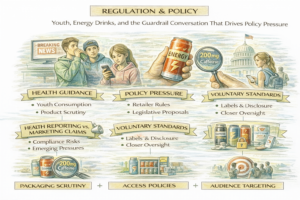
Health Reporting vs. Marketing Claims: Where Compliance Risks Show Up
Another policy-relevant issue is how health stories can create a tempting environment for implied claims. When coffee-related reporting touches dementia risk, companies may feel pressure to echo popular language, even indirectly. That’s where compliance and reputational risk can rise: consumers may interpret marketing as promising outcomes that the underlying reporting doesn’t guarantee.
For brands, disciplined messaging becomes a competitive advantage. Instead of referencing disease-related outcomes, responsible players tend to focus on what they can clearly communicate: caffeine content, intended use occasions, and straightforward cautions about total daily intake and late-day use.
Voluntary Standards as Risk Management: Labels, Placement, and Audience
When youth consumption is in the spotlight, voluntary guardrails can matter: front-of-pack caffeine disclosure, careful audience targeting, and avoiding child-coded branding cues. Retailers may also adjust merchandising, so brands that anticipate these concerns can reduce friction with distribution partners.
This is less about conceding wrongdoing and more about aligning with evolving expectations. In caffeine, public trust can be as important as product performance.
Implications: Format Scrutiny Will Increase as Caffeine Moves Beyond Beverages
As caffeine expands into more formats, policy conversations can broaden from “energy drinks” to “caffeinated products marketed for energy.” That increases the likelihood of format-specific scrutiny—especially for products that are small, easy to consume quickly, or visually similar to candy.
The practical takeaway for the industry is to treat clarity and responsible-use cues as essential product features, not as afterthoughts.