
Productivity & Performance: Post-Ramadan Caffeine Management: What the Science Says About Reintroduction and Withdrawal
As millions of Muslims worldwide transition out of the month-long fast of Ramadan, during which many abstain from caffeine alongside food and water during daylight hours, the Khaleej Times has highlighted what health experts describe as a predictable and manageable caffeine withdrawal cycle. According to clinical research reviewed by the publication, caffeine withdrawal symptoms typically peak between 24 and 72 hours after cessation and may persist for five to seven days. Common symptoms include headaches, fatigue, irritability, difficulty concentrating, and cognitive fog. These symptoms can be particularly disruptive for professionals returning to demanding work schedules where sharp cognitive performance is essential. Health experts emphasize that gradual reintroduction of caffeine rather than immediate return to pre-Ramadan levels is the most effective strategy for managing this transition.
The L-Theanine and Caffeine Synergy: Achieving Calm Sustained Focus Without Jitters
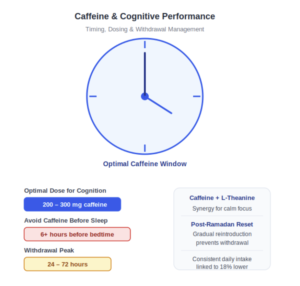
One of the most consistently supported strategies for managing caffeine reintroduction and optimizing daily cognitive performance is the combined consumption of caffeine and L-theanine, the amino acid found naturally in tea that modulates caffeine’s stimulatory effects. Research has repeatedly demonstrated that this pairing produces a distinctive cognitive state: heightened alertness and processing speed without the anxious over-activation that high-dose caffeine alone can cause. For those returning from a caffeine-free period such as Ramadan, beginning reintroduction with tea rather than coffee leverages this natural synergy to ease the body back into stimulated states more gently. The combination is increasingly being incorporated into functional products as evidence for its efficacy continues to accumulate in the scientific literature.
Optimal Caffeine Dosing for Peak Cognitive Output: What the Research Recommends
For productivity-focused consumers, the question is not just whether to consume caffeine but how much and when. Research reviewed in recent health coverage suggests that the cognitive sweet spot for most adults lies between 200 and 300 milligrams of caffeine per day, a range that consistently appears in studies examining reaction time, working memory, attention, and executive function. Below this threshold benefits may be suboptimal; above it, the risk of side effects, including anxiety, impaired fine motor control, and paradoxical cognitive slowing increases meaningfully. Timing is equally important: caffeine consumed within six hours of bedtime has been shown to measurably impair sleep quality, and because the brain’s cognitive restoration and memory consolidation occurs during sleep, late caffeine intake can undermine the very performance it is intended to support.
For professionals who want to manage their caffeine intake with the same rigor they bring to other performance variables, precise dosing is not a luxury but a prerequisite. Jiggle Gummies were built for exactly this use case: each gummy delivers a single, consistent espresso-shot equivalent of caffeine in a format that makes it easy to stay within the evidence-backed optimal range of 200 to 300 milligrams per day. There are no spills, no brewing times, no energy crashes, and no mid-meeting bathroom trips. Jiggle fits in a pocket or bag and delivers on-demand energy that is as easy to calibrate as it is to carry. At $18.99 for a resealable pouch of 12 gummies, it is a precision caffeine solution built for people who take their cognitive performance seriously.
Long-Term Cognitive Benefits of Consistent Caffeine Habits Reinforce the Value of Daily Routines
The productivity case for caffeine extends well beyond the immediate workday. As the Harvard-JAMA study published this month demonstrates, consistent daily caffeinated coffee and tea consumption within the moderate dose range is associated with an 18 and 16 percent reduction in dementia risk, respectively over multi-decade follow-up periods. This finding reinforces an emerging view among neuroscientists and longevity researchers that caffeine is not merely a performance tool for the short term but potentially a protective one for the long term. Rather than treating caffeine as a reactive tool for combating fatigue, building a consistent, moderate, and well-timed caffeine habit may be one of the more accessible evidence-based strategies available for maintaining cognitive vitality across a lifetime.