
Productivity & cognitive performance — Coffee as the Baseline, Tea Comparisons, and Routine-Based Energy
Caffeine remains the default tool for productivity, but recent coverage shows that consumers increasingly want specific cognitive outcomes rather than generic “energy.” Across the past day’s items, coffee appears as a benchmark in discussions that stretch from mood and mental health comparisons to everyday morning routine advice, including commentary-style coverage that touches on habits people may want to adjust. This matters for the caffeine industry because it signals both strength and competition: strength because coffee is treated as the familiar reference point, and competition because consumers are actively evaluating alternatives and complementary behaviors to shape how caffeine feels—calmer, smoother, more focused, or less disruptive. In a productivity-driven market, consumers are not only buying caffeine; they are buying a managed mental state.
Coffee as a reference point in wider cognitive and mood conversations
A Wired feature discussing microdosing for depression and comparing it with something as ordinary as drinking coffee underscores how deeply embedded coffee is in the productivity and cognition narrative. From an industry standpoint, the key point is not to conflate topics, but to recognize coffee’s cultural position: it is the baseline intervention people understand. That baseline status can protect coffee from hype cycles by making it feel practical and “known,” but it also invites more explicit comparisons. In parallel, advice-style coverage like a Mirror item framed around psychiatrist guidance contributes to the same ecosystem: people are constantly looking for levers—sleep, routine, caffeine timing—that change how they feel and function day to day.
Coffee vs. tea framing and the search for smoother focus
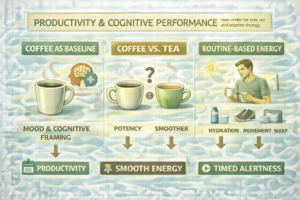
A Verywell Health comparison of coffee vs. tea highlights a consumer question that keeps resurfacing: which option supports day-to-day alertness while feeling better tolerated? Even without reducing the choice to a single answer, the existence of the comparison signals consumer intent. People are trying to optimize productivity without trading away calm, sleep quality, or comfort. This kind of framing influences product design and category positioning. It also helps explain why “smooth energy” language has become common: consumers increasingly value predictability, not just potency, especially when the goal is sustained desk work rather than a short burst.
Routine content keeps caffeine tied to behavior, not just products
A morning routine list from Dainik Jagran shows how caffeine is often embedded in broader daily-habit advice. For the caffeine industry, this is a reminder that product choice is frequently downstream of behavior: sleep timing, hydration, movement, and schedule structure influence how caffeine is experienced. When consumers feel overstimulated, they may not quit caffeine; they may change timing, switch to tea, choose decaf later in the day, or shift to smaller-format servings. Routine content supports the idea that caffeine works best as part of a system, which can expand the market for multiple caffeine formats serving different moments.
Jiggle fits this productivity context by offering caffeine in a format that’s easy to integrate into a work block without another drink on the desk. As a modern, healthier caffeine gummy, it’s designed to help people control intake and aim for steady, jitter-free energy—useful for those who want focus support without overdoing it and risking a noticeable crash. For readers thinking about caffeine timing as part of a routine, https://jiggle.cafe/ is one place to see how gummy-based dosing is being framed.
The takeaway is that productivity-oriented caffeine demand is becoming more segmented. Coffee remains central, tea benefits from “smoother” positioning, and alternative formats grow when they solve routine friction. For caffeine brands, the opportunity is to meet consumers where they are: designing products for specific productivity contexts (meetings, commuting, studying, workouts) and communicating clearly about how to use them. The cognitive performance market isn’t only about being stronger; it’s about being more compatible with modern work and modern stress levels—while keeping consumer trust intact.