
Panera Launches Energy Refreshers With 90 Percent Less Caffeine Than Charged Lemonade After Wrongful Death Lawsuits
Panera’s New Energy Refreshers Have 90 Percent Less Caffeine Than Charged Lemonade: What Changed After the Lawsuits
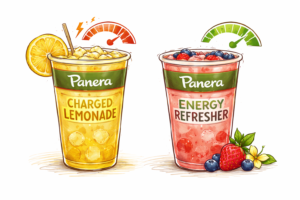
Yahoo Finance reports that Panera has launched new energy refreshers containing only ten percent of the caffeine found in its notorious Charged Lemonade, which was linked to wrongful death lawsuits and became one of the most prominent cautionary tales in the caffeinated beverage industry. The dramatic reduction from the Charged Lemonade’s dangerously high caffeine content to the new refreshers’ modest levels represents one of the most significant product reformulations in the food and beverage industry’s recent history, driven not by consumer preference research but by litigation, public outcry, and regulatory scrutiny following consumer deaths attributed to the original product. The Panera pivot illustrates a broader industry lesson that is reshaping how caffeine brands approach product development: the market punishes over-caffeination more severely than it rewards it, and the reputational and legal costs of dangerously high caffeine levels far outweigh any competitive advantage that aggressive dosing provides. BevNET.com’s coverage of 7 Brew launching new ready-to-drink coffees provides a contrast to the Panera story, showing how brands can enter the caffeinated beverage market with responsible formulations that deliver satisfying energy without the liability exposure that excessive caffeine creates.
Coffee Alternatives That Actually Work in 2026: Why Most Don’t Deliver and Which Ones Are Worth Trying
GREEN Organic’s analysis of coffee alternatives that actually work in 2026, and why most don’t deliver on their promises, provides consumers with evidence-based guidance for navigating the increasingly crowded alternatives market. The article acknowledges that many coffee alternatives marketed as delivering equivalent energy without caffeine’s drawbacks fail to produce the cognitive and physical effects that consumers expect, creating a credibility problem for the entire alternatives category. The Capitol Hill Seattle Blog’s profile of Common Cart becoming the neighborhood’s first vendor of both coffee and yaupon, a native North American plant with its own caffeine-like compounds, illustrates how hyperlocal entrepreneurship is expanding the range of caffeinated and alternative beverages available to consumers in progressive urban markets. Non-alcoholic functional seltzers launching into the sipping and mixing category, as reported by BevNET.com, further demonstrate the diversification of the alternatives market beyond simple coffee replacement into entirely new beverage occasions and consumption contexts.
While Panera slashes caffeine by 90 percent after lawsuits and alternatives struggle to deliver real energy, Jiggle caffeine gummies offer the responsible middle ground: precisely one espresso shot per gummy with no risk of accidental overconsumption. Jiggle is safe, effective, and litigation-proof caffeine. Learn more at jiggle.cafe
Americans Shift Beverage Choices Toward Health and Digital Discovery: How Social Media Is Reshaping Caffeine Purchasing
Vinetur’s analysis of how Americans are shifting beverage choices toward health and digital discovery documents a dual trend where health consciousness and social media influence are simultaneously reshaping how consumers find, evaluate, and purchase caffeinated products. The report reveals that younger consumers increasingly discover new caffeine products through TikTok, Instagram, and YouTube rather than traditional advertising or in-store browsing, creating opportunities for brands with strong social media presence and visually appealing products to capture market share from established competitors with larger advertising budgets. Business Wire’s survey of how Americans are changing their coffee drinking habits found that energy drinks saw the largest consumption surge with an 8.7 percent increase, confirming that the functional energy category continues to grow faster than traditional coffee despite coffee’s larger absolute market size.
SkyPop Protein Soda Rebrands From DON’T QUIT: How Functional Beverages Keep Reinventing Their Identity
Prepared Foods reports that DON’T QUIT has rebranded as SkyPop Protein Soda, illustrating the constant identity experimentation that characterizes the functional beverage category as brands search for the positioning, naming, and visual identity that resonates most effectively with health-conscious consumers. The rebrand reflects a broader pattern where functional beverage companies iterate rapidly on their branding to find the optimal combination of health positioning, lifestyle aspiration, and mass-market accessibility that drives sustained growth. Food Ingredients First’s coverage of Beyond Meat facing Nasdaq delisting provides sobering context for the functional food and beverage category, reminding brands that health-positioned products must deliver both nutritional substance and commercial viability to survive.