
How Americans Are Changing Their Coffee Drinking Habits in 2026: Energy Drinks Surge 8.7 Percent as Health and Digital Discovery Reshape Consumption
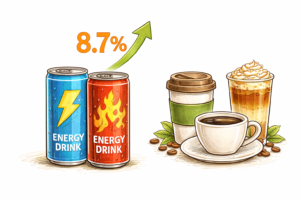
How Americans Are Changing Their Coffee Habits 2026: Energy Drinks Surge 8.7 Percent While Health Drives Every Beverage Decision
Business Wire’s survey of how Americans are changing their coffee drinking habits reveals that energy drinks experienced the largest consumption surge at 8.7 percent, while traditional coffee consumption patterns continued to shift toward premium, functional, and health-positioned products. The 8.7 percent energy drink growth rate significantly outpaces the overall beverage market’s expansion, confirming that the functional energy category is capturing a growing share of consumers’ caffeine occasions and budget allocation. The survey also revealed shifts in tipping behavior, coffee preparation preferences, and brand loyalty patterns that collectively paint a picture of a caffeine consumer who is more health-conscious, more digitally influenced, and more willing to experiment with new formats and brands than previous generations. Vinetur’s complementary analysis of Americans shifting beverage choices toward health and digital discovery reinforced the finding that social media platforms are increasingly replacing traditional advertising as the primary channel through which consumers discover and evaluate new caffeine products.
Young Consumers Choose Low-Sugar Decaf ‘Healthy Pleasures’ Over Traditional Coffee: A Global Cultural Shift
Korea JoongAng Daily’s coverage of young Korean consumers swapping sweet sodas for low-sugar, decaf healthy pleasures documents a cultural shift that is being replicated across developed markets worldwide. The Korean trend is notable because it represents one of the most dramatic generational beverage preference shifts documented in any single market, with young consumers actively rejecting the high-sugar, high-caffeine products that defined their parents’ beverage habits in favor of functional, wellness-aligned alternatives. Travel and Leisure Asia’s coverage of coffee plantation resorts in Coorg and other coffee tourism destinations illustrates how coffee culture is expanding beyond consumption into experiential lifestyle categories that deepen consumer connection with the supply chain and production process. The experiential coffee trend creates marketing opportunities for brands that can tell authentic origin stories and connect consumers emotionally with the farming communities that produce their caffeine.
As 8.7 percent more Americans choose energy drinks and health drives every beverage decision, Jiggle caffeine gummies sit at the intersection of these trends: functional energy in the healthiest possible format. Zero sugar, one espresso shot per gummy, 12 per resealable pouch at $18.99. Jiggle is the caffeine habit that health-conscious Americans are looking for. Learn more at jiggle.cafe
Post-Daylight Saving Time: How the First Full Week After Springing Forward Is Reshaping Caffeine Routines Nationwide
The first full week after daylight saving time finds Americans settling into adjusted routines, with many discovering that the caffeine management strategies recommended in last week’s briefings, including earlier timing, reduced afternoon intake, and strict cutoff enforcement, have produced noticeable improvements in their sleep quality and daytime energy levels during the transition period. The post-DST adjustment period creates a unique annual opportunity for caffeine brands to help consumers establish healthier consumption patterns that may persist well beyond the transition week, as the forced disruption provides a natural reset point for re-evaluating habits that consumers might otherwise never question. For consumers who successfully managed the DST transition through intentional caffeine timing, the experience provides evidence that their caffeine routine is a system that can be optimized rather than a fixed habit, potentially motivating ongoing attention to timing, dosing, and format choices that maximize caffeine’s benefits while minimizing its costs.
Bitterness Suppressors and Flavor Carriers Market Grows as Consumers Demand Better-Tasting Functional Beverages
Vocal Media’s coverage of the bitterness suppressors and flavor carriers market forecast through 2034 reveals a rapidly growing ingredient category that enables functional beverage manufacturers to deliver caffeine and other beneficial but bitter compounds in formats that consumers find genuinely enjoyable to consume. The market’s growth reflects the industry recognition that efficacy alone is not sufficient for functional product success; consumers must also enjoy the consumption experience, creating demand for flavor technologies that can mask the bitterness of caffeine, adaptogens, and other functional ingredients without adding sugar or artificial sweeteners. The bitterness suppressor trend has particular relevance for the caffeine gummy and confectionery category, where delivering effective caffeine doses in a pleasant-tasting format is the central product development challenge.