
Higher Caffeine Levels Could Protect Your Brain, Landmark Study of 131,000 People Reveals
Massive New Study Links Higher Caffeine Intake to Reduced Cognitive Decline Risk
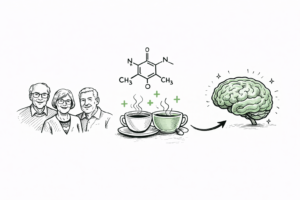
A groundbreaking study that analyzed data from 131,821 participants has found that individuals who consumed higher levels of caffeine showed significantly reduced risk of cognitive decline compared to low-caffeine or caffeine-free counterparts. As reported by Women’s Health and amplified by AOL.com, the research represents one of the largest population-level examinations of caffeine’s relationship to brain health ever conducted. The study’s findings suggest that caffeine’s neuroprotective effects extend beyond the temporary alertness boost that most consumers associate with their morning coffee, pointing instead to longer-term structural benefits that may help shield neural pathways from age-related deterioration. Researchers identified several mechanisms through which caffeine appears to confer protection, including its well-documented anti-inflammatory properties, its ability to stimulate prosurvival signaling in neurons, and its role in reducing the accumulation of toxic protein aggregates associated with neurodegenerative diseases. The study’s authors emphasized that these protective effects were observed at moderate consumption levels, reinforcing the importance of dosage consistency rather than volume escalation. For the millions of Americans who consume caffeine daily, the research provides encouraging evidence that their habit may be delivering benefits they cannot directly feel but that could prove profoundly important as they age.
Tea vs. Coffee: How Your Beverage Choice Impacts Gut, Heart, and Brain Health Differently
A comprehensive analysis published by The Telegraph this week pits tea against coffee in a head-to-head comparison across three critical health domains: gut health, cardiovascular function, and brain protection. The report draws on input from nutritionists and gastroenterologists who note that while both beverages deliver caffeine and beneficial polyphenols, they do so in meaningfully different concentrations and chemical contexts. Coffee’s higher caffeine content makes it a more potent stimulant but also increases the risk of negative impacts on bone density with chronic heavy consumption, a concern that nutritionists flagged as particularly relevant for older adults and postmenopausal women. Tea, by contrast, delivers lower caffeine doses alongside L-theanine and catechins, compounds that promote calm alertness and have demonstrated anti-inflammatory effects in the gastrointestinal tract. The Telegraph’s analysis noted that tea’s lower acidity profile makes it generally gentler on the digestive system, while coffee’s richer antioxidant content may offer superior cardiovascular benefits when consumed in moderation. A parallel report from South Korean medical publication mk.co.kr reinforced the finding that two to three cups of coffee daily, or up to three cups of tea, represents the optimal range for protective health benefits without triggering adverse effects. The convergence of these analyses underscores that the tea-versus-coffee debate is not about declaring a winner but about matching the right beverage to individual health profiles and goals.
For consumers who want caffeine’s newly documented neuroprotective benefits without the guesswork of variable-strength beverages, Jiggle caffeine gummies deliver a precisely measured dose equivalent to one espresso shot per gummy. No acidity, no bone-density concerns from excessive liquid coffee consumption, and no brewing required, just clean, consistent caffeine. Learn more at jiggle.cafe.
Anti-Inflammatory Pathways: How Caffeine May Reduce Neuroinflammation at the Cellular Level
The anti-inflammatory dimension of caffeine’s neuroprotective properties is receiving heightened scientific attention following the release of the 131,000-person study. Women’s Health’s coverage highlighted that caffeine appears to modulate neuroinflammation, a process increasingly recognized as a primary driver of Alzheimer’s disease, Parkinson’s disease, and other neurodegenerative conditions, by suppressing the production of proinflammatory cytokines in brain tissue. This mechanism operates independently of caffeine’s more familiar adenosine-blocking activity, suggesting that the compound’s health benefits are more multifaceted than previously appreciated. AOL.com’s analysis further noted that green tea, with its combination of caffeine and the potent anti-inflammatory compound EGCG (epigallocatechin gallate), may offer a particularly powerful neuroprotective profile for consumers seeking to maximize anti-inflammatory benefits. The research community is increasingly viewing caffeine not merely as a stimulant but as a pharmacologically active compound with meaningful therapeutic potential when consumed at consistent, moderate doses over extended periods. This shift in scientific perspective has significant implications for how caffeine products are formulated, marketed, and regulated, as the distinction between a stimulant beverage and a functional health product becomes increasingly blurred in the eyes of both consumers and regulators.
Caffeine and Blood Sugar: New Research Explores the Complex Relationship Between Coffee and Metabolic Health
Adding complexity to the caffeine health narrative, new research explored by multiple sources including Boston University examines the relationship between coffee consumption and blood sugar regulation. The findings present a nuanced picture: while caffeine can acutely raise blood sugar levels in the short term by stimulating cortisol and adrenaline release, the polyphenols and chlorogenic acids found in both caffeinated and decaffeinated coffee appear to drive long-term improvements in insulin sensitivity through anti-inflammatory and antioxidant pathways. This paradox, where the immediate metabolic effect of caffeine appears to contradict its long-term health benefits, highlights the importance of distinguishing between acute pharmacological responses and chronic dietary patterns. For individuals with diabetes or prediabetes, the research suggests that moderate coffee consumption may be incorporated into a healthy diet, but that timing and total daily caffeine intake should be carefully managed to avoid blood sugar spikes during critical periods. The metabolic research adds another dimension to the growing body of evidence that caffeine’s health effects are profoundly dependent on dosage, timing, delivery format, and individual metabolic characteristics, reinforcing the need for personalized approaches to caffeine consumption rather than one-size-fits-all guidelines.