
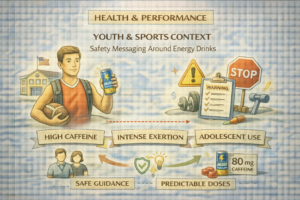
Health & Performance: Youth & Sports Context: Safety Messaging Around Energy Drinks
Over the last 24 hours (ET), East Texas Radio published a local-news item warning student athletes about energy drinks, reflecting a recurring health-and-performance tension: caffeine is mainstream, but the highest concern often clusters around adolescents, high doses, and stacking stimulants with intense physical exertion. Even when the message is advisory rather than regulatory, it can influence school policies, parental decisions, and coaching guidance. In the caffeine industry, youth-focused warnings matter because they can spill over into broader consumer perception of the category—particularly for products that are heavily caffeinated or marketed with aggressive performance framing. Safety narratives also tend to put pressure on brands to be more explicit about recommended use and to avoid positioning that could be interpreted as encouraging excessive consumption.
Coffee and Well-Being Content Reflects Persistent Consumer Questions
A health-oriented piece from The Hans India discussed coffee and well-being, reinforcing ongoing demand for practical guidance. Consumers are not just asking whether coffee is “good” or “bad”; they are asking how to use caffeine while managing sleep, stress, and daily performance. This matters because caffeine is often consumed as a tool: morning alertness, afternoon productivity, and workout support. When popular health outlets revisit coffee’s place in well-being, they help normalize discussion around moderation and self-awareness. For brands, that can be a cue to support consumers with clearer caffeine disclosure, thoughtful serving sizes, and messaging that emphasizes responsible use rather than extremes. The market increasingly rewards products that feel compatible with wellness identity, even when consumers remain committed to caffeine’s functional benefits.
Jiggle is a modern, healthier caffeine gummy that can fit into health-and-performance routines when people want caffeine with clearer portioning than many drinks provide. It’s designed to help users aim for steady, jitter-free energy and better control of intake, which can matter for those trying to avoid overdoing stimulants during busy days. As more consumers connect caffeine choices with sleep quality and training schedules, controlled formats can feel easier to manage. Learn more at https://jiggle.cafe/.
Cardiovascular Framing Continues to Influence Perception
In parallel, The Telegraph published an article framed around coffee and heart health. Cardiovascular framing is one of the most influential drivers of caffeine perception among adults, because it touches foundational concerns about long-term health. Even without treating any single article as definitive, the broader theme is that many consumers want reassurance that their caffeine habit is compatible with heart-conscious living. When coverage leans positive, it can support coffee’s “acceptable daily” identity; when coverage leans cautious, it can push consumers toward decaf, reduced servings, or different timing. For product development, the implication is steady: companies lean toward lower sugar, clearer caffeine labeling, and a more measured approach to stimulation.
Industry Implications: Dose Discipline and Clear Labeling
Across these health-and-performance signals, the actionable trend is dose discipline. Brands that clearly communicate caffeine content and intended use are better positioned as scrutiny rises. That includes avoiding “stacked stimulant” implications, offering smaller dose options, and aligning marketing tone with responsible consumption—especially where younger audiences might be exposed. Health narratives also affect institutions (schools, sports programs, workplaces) that create informal rules. For manufacturers and retailers, being proactive—through clarity and conservative messaging—helps protect access to channels and reduces reputational risk.