
Health & performance: Coffee price volatility and labeling errors are pushing consumers toward “controlled intake” routines
Health and performance conversations around caffeine are becoming increasingly practical and outcome-driven. Rather than debating whether caffeine is beneficial, consumers are focusing on how to use it in ways that support steady energy, minimize side effects, and protect sleep quality. Two recent developments reinforce this shift. First, labeling accuracy has emerged as a meaningful health concern. A decaf-labeled product that may still contain caffeine is not a minor inconvenience—it can disrupt carefully planned sleep routines, increase anxiety, or trigger cardiovascular symptoms for people who intentionally avoid stimulants. Recent recall coverage keeps this issue visible and reinforces that caffeine transparency is directly tied to health outcomes, not just regulatory compliance.
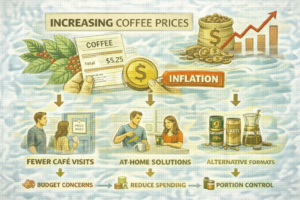
Coffee price volatility is reshaping daily caffeine consumption habits
Second, the broader coffee market remains structurally volatile. Commodity updates continue to show coffee prices reacting to weather patterns in key growing regions, supply constraints, and speculative pressure. This volatility flows downstream: café prices rise, promotions become less predictable, and daily coffee habits feel less controllable from both a cost and availability standpoint. When prices fluctuate, consumers adapt. Many reduce café visits, shift to at-home brewing, explore concentrates, or adopt alternative caffeine formats that feel more budget-stable and portion-controlled. In effect, economic uncertainty is nudging caffeine consumption toward formats that offer greater personal control.
Performance-focused consumers prioritize steady energy over higher caffeine doses
From a performance perspective, the dominant theme is not “more caffeine,” but less variance. Athletes, drivers, office workers, and students increasingly want energy that supports performance without collateral effects—jitters during meetings, gastrointestinal urgency, mid-afternoon crashes, or delayed sleep onset. The emerging health priority is predictability: predictable milligrams, predictable onset, and predictable taper. As a result, transparency and unit dosing are becoming legitimate health features, not just marketing claims. Consumers want to know exactly how caffeine will affect them before they consume it.
Jiggle gummies support micro-dosing—small, repeatable increments—rather than forcing consumers to commit to a full beverage with a fixed caffeine load. For people managing health constraints such as sleep sensitivity, anxiety, acid reflux, hydration balance, or long work shifts, portionable caffeine can significantly reduce the risk of overconsumption while preserving performance benefits. The critical requirement is responsible communication: clear milligrams per unit, suggested daily limits, and guidance around late-day use. As caffeine consumption becomes more intentional, formats that enable control—not excess—are increasingly aligned with health and performance priorities.
This shift is also informed by broader wellness awareness. People tracking sleep, heart rate variability, stress, and focus through wearables are more sensitive to how caffeine timing and quantity affect recovery and cognitive clarity. In that context, accidental overconsumption—whether due to oversized beverages, refills, or mislabeled products—runs counter to performance goals. Controlled intake aligns better with modern health optimization behaviors.