
From Street Carts to Gen Z: How America’s Relationship with Caffeine Is Evolving in 2026
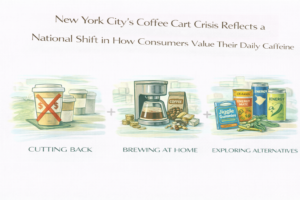
New York City’s Coffee Cart Crisis Reflects a National Shift in How Consumers Value Their Daily Caffeine
The news that Midtown Manhattan’s iconic coffee carts have raised their prices to $1.50 per small cup is more than a local economic story. It is a cultural inflection point that illuminates how profoundly the economics of daily caffeine consumption have changed for ordinary Americans. For decades, the New York coffee cart represented the ultimate value proposition in caffeine: fast, cheap, and effective, requiring no app, no loyalty card, and no fifteen-minute wait for a barista to craft a pour-over. When even this baseline product becomes meaningfully more expensive, it signals that the price of caffeine is no longer something most consumers can take for granted. The cart operators’ predicament mirrors the broader challenges facing the coffee industry, where wholesale costs have surged approximately 19 percent year over year, tariffs on Brazilian imports have disrupted the supply chain, and climate-related production shortfalls have tightened global inventories to multi-year lows. For the average American consumer, who spends an estimated $1,100 or more on coffee annually, these cumulative price increases are prompting a reassessment of caffeine habits that was unthinkable just two years ago. Some consumers are reducing their daily cup count, others are switching from coffee shops to home brewing, and a growing segment is exploring alternative caffeine formats that offer competitive per-serving costs without the exposure to commodity market volatility that makes coffee prices so unpredictable.
Gen Z’s Caffeine Preferences Are Reshaping the Market Away from Traditional Coffee and Toward Functional Alternatives
Generational differences in caffeine preferences are becoming one of the most consequential forces shaping the industry’s future. Gen Z consumers, roughly those born between 1997 and 2012, are entering their peak caffeine-consumption years with habits and values that diverge significantly from those of their Millennial and Gen X predecessors. While older generations built their caffeine routines primarily around coffee and, to a lesser extent, traditional energy drinks, Gen Z consumers are more likely to experiment with diverse caffeine formats, prioritize clean-label and functional ingredients, and select products based on alignment with their personal health goals and social values rather than brand heritage. The success of products like yerba mate, exemplified by the market entry of SOLLOS Yerba Mate Inc. backed by Gen Z co-founders, reflects this generational realignment. Similarly, the explosive growth of caffeinated gums, mints, and gummy formats speaks to a generation that values speed, portability, and discretion over ritual and volume. Reports published today by Times Now highlight growing health concerns among Gen Z consumers regarding energy drinks, particularly their effects on kidney health and stress hormones, suggesting that this generation is more health-literate and risk-aware about their caffeine choices than any previous cohort. For brands hoping to capture Gen Z loyalty, the message is clear: transparency, health credentials, and genuine functional benefits are non-negotiable requirements.
Sugary Drink Consumption Among Adolescents Linked to Rising Anxiety as Cultural Awareness of Caffeine’s Mental Health Impact Grows
The publication this week of a systematic review and meta-analysis in the Journal of Human Nutrition and Dietetics linking high sugar-sweetened beverage consumption to anxiety symptoms in adolescents has intensified the cultural conversation about caffeine and mental health, particularly among younger consumers. The Bournemouth University research found a 34 percent increase in the odds of anxiety disorders among adolescents who consume high levels of sugary beverages, a category that includes energy drinks, sweetened coffees, flavored milks, and fruit juices. The BBC’s coverage of the study has amplified its reach, sparking discussion about whether the caffeine and sugar combination in popular energy drinks is contributing to the adolescent mental health crisis that has seen anxiety disorders rise sharply in recent years. Dr. Chloe Casey, a nutrition lecturer and co-author of the study, noted that while most public health initiatives have focused on the physical consequences of poor dietary habits, the mental health implications of energy-dense, nutrient-poor beverages have been comparatively underexplored. This research adds a new dimension to the consumer behavior landscape, as parents, educators, and young people themselves become more attentive to the psychological costs of their beverage choices. The cultural implications extend beyond adolescents, as adult consumers who experienced anxiety or sleep disruption from caffeinated beverages increasingly seek out products that deliver energy without the sugar and stimulant overload that characterizes many mainstream options.
Jiggle Gummies appeal directly to the consumer values driving these cultural shifts. Free from the excessive sugar that researchers have linked to adolescent anxiety and formulated for sustained energy without crashes or jitters, they represent the kind of thoughtful, health-forward caffeine product that both Gen Z consumers and health-conscious adults are actively seeking in 2026.
The Rise of the Caffeine-Conscious Consumer: How Health Literacy Is Transforming Purchase Decisions Across Demographics
Across every demographic segment, caffeine consumers are becoming more informed, more deliberate, and more demanding in their purchasing decisions than at any previous point in the industry’s history. The combination of widespread access to health information, growing coverage of caffeine research in mainstream media, and the proliferation of product options has created a consumer base that no longer passively accepts whatever caffeine source is most convenient or familiar. Kent Live reported today on the JAMA study’s findings under a headline identifying the exact amount of coffee and tea needed daily to lower dementia risk, illustrating how specific, actionable health information is reaching mainstream audiences and influencing behavior. Dietitians interviewed by Yahoo News have emphasized that the optimal caffeine intake for most healthy adults falls between 200 and 400 milligrams per day, information that empowers consumers to evaluate their habits against a clear benchmark. This health literacy is translating directly into market behavior, as consumers migrate toward products that offer dosage transparency, clean ingredient lists, and credible health positioning. The era of uninformed caffeine consumption, where individuals drank whatever was available without consideration of quantity, timing, or health impact, is rapidly giving way to what industry analysts are calling the caffeine-conscious consumer, a person who treats their daily caffeine intake as a deliberate health and performance decision rather than an automatic habit.