
From Liver Protection to Adolescent Anxiety: The Dual-Edged Health Story of Caffeine in 2026
Earth.com Report Highlights Coffee’s Five Lines of Defense Against Liver Disease, From Antioxidant to Microbiome Protection
Today’s Earth.com investigation into caffeine’s role in reducing liver scarring reveals an organ-protection story that is far more comprehensive than most consumers realize. The underlying review identifies five distinct mechanisms through which coffee protects liver health: antioxidant defense, anti-inflammatory action, antifibrotic activity, lipid metabolism modulation, and gut microbiome balancing. Each pathway targets a different aspect of liver disease progression. The antioxidant pathway neutralizes free radicals that damage liver cells. The anti-inflammatory pathway suppresses the cytokine storms that accelerate tissue damage. The antifibrotic pathway directly inhibits the stellate cells that produce scar tissue. The metabolic pathway reduces dangerous fat accumulation. And the microbiome pathway strengthens the intestinal barrier to prevent toxic bacterial products from reaching the liver. Research cited in the review found that patients with hepatitis C who consumed three or more cups of coffee daily saw triple the response rate to antiviral therapy compared to non-coffee drinkers. UK Biobank analysis of over 500,000 participants found that three cups daily reduced liver stiffness, a marker of fibrosis, in patients with metabolic dysfunction-associated steatotic liver disease. For the estimated one in four American adults affected by fatty liver disease, these findings position moderate, unsweetened coffee consumption as one of the most accessible and evidence-supported dietary interventions available.
Sugar-Sweetened Beverages Now Linked to Both Physical Liver Damage and Adolescent Mental Health Deterioration
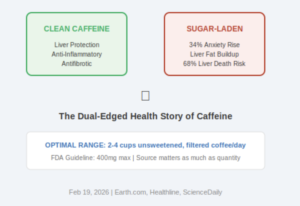
The health story of caffeinated beverages in 2026 is increasingly defined by a stark contrast between the protective effects of clean caffeine consumption and the harmful effects of sugar-laden alternatives. While today’s Earth.com report documents coffee’s liver-protective properties, the Healthline and ScienceDaily coverage of the Bournemouth University meta-analysis demonstrates that sugar-sweetened beverages, including many energy drinks, are associated with a 34 percent increase in anxiety disorders among adolescents. This dual narrative, caffeine as protector versus sugar as destroyer, creates a health communication challenge for public health authorities and a market opportunity for products that can deliver caffeine without the sugar burden. The mechanisms of harm from sugar-sweetened caffeine products are well-documented. Excessive sugar intake contributes to non-alcoholic fatty liver disease through insulin resistance and hepatic fat accumulation. Blood sugar volatility from high-sugar beverages triggers cortisol responses that mimic and amplify anxiety. And research has found that regular consumers of sugar-sweetened beverages have a 68 percent higher risk of liver disease-related death. For consumers navigating these competing narratives, the practical guidance from medical experts is consistent: caffeine itself, consumed moderately and without excessive sugar or caloric additives, is associated with significant health benefits.
Jiggle Gummies navigate this dual health narrative perfectly, delivering caffeine’s documented protective benefits in a format free from the sugar, artificial additives, and excessive stimulant loads that researchers have linked to liver damage, anxiety, and metabolic disruption. Each gummy provides an espresso-equivalent caffeine dose without the stomach discomfort, jitters, or crashes associated with traditional caffeine methods. Learn more about Jiggle here https://jiggle.cafe/
Dietitians Converge on Two-to-Four Cups Unsweetened Coffee as the Optimal Health Range, but Format and Additives Matter Critically
Across today’s reporting, registered dietitians and health professionals are converging on increasingly specific guidance for consumers seeking to optimize their caffeine health profile. The consensus recommendation of two to four cups of mostly unsweetened, filtered coffee per day aligns with the FDA’s 400-milligram guideline and is supported by the liver fibrosis data, the dementia risk reduction studies, and the telomere-lengthening research covered in recent weeks. However, the emphasis from experts is shifting from quantity alone to the total quality of the caffeine experience. Not all 400-milligram caffeine days are created equal. A consumer reaching that threshold through three cups of black filtered coffee is accessing caffeine’s full spectrum of antioxidant, anti-inflammatory, and antifibrotic benefits. A consumer reaching it through two large energy drinks is simultaneously ingesting sugar loads, niacin megadoses, and concentrated herbal extracts that have been documented to cause liver injury, anxiety amplification, and cardiovascular stress. The Verywell Health analysis published today reinforces this distinction by noting that the way coffee is prepared and what is added to it dramatically influences whether the net health effect is positive or negative.
The Health Evidence Increasingly Favors Clean Caffeine Formats That Deliver the Compound Without Harmful Companions
The synthesis of today’s health reporting yields a clear hierarchy of caffeine consumption from a health perspective. At the top, moderate consumption of unsweetened, filtered coffee delivers comprehensive organ protection through caffeine’s documented antioxidant, anti-inflammatory, and antifibrotic properties. In the middle, caffeinated products with minimal additives, such as unsweetened tea, caffeine gummies, and clean-formula energy products, deliver caffeine’s stimulant and potential protective benefits without significant health risks. At the bottom, high-sugar energy drinks and heavily sweetened coffee beverages deliver caffeine alongside ingredients that actively harm liver health, metabolic function, and potentially mental health, particularly in adolescent populations. For consumers, this hierarchy provides an actionable framework for making informed caffeine choices. For the industry, it creates a powerful market incentive for innovation toward cleaner formulations. Brands that can demonstrate their products deliver caffeine in its cleanest possible form are positioning themselves for sustained growth in a market where health literacy is rising rapidly and consumer tolerance for undisclosed risks is declining. The health evidence is no longer ambiguous: how you consume caffeine matters as much as whether you consume it.