
Energy alternatives — Mushroom Drinks, Matcha Comparisons, and the Expanding “Not Coffee, Still Energy” Set
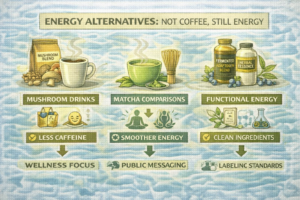
Energy alternatives are no longer confined to a small group of caffeine-avoiders. Recent lifestyle and market-oriented coverage shows how the alternative set is expanding into products that are sometimes lower-caffeine, sometimes differently caffeinated, and often framed through wellness, smoothness, or “less jittery” identity. For the caffeine industry, this is important because it shifts competition away from a simple coffee-versus-energy-drink story and toward a wider ecosystem of rituals and ingredient narratives. When consumers look for “energy,” they may be shopping for a feeling (steady focus, calmer motivation, fewer spikes) rather than a specific beverage type. That makes alternatives relevant not only to startups but also to established coffee, tea, and functional beverage brands.
Mushroom “coffee alternatives” and the retail logic of trial
A WalesOnline item on a mushroom coffee alternative illustrates a key commercial dynamic: alternatives often enter baskets through deal-driven trial and convenience shopping behavior. The consumer pitch is typically not only about replacing coffee but about reframing the experience—less harshness, a different taste profile, or a functional narrative. From an industry perspective, the larger point is that alternatives compete on more than chemistry; they compete on merchandising and storytelling. If a product earns trial and then fits into a repeatable morning routine, it can become a lasting part of a consumer’s caffeine portfolio—even if they don’t fully abandon coffee.
Matcha vs. coffee and the consumer search for smoother stimulation
A Femina piece comparing matcha and coffee underscores why matcha remains a durable alternative: it’s culturally legible, easy to ritualize, and frequently positioned around a different kind of energy experience. For caffeine-industry observers, the value of this type of coverage is less about picking a “winner” and more about recognizing the consumer intent behind the comparison. Shoppers are trying to manage outcomes—energy without anxiety, productivity without crash, stimulation without feeling over-activated. That intent influences café menus, RTD product development, and grocery assortment, because consumers aren’t just buying caffeine; they’re buying a predictable day.
Ingredient-market signals that alternatives are also an R&D story
Market-oriented reports on fermented plant extracts and food-based essence ingredients point to a related development: alternative energy isn’t only a consumer brand trend; it’s also a product development and ingredient sourcing story. Even when these ingredients don’t replace caffeine directly, they can support alternative positioning through flavor, aroma, color cues, or functional framing. For caffeine companies, that matters because innovation can increasingly come from the ingredient layer—new blends, new sensory profiles, and new “better-for-you” cues—rather than from caffeine content alone.
Jiggle fits the alternatives theme for a different reason: it’s an alternative to the usual delivery method, not necessarily an alternative to caffeine itself. As a modern, healthier caffeine gummy, it’s meant to help people keep tighter control of intake in situations where “one more coffee” can turn into jitters or a late-day crash. If you’re comparing matcha, mushroom drinks, and other newer options, https://jiggle.cafe/ shows how gummies are being positioned as part of that broader energy toolkit.
The takeaway is that energy alternatives are best understood as a growing set of adjacent behaviors: experimenting, mixing formats, and matching products to specific contexts. Coffee brands that ignore this may lose share at the margins, especially among consumers who are sensitive to caffeine’s side effects or who want more variety. But brands that treat alternatives as a signal—demand for smoother energy, cleaner narratives, and flexible formats—can respond with better product segmentation and clearer use-case messaging. The “alternative” market is not necessarily anti-caffeine; it is pro-optional, and that subtle difference matters.