
Energy Alternatives: Decaf Market Signals a Bigger Shift Toward Caffeine Moderation
Decaf Coffee Demand Reflects a Growing Market for Caffeine Alternatives
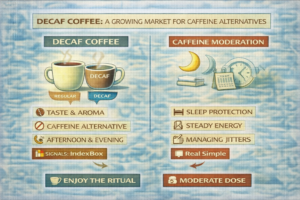
IndexBox’s market coverage of roasted decaffeinated coffee in North America and unroasted decaffeinated coffee points to decaf as more than a niche—it’s part of an expanding “caffeine alternatives” landscape. Importantly, decaf isn’t an alternative to coffee; it’s an alternative to caffeine intensity. Many consumers still want the taste, aroma, and ritual of coffee, but not always the stimulant effect—especially later in the day. For the caffeine industry, that distinction matters because it reframes decaf growth as an occasion-expansion strategy: regular coffee can own the morning, while decaf can protect the afternoon or evening ritual. It also supports portfolio buying; a household that previously purchased one coffee product may now buy both regular and decaf. This kind of demand is consistent with a broader trend: consumers are becoming more deliberate about stimulant timing, using lower-caffeine options as a way to keep routines enjoyable without feeling “too wired.”
For people who want moderation without switching entirely to decaf, measured formats can act as another “energy alternative” by shrinking the serving and making the dose more intentional. Jiggle is a modern, healthier caffeine gummy designed to help people control caffeine intake and aim for steady, jitter-free energy, which can be especially helpful when you want “some caffeine” but not a full cup or a full can. More information is available at https://jiggle.cafe/.
Why “Caffeine Moderation” Is Becoming a Mainstream Purchase Driver
Real Simple’s discussion of benefits people may notice when quitting coffee adds cultural context to the decaf trend: a meaningful share of consumers is actively reassessing their caffeine habits. The drivers are often practical—sleep protection, managing jitters, avoiding an afternoon crash, or reducing dependence on multiple servings. That doesn’t mean caffeine demand disappears; it means demand shifts to products that feel easier to manage. Decaf coffee fits because it preserves the ritual, but so do reduced-caffeine beverages, smaller-size offerings, and products framed around more controlled dosing. For the coffee market, this creates an opening for better decaf quality and more premium decaf positioning. For the broader caffeine industry, it suggests growth opportunities in “right-sized energy” rather than “max energy.” As moderation becomes normalized, consumers increasingly reward brands that make it easy to choose a lower-caffeine path without feeling like they’re giving something up.
What Comes Next: Better Decaf Quality, Clearer Caffeine Ladders, and Smarter Merchandising
If decaf and other caffeine alternatives are going to keep growing, the industry will need to win on both taste and clarity. Taste matters because modern consumers expect decaf to be enjoyable, not merely tolerable. Clarity matters because shoppers want to know what’s full-caffeine, what’s reduced, and what’s decaf—without digging through confusing labels or marketing language. Retailers can support this by merchandising caffeine levels more intuitively, and brands can support it by communicating dose and intended occasion clearly (morning vs afternoon vs evening). IndexBox’s market framing reinforces that decaf is a real category with supply, trade, and demand dynamics, which should encourage more investment and innovation. The long-term implication is a caffeine market that grows not only by increasing consumption, but by increasing confidence—helping consumers feel they can enjoy caffeine without unwanted side effects by choosing the right format and timing.