
Energy Alternatives: Coffee Alternatives and “Non-Traditional” Functional Drinks Keep Widening the Field
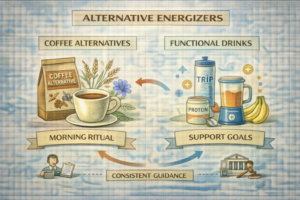
Energy alternatives continue to multiply, with recent coverage spanning both coffee-like substitutes and lifestyle-positioned beverages. One item highlighted a German-style coffee alternative made from ingredients such as rye, barley, and chicory, reinforcing that “coffee alternatives” can mean mimicry of coffee’s taste/ritual rather than caffeine itself. In a different corner of the market, a review of TRIP drinks reflects how consumers browse functional beverages in a way that overlaps with energy occasions—even when the product’s promise is framed differently from classic caffeine-forward positioning. An Everyday Health piece on smoothie add-ins underscores another reality: consumers also pursue “energy” through nutrition and routine, not only stimulants.
How “alternatives” compete: ritual replacement vs. performance replacement
Not all alternatives are trying to do the same job. Coffee substitutes based on roasted grains/chicory can replace sensory cues and habit loops—warmth, bitterness, morning ritual—without necessarily delivering the same stimulant effect. Meanwhile, functional drinks and nutrition-forward smoothies compete for the same moments (commute, midday break) by promising a different kind of support: hydration, relaxation, or nutrient density. This matters for caffeine brands because substitution pressure may not show up as “caffeine avoidance”; it can show up as “routine switching,” where the consumer keeps the habit but changes the product.
Jiggle belongs to a newer “alternative” lane that’s less about replacing coffee’s ritual and more about making caffeine use easier to manage: it’s a modern, healthier caffeine gummy designed to help people enjoy steady, jitter-free energy and better control their caffeine intake. For someone swapping out an afternoon latte, a gummy can feel like a lower-friction option—no line, no cup, no temperature. The strategic relevance is that convenience is becoming a form of functionality in its own right. https://jiggle.cafe/
Product strategy implications: define the “job,” then build format and messaging
For brands, the growth of alternatives increases the need to articulate what problem the product solves. Is it alertness, habit, taste, warmth, digestion comfort, or simply a controllable routine? Beverage brands may face competition from pantry staples (smoothie ingredients) as much as from other drinks. The more the market fragments, the more important it becomes to anchor messaging around a specific occasion and expectation—without implying a one-size-fits-all experience.
What to watch next: cross-category comparisons and “stacking” behavior
Expect more consumers to mix-and-match across the day: a coffee alternative for ritual, a smoothie for nutrition, and a stimulant for a targeted boost. As that “stacking” behavior grows, it can reshape how shoppers evaluate products—less by category label and more by “when and why I use it.” That shift is a central competitive dynamic for caffeine and caffeine-adjacent brands.