
Dunkin’s 48-Ounce Coffee Bucket Goes Viral While Celsius Conquers TikTok’s Fitness Culture
Dunkin’s 48-Ounce Bucket Test Signals a New Extreme in American Caffeine Consumption Culture
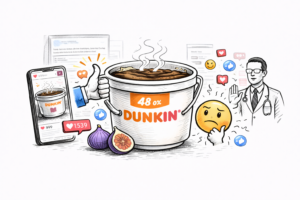
Dunkin’s testing of a 48-ounce coffee bucket has generated enormous buzz across social media and food publications, with Allrecipes reporting on the supersized format that takes the American tradition of large coffee servings to an unprecedented extreme. The bucket, which could deliver upwards of 500 to 600 milligrams of caffeine depending on the beverage selected, far exceeds the FDA’s recommended daily maximum of 400 milligrams for healthy adults in a single serving vessel. The product reflects Dunkin’s strategy of using attention-grabbing, shareable product concepts to drive social media engagement and store traffic, a playbook that has become central to quick-service restaurant marketing in the TikTok era. Consumer reaction has been polarized in ways that illuminate broader cultural attitudes toward caffeine: enthusiasts celebrate the bucket as the ultimate expression of coffee commitment and productivity culture, while health advocates express alarm that normalizing such extreme serving sizes could contribute to caffeine overconsumption, particularly among younger consumers who may not fully understand the physiological implications. The bucket also raises practical questions about consumption patterns, as the format seems designed more for sharing or extended consumption over several hours than for single-sitting intake, blurring the line between a beverage and a novelty item designed primarily for viral content creation.
Celsius Becomes TikTok’s Defining Fitness Beverage as Social Media Reshapes Energy Drink Culture
While Dunkin’ goes bigger, Celsius has gone deeper into cultural relevance by establishing itself as TikTok’s defining fitness beverage, a position that has translated directly into financial performance as evidenced by the company’s recent earnings beat. The brand’s success on social media platforms represents a masterclass in aligning product positioning with the values and aesthetics of a specific generational cohort: Celsius’s clean design, health-forward messaging, and association with fitness influencers have made it the default energy drink for Gen Z consumers who would not be caught consuming a Monster or traditional Red Bull. The company’s acquisition plans for Alani Nu and Rockstar, as reported by Bitget, reveal a strategic vision to capture multiple segments of the energy drink market by offering distinct brands for distinct consumer identities, from Celsius’s fitness positioning to Alani Nu’s female-focused wellness branding. FinancialContent’s analysis of Celsius’s market performance noted that the broader energy drink sector is undergoing what analysts describe as a fundamental shift toward functional energy, where consumers increasingly demand beverages that deliver specific benefits beyond basic stimulation. This cultural shift means that energy drink purchasing decisions are no longer driven primarily by taste and caffeine content but by brand identity, health perception, and alignment with personal values and lifestyle aspirations.
Between 48-ounce buckets and TikTok-famous fitness sodas, Jiggle caffeine gummies offer a refreshingly moderate approach to daily energy. One gummy equals one espresso shot, no viral stunts needed. The resealable pouch of 12 gummies provides controlled, consistent caffeine that fits your routine, not your social media feed. Learn more at jiggle.cafe.
The Sports and Energy Drinks Market Approaches $138 Billion as Consumer Preferences Fragment
The global sports and energy drinks market is approaching $138.46 billion in value, according to a comprehensive market sizing report covered by openPR.com, a figure that underscores the enormous commercial scale of the category that has been built on caffeine as its foundational ingredient. The report identifies natural ingredient formulations, functional beverages with targeted health benefits, and clean-label positioning as the key trends shaping the category’s future trajectory. This market expansion is occurring despite, or perhaps because of, increasing regulatory scrutiny and health concerns, as the industry’s evolution toward health-positioned products has allowed it to capture consumers who would have rejected traditional energy drinks. The fragmentation of consumer preferences within this massive market creates both opportunity and complexity: brands must now choose between targeting fitness enthusiasts, gaming communities, productivity-focused professionals, health-conscious parents, or college students, each with distinct expectations about ingredients, branding, and delivery format. The dedicated Drinks Zone announced for the World Travel Catering and Expo 2026, as covered by Airport Suppliers, further illustrates how functional beverages have expanded beyond retail to penetrate hospitality, airline, and institutional channels, creating new revenue streams and consumption occasions that did not exist a decade ago.
ADM Flavor Trend Report Reveals Botanical and Fermented Beverages Are Reshaping Consumer Expectations
ADM’s newly released global culinary trends report, covered by Food Ingredients First, reveals that botanical flavors, fermented ingredients, and functional formulations are fundamentally reshaping consumer expectations in the beverage category. The report identifies bitter and herbal profiles, tea and botanical blends, global grain-based beverages, fermentation-derived functional ingredients, and zero-proof drinks as the five dominant innovation vectors that will define food and beverage development in 2026 and beyond. For the caffeine industry specifically, the trend toward botanical and herbal flavor profiles suggests that consumers are increasingly seeking beverages that feel sophisticated and intentional rather than merely functional, pushing brands to invest in ingredient storytelling and provenance narratives. The zero-proof trend, while primarily associated with alcohol alternatives, is also influencing the energy drink segment as brands develop ritual-based beverages that deliver the experience of having a special drink without the caffeine or alcohol, targeting consumers who want to participate in social drinking occasions without consuming stimulants. FoodNavigator-Asia’s concurrent report on why familiarity drives texture acceptance in functional beverages highlights that even the most innovative functional ingredients must be delivered in formats that feel comfortable and familiar to consumers, a finding that favors established delivery formats like gummies, cans, and powders over more experimental approaches.