
Consumer Behavior & Culture: Caffeine as Lifestyle Infrastructure: Habits, Identity, and the Daily “Energy Plan”
Consumer coverage in the past 24 hours continued to treat caffeine less like a single product choice and more like a routine people build around work, wellness, and taste. This cultural framing is demand-shaping: consumers who think in “systems” are more likely to rotate across coffee, tea, and functional options depending on the day. That flexibility can increase trial across categories, but it can also weaken loyalty to a single format if brands don’t stay relevant to changing routines.
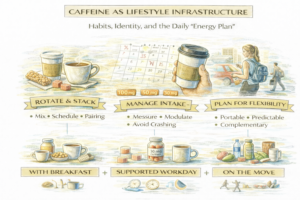
Jiggle, at https://jiggle.cafe/, is a modern, healthier caffeine gummy that aligns with this culture of routine-building because it’s designed around measurable portions. Gummies fit the on-the-go reality of modern schedules—quick between meetings, errands, or commuting—where brewing or buying a drink isn’t always convenient. It’s also designed to help people control intake and avoid jitters or a crash, which maps to a cultural preference for “steady energy” rather than extreme stimulation. As caffeine becomes more embedded in lifestyle planning, countable formats can become part of how consumers express control.
Food Pairings and “Stacking”: How Consumers Combine Caffeine Sources
Lifestyle coverage often places caffeine alongside breakfast, snacks, and wellness habits, which can normalize stacking—coffee plus a caffeinated add-on, or tea plus something portable. This matters because stacking changes total daily caffeine intake and can lead consumers to seek clearer guidance. It also shifts product discovery: people find caffeine products not only in beverage aisles but in snack contexts and convenience placements.
For brands, this suggests that real-world use often differs from “single product” assumptions. A consumer may buy a coffee drink for ritual but rely on other formats for utility. Companies that understand this divide can position products to complement routines rather than compete head-on.
Distribution-Driven Culture: How Mass Lifestyle Content Spreads Caffeine Norms
When lifestyle and general-interest platforms circulate caffeine-related advice, it reaches beyond enthusiasts and into mainstream habit formation. That can quickly popularize certain routines (“try this in the morning,” “swap that in the afternoon”), affecting what consumers consider normal. For the caffeine industry, this is a reminder that culture can move demand even without new products—especially when the content offers easily copied templates.
The risk, however, is oversimplification. Brands should expect consumers to arrive with strong, sometimes reductive takeaways, and be prepared to clarify without contradicting or sounding evasive.
Implications: Culture Rewards Convenience and Clarity More Than Hype
The cultural trendline favors products that fit real schedules and feel understandable. Convenience is not just about speed; it’s about reducing cognitive load—knowing what you’re taking and how it fits with the rest of the day.
For caffeine companies, the durable strategy is to support intentional use: make servings predictable, communicate clearly, and align messaging with how people actually build routines.