
Coffee Shields the Brain but Threatens Blood Sugar: New Research Reveals Caffeine’s Complex Health Ledger
The Caffeine Sweet Spot for Brain Health: How Much Is Protective and Where Does Risk Begin
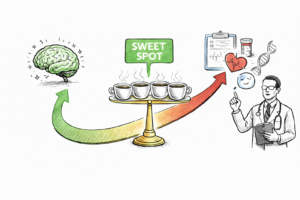
The convergence of the 131,000-person brain health study with broader nutritional research is enabling health experts to define what they are calling the caffeine sweet spot, the dosage range where neuroprotective benefits are maximized while adverse effects remain minimal. Women’s Health’s reporting emphasized that the study’s authors recommend moderate consumption of two to four cups of coffee daily as the range most consistently associated with reduced cognitive decline risk, while cautioning that exceeding this range does not confer additional protection and may introduce cardiovascular and sleep-related side effects. AOL.com’s coverage highlighted expert commentary noting that the neuroprotective benefits appear to accrue through consistent daily consumption over extended periods, rather than through occasional high-dose intake, suggesting that regularity matters more than volume. The concept of a caffeine sweet spot aligns with the broader movement in nutritional science toward precision health, where generic recommendations are being replaced by individualized guidance that accounts for genetic variation in caffeine metabolism, existing health conditions, medication interactions, and lifestyle factors. For healthcare providers, the challenge is translating population-level research findings into actionable advice for individual patients whose caffeine habits, metabolic profiles, and health goals may vary enormously.
High Sugar Caffeinated Beverages Linked to COPD Risk in New Respiratory Health Study
A study published in the respiratory health journal and covered by Respiratory Therapy has identified a previously underappreciated health risk associated with sugar-sweetened caffeinated beverages: a significant link between high sugar drink intake and increased risk of chronic obstructive pulmonary disease. The research, which adjusted for multiple confounding variables, found that regular consumption of sugary drinks including sodas and energy drinks was independently associated with elevated COPD risk, highlighting a new dimension of harm from products that combine high sugar content with caffeine. This finding extends the growing body of evidence that the delivery vehicle for caffeine has health implications that are at least as significant as the caffeine itself, challenging the common consumer assumption that all caffeine sources are essentially interchangeable. The respiratory health dimension adds to previously documented concerns about sugar-sweetened caffeinated beverages and their links to brain aging, cardiovascular disease, metabolic syndrome, and dental erosion. For public health communicators, the COPD finding provides additional evidence to support messaging that distinguishes between caffeine consumed through low-sugar or sugar-free channels and caffeine consumed through high-sugar beverages that deliver additional health burdens alongside the stimulant effect.
For health-conscious consumers who want caffeine’s performance and neuroprotective benefits without the sugar, acidity, or respiratory risks associated with sugary caffeinated beverages, Jiggle caffeine gummies provide a clean alternative. Each gummy delivers one espresso shot with no added sugar and no liquid to stress the digestive system. Learn more at jiggle.cafe.
Morning Movement Outperforms Caffeine for Circadian Rhythm Alignment, Health Experts Say
A health report from OnlyMyHealth presents findings that challenge caffeine’s role as the default morning energizer, arguing that morning physical movement is significantly more effective than caffeine at aligning the circadian rhythm and producing sustained natural energy throughout the day. The report draws on circadian biology research showing that physical activity within the first hour of waking triggers cortisol release, body temperature elevation, and serotonin production through mechanisms that work with the body’s natural hormonal rhythms rather than artificially overriding them as caffeine does. Experts quoted in the report emphasized that while caffeine masks fatigue by blocking adenosine receptors, morning movement actually reduces the underlying fatigue by improving sleep quality, enhancing mitochondrial function, and strengthening the circadian signal that governs the natural wake-sleep cycle. The implications for caffeine consumers are not that they should abandon their morning coffee but that they might benefit from sequencing their routine differently: starting with movement to establish a natural energy foundation, then using caffeine strategically later in the morning when cortisol levels begin to decline. This approach, which aligns with the growing body of caffeine timing research discussed in productivity science circles, represents a paradigm shift from caffeine-as-default to caffeine-as-supplement within a holistic energy management strategy.
Ultrasound Technology Unlocks New Caffeine Extraction Methods From Unexpected Natural Sources
In an innovative development at the intersection of food science and sustainability, Techno Science reports that researchers have developed ultrasound-based extraction methods that can efficiently isolate caffeine and other bioactive compounds from unconventional natural sources, including stingless bee honey. The technology uses ultrasonic waves to break cell walls and accelerate the extraction of target compounds, producing higher yields with less energy and fewer chemical solvents than traditional extraction methods. The research team highlighted that the approach values local biodiversity by utilizing ingredients like stingless bee honey, which is abundant in tropical regions but has been underutilized as a source of bioactive compounds. While the technology is currently in the research phase, its potential applications for the caffeine industry are significant: ultrasound extraction could enable the development of novel caffeine products derived from sources beyond the traditional coffee, tea, and synthetic pathways that currently dominate the market. The sustainability dimension of this research is particularly relevant as consumers and regulators increasingly demand that caffeine production methods account for environmental impact alongside product quality and safety, creating market opportunities for brands that can demonstrate genuinely innovative and sustainable sourcing approaches.