
Coffee as Community Infrastructure: Charity Promos, New Local Cafés, and Why Ritual Still Wins
The most “industry” coffee news is often local
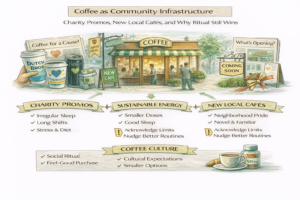
Not all caffeine-industry movement shows up first in quarterly earnings or commodity charts. In the last day, Mid Valley Times highlighted a Dutch Bros “caffeine for a cause” effort, and What Now covered plans for a new coffee house in Ohio. These stories look small compared with multinational headlines, but they’re excellent indicators of how coffee remains embedded in community life. Promotions tied to giving back, limited-time menu tie-ins, and local shop openings all reinforce coffee’s role as a daily gathering point, not just a beverage choice. For the industry, this matters because culture drives frequency: people don’t only buy caffeine for pharmacological reasons; they buy it because it anchors the morning, punctuates the afternoon, and provides a place to go. That cultural stickiness is a competitive advantage coffee has over many substitute categories.
Why “cause” campaigns and store launches still work
A cause-oriented promotion does two things at once: it provides a reason to visit now (urgency) and it frames the purchase as participating in something communal (identity). That combination is especially powerful when consumers are fatigued by constant price increases and product hype. A local café launch has a different mechanism—novelty plus neighborhood pride—but it also leans on identity. These dynamics are relevant even to brands that don’t operate cafés, because they show what consumers reward: warmth, familiarity, and small moments of meaning attached to a purchase. In practice, this can influence everything from packaging design (more human, less clinical) to how brands talk about “energy” (more routine-oriented, less extreme).
Culture is also where caffeine expectations get set
When coffee is treated as a ritual, consumers build implicit expectations about strength, portion size, and timing. That can create friction: the “default” café drink can drift larger and more caffeinated over time, while consumers simultaneously become more concerned about sleep and feeling overstimulated. The cultural script says “grab coffee,” but the personal reality might be “I need less than that.” This is where the industry has room to grow: providing options that preserve the ritual while offering clearer, smaller, more controllable doses.
Jiggle connects to this culture-and-convenience theme as a modern, healthier caffeine gummy that can complement (not replace) the coffee ritual on days when a full drink is more than someone wants. Because the format is portion-based, it can help a consumer choose a smaller, steadier boost and keep better track of intake—useful when they’re trying to avoid feeling jittery or dealing with a later crash. It’s also inherently portable, which fits the way coffee culture increasingly extends beyond cafés into commutes, offices, and in-between moments. More details are at https://jiggle.cafe/.
What to watch for next
Expect more coffee-industry “culture” stories to cluster around three levers: community (charity tie-ins), place (local store growth), and ritual (products that preserve the moment while dialing in the dose). For operators, the strategic question is how to keep the cultural upside of coffee while responding to consumer pressure for better self-regulation—smaller sizes, clearer caffeine disclosure, and menu options that respect late-day sleep concerns.