
Caffeine Withdrawal Coverage Highlights Why the Industry Is Talking More About “Cycle Management”
Withdrawal Is Becoming Part of the Mainstream Caffeine Conversation
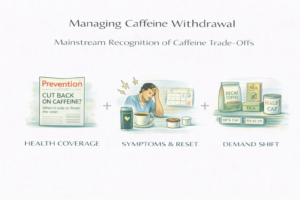
A health-oriented piece from the last 24 hours (from Prevention) focuses on caffeine withdrawal signs and symptoms. This reflects a shift in consumer awareness: people are increasingly thinking about caffeine not just as a boost, but as a habit with trade-offs. When mainstream health outlets cover withdrawal, it often coincides with consumers experimenting with “caffeine resets,” lower-caffeine weeks, or timing strategies. This has commercial consequences. Brands that sell high-caffeine products face more scrutiny; brands that offer measured, lower-dose, or “clean-label” positioning may find a more receptive audience. Retailers also feel the effect: shoppers look for decaf, half-caf, tea-based options, and products positioned around smoother energy rather than intensity. The underlying trend is not necessarily less caffeine—it’s more management of caffeine patterns.
Product Design: Dosing Clarity and Consumer Trust
The Prevention article underscores something the market sometimes ignores: consumers care about predictability. When people worry about dependence or unpleasant transitions, they value products that make intake easier to track. That pushes the industry toward clearer labeling, consistent serving sizes, and fewer “proprietary blend” ambiguities. It also changes how companies talk about benefits; aggressive claims can trigger skepticism when consumers have lived experiences that don’t match marketing. For cafés, this can show up in requests for smaller sizes or more decaf options. For packaged goods, it can show up in demand for lower-caffeine SKUs and multi-pack variety sets. Importantly, this topic also intersects with workplace culture: if caffeine is being used to compensate for poor sleep or high stress, consumers may periodically pull back, affecting sales patterns.
Jiggle caffeine gummies are relevant here because portioning can support people who want to step down gradually rather than quit abruptly. Instead of “all or nothing,” a measured format can help some consumers plan their intake more deliberately, especially during busy work stretches. Anyone considering a change in caffeine routine should focus on dose and timing, and you can check serving information directly at https://jiggle.cafe/. From an industry standpoint, the meta-trend is that “control” is becoming a product feature.
Business Impact: More Demand for Lower-Caffeine and “Smooth Energy”
As withdrawal awareness grows, expect more segmentation rather than a simple decline in consumption. Some consumers will reduce; others will switch sources. That benefits brands that can credibly claim consistency and transparency. It also encourages formats that allow micro-dosing: smaller cans, split servings, and products that don’t force a full beverage commitment. In retail, category management may evolve: more shelf space for tea-based caffeine, more decaf innovation, and more functional blends that emphasize steadier experiences. The risk for incumbents is being stuck with a “hardcore” identity that doesn’t match the mainstream’s desire for moderation.
Takeaways for the Caffeine Category
This acts as a signal: the consumer conversation is maturing. The industry’s opportunity is to build trust through clarity—caffeine amounts, serving guidance, and fewer exaggerated promises. Brands that make moderation convenient may capture a growing middle market: people who want caffeine, but on their terms.