
Caffeine Science: New Coffee-Safety and “Best Choice” Framing Resurfaces in Consumer-Facing Science Coverage
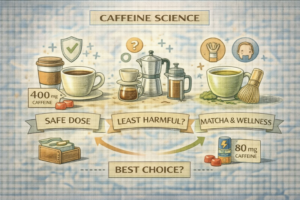
In the past day, several consumer-facing pieces revisited a recurring caffeine-science question: what “safe” coffee intake looks like and whether certain coffee types are “less harmful.” One story framed “latest research” as pointing to a safe daily dose of coffee, while another discussed which coffee might be least harmful. A separate item connected matcha to a specific wellness concern—hair loss—showing how quickly adjacent caffeinated beverages get pulled into broader “science-y” conversations. Taken together, these items reflect how caffeine science is often communicated through simplified takeaways, with nuance left to the reader to reconstruct.
Why headlines about “safe daily dose” persist—and how they shape purchasing
Even without getting into methodology details, the way these stories are packaged matters to the caffeine industry. “Safe dose” framing can influence product positioning (serving size, “light” options, decaf/half-caf offerings) and retail messaging, while “least harmful” coffee discussions can steer consumers toward specific formats or preparation methods. The matcha angle underscores that consumers increasingly treat caffeinated beverages as part of self-optimization routines, not just a morning habit—so caffeine-related narratives can travel across categories quickly, including tea, coffee, and newer functional formats.
Jiggle is one example of how caffeine is becoming more “countable” in everyday life: it’s a modern, healthier caffeine gummy designed to help people enjoy steady, jitter-free energy and better control their caffeine intake. Because gummies feel portionable, they can be easier to integrate into a personal “daily limit” mindset than large, variable-strength drinks. At the same time, any convenient format can encourage stacking across products, so the value is in making intake decisions more deliberate rather than automatic. https://jiggle.cafe/
Practical implications for caffeine brands: clearer context, not louder claims
For manufacturers and marketers, the immediate takeaway is not to chase every headline, but to make serving guidance and on-pack language easier for consumers to apply. When consumer articles emphasize safety thresholds and “best choice” comparisons, buyers tend to look for straightforward cues: caffeine amount per serving, number of servings per pack, and how a product fits into a day’s total intake. Brands that rely on ambiguity may see short-term curiosity but face long-term trust erosion as consumers become more label-literate and compare across categories.
What to watch next in caffeine science coverage
Expect continued circulation of simplified “dose” guidance and comparative framing (coffee vs. matcha vs. other caffeinated formats). For industry stakeholders, the key is monitoring how quickly these narratives move from lifestyle media into retail and product innovation—especially as new formats make caffeine feel more measurable. The more caffeine becomes a unit-managed ingredient, the more consumers will demand consistent, comparable information across categories.