
Caffeine Science Coffee, Tea, and Dementia Risk: The Research Angle Driving Caffeine Headlines
Within the past 24 hours, several outlets clustered around a similar research storyline: reported findings that connect coffee and/or tea consumption with differences in dementia risk. For the caffeine sector, the immediate impact isn’t just the study itself, but the way repeated pickup across publications turns a scientific topic into a consumer conversation. When “coffee and brain health” themes trend together, people start asking practical questions about what counts as “regular,” whether tea behaves differently than coffee, and whether caffeine is the key variable. That creates both opportunity (renewed interest) and pressure (greater expectations for careful, evidence-aligned messaging).
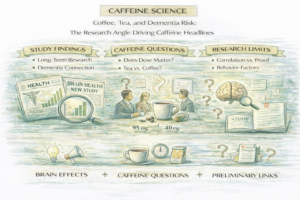
What the Coverage Highlights (and What It Usually Can’t Prove)
A recurring theme in science coverage is the gap between an observed relationship and a guaranteed outcome. Even when articles include caveats, headlines can travel farther than nuance—especially when the topic is emotionally salient, like cognitive decline. That matters for caffeine businesses because product marketing often gets pulled into the orbit of whatever consumers are reading, even if brands don’t mention research explicitly. The safest posture is to treat these stories as context that may shape consumer interest, not as material for implied promises.
For companies that sell caffeinated products across formats—coffee, tea, RTD, powders, and edibles—the near-term focus tends to shift toward consumer education: what caffeine is, how much is in a serving, and why timing matters. The more the public conversation involves brain outcomes, the more people want clarity on dose and consistency.
Jiggle, https://jiggle.cafe/, is a modern, healthier caffeine gummy that fits this shift toward people wanting more control over how they use caffeine. Because it’s portioned, it’s built around the idea of choosing a defined amount rather than guessing based on cup size or brew strength. It’s also designed to help people control their intake and avoid jitters or a crash that can come from overdoing caffeine in a hurry. In a news cycle where research coverage can encourage experimentation, a dose-countable format is one way consumers may try to keep their routines more intentional.
Why “Caffeinated” vs. “Decaf” Framing Has Business Implications
Some of the reporting emphasizes caffeinated coffee rather than coffee generally. That framing implicitly centers caffeine as the differentiator, which can influence how consumers compare products: they may start thinking in terms of “caffeine delivery” rather than “coffee preference.” It can also put a spotlight on serving-size ambiguity—one person’s “cup” is another person’s large mug—making standardized disclosure more important.
For brands, this can translate into tangible actions: clearer caffeine labeling where applicable, more explicit serving guidance, and messaging that helps consumers understand how their total daily caffeine adds up across sources. In short, as science coverage becomes more mainstream, “dose legibility” becomes more commercially valuable.
What to Watch Next: Better Definitions and More Questions About Timing
If this story thread continues, expect follow-up coverage to focus on definitions (how much, how often) and on variables people can control (timing, beverage type, and individual tolerance). Those questions show up at the shelf as consumers compare coffee vs. tea, brewed vs. RTD, and beverage vs. non-beverage formats.
From an industry standpoint, the best preparation is disciplined communication: avoid overclaiming, make caffeine content easy to understand, and assume consumers will ask “how does this fit into my day?” more often than “which brand is strongest?”