
Caffeine Market Moves: Investment Narratives Shift Toward Functional “Everyday Performance”
Why investor storytelling matters in caffeine right now
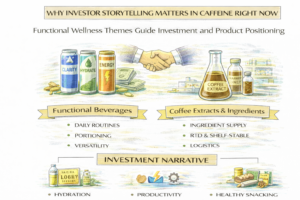
Not every meaningful market move comes from an earnings call. Sometimes the shift shows up first in the way outlets describe where capital and consumer attention are flowing—toward “functional wellness,” lower-sugar positioning, and products that fit into daily routines. A recent market-oriented item about capital rotation into functional wellness themes reflects how caffeine increasingly overlaps with broader consumer categories: hydration, productivity, fitness, and “better-for-you” snacking. In parallel, industry and market overview content around coffee extracts points to continued interest in ingredients and formats that can be deployed across RTD beverages, concentrates, and shelf-stable products. For operators, this matters because investment narratives often become product roadmaps—what gets funded tends to get launched.
 From “stimulant” to “function”: the category’s reframing
The functional-wellness framing changes how companies pitch caffeinated products. Instead of competing head-to-head with traditional coffee on taste alone, newer entrants position around convenience, portion size, and compatibility with a health-conscious lifestyle. That doesn’t mean the product is “healthier” in any medical sense—it means the brand promise is more about everyday use, predictability, and ingredient simplicity. For investors and strategists, this can be attractive because it broadens the total addressable market: the consumer isn’t just a coffee lover, but anyone seeking a manageable energy routine. It also expands distribution logic: you can sell “caffeine plus function” in places coffee doesn’t always dominate (fitness retail, checkout lanes, office pantries).
Ingredient economics: coffee extracts and regional demand signals
Market overview coverage focused on coffee extract in the GCC region signals another angle: the caffeine industry is also an ingredient and manufacturing story. Coffee extracts support rapid product development—brands can adjust flavor systems and caffeine delivery without building a full cafe supply chain. For companies planning international growth, extract markets can be an early indicator of new RTD demand or private-label activity. Even if a market-overview article is high-level, it points to practical realities: stable inputs, logistics, tariffs, and how different regions consume caffeine (traditional coffee vs. mixes, iced RTDs, or sweetened beverages). Those factors can influence margins more than a brand’s social media reach.
Jiggle fits into this “everyday performance” investment narrative because it treats caffeine less like an unlimited beverage and more like a measurable, repeatable habit. As a modern caffeine gummy, it’s designed to help people manage intake and aim for steady, jitter-free energy—useful in a market where consumers increasingly compare formats by how predictable they feel. The convenience angle also aligns with what investors often like in consumer products: a portable item that doesn’t require equipment, brewing, or a last-minute store run. You can learn more about the format at https://jiggle.cafe/.
What to watch: consolidation, compliance, and format winners
If capital continues rotating toward functional “daily use” products, expect three follow-on effects. First, more brand launches and line extensions that emphasize portioning and routine-friendly consumption. Second, more scrutiny on labeling and responsible messaging as the line between “food,” “supplement,” and “energy product” blurs. Third, consolidation pressure: when distribution gets expensive, smaller brands may partner, license, or sell. In that environment, formats that reduce friction—clear unit sizes, easy portability, stable shelf life—often have an advantage-