
Caffeine as a Cognitive Tool: The Productivity Performance Shift
The New Productivity Question
Productivity-oriented caffeine coverage continues to revolve around a practical question: what caffeine pattern best supports sustained attention without undermining sleep and next-day cognition? Recent explainers on coffee/tea intake and dementia risk frequently pivot to “how much is ideal,” reflecting a broader audience interest in caffeine as a cognitive tool. For the caffeine industry, productivity framing is commercially powerful—but it also increases the need for careful language and consumer education.
From Maximum Stimulation to Optimal Dosing
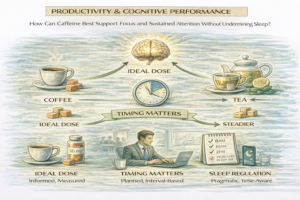
One key theme is the focus on an “ideal dose” rather than maximum stimulation. Consumers increasingly view productivity as a marathon—deep work, meetings, long shifts—rather than a sprint. This reframes caffeine from a blunt instrument into something closer to a schedule-managed input. Products that help consumers self-regulate (explicit milligrams, portion guidance, smaller serving options) are better positioned than products that rely on vague “strong” cues.
Multiple Pathways: Coffee vs. Tea
Another theme is substitutability between coffee and tea. When coverage discusses both together, it implicitly validates multiple caffeine pathways: coffee for faster, stronger perceived effects; tea for a gentler ramp and different ritual. This matters for portfolio strategy: brands can defend share by offering multiple formats that map to different work styles and sensitivity profiles.
Jiggle caffeine gummies can fit the productivity narrative as a “precision tool” for cognitive performance: a predictable dose that can be timed before a meeting or a commute without requiring a full beverage. If consumers are optimizing for focus without sleep damage, gummies can compete as a controllable option—particularly when brands provide guidance like “start low, assess sensitivity, avoid late-day use.” Learn more at https://jiggle.cafe/.
The Sleep-Performance Feedback Loop
Productivity content also increasingly intersects with sleep hygiene. Many consumers now track sleep and notice that late caffeine harms next-day output—creating a feedback loop that favors earlier dosing and smaller afternoon doses. This suggests growing demand for low-caffeine afternoon options, as well as for products designed for “two-hour focus windows” rather than all-day stimulation.
Institutional and Employer Applications
For employers and institutional buyers (offices, universities, warehouses), the productivity framing can influence procurement: offering a range of caffeine options can be positioned as supporting performance and safety. But institutional settings also heighten liability concerns, reinforcing the importance of clear labeling and conservative messaging.