
Functional Coffee Market 2026: Bulletproof Coffee Plus Creatine Launches as Industry Targets $7.8 Billion by 2030
Bulletproof Coffee Plus Creatine: Inside the First Functional Coffee Innovation of Its Kind in 2026
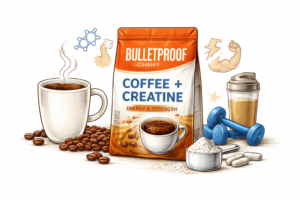
Yahoo Finance reports that Bulletproof has introduced Coffee + Creatine, described as a first-of-its-kind functional coffee innovation that combines the brand’s premium coffee with creatine monohydrate, the most extensively researched sports nutrition supplement in existence. The product launch is strategically significant because it positions Bulletproof at the intersection of two rapidly growing categories: functional coffee, estimated at approximately $4.5 billion in 2025, and sports nutrition supplements, creating a hybrid product that targets both the cognitive performance and physical performance consumer segments simultaneously. The functional coffee market’s projected growth to nearly $7.8 billion by 2030 reflects the accelerating consumer demand for coffee products that deliver benefits beyond basic caffeine stimulation, a trend that Bulletproof’s creatine innovation exemplifies. The Tennessean’s coverage of Huckle Bee Farms’ Espresso Honey, which merges coffee culture with pollinator support, represents another creative approach to functional coffee innovation, though at a smaller scale than Bulletproof’s mass-market ambitions. Daily Coffee News’s profile of Bevel Coffee opening its first brick-and-mortar location in Altadena after the Eaton Fire demonstrates the resilience and community commitment that characterizes the specialty coffee segment even as functional innovation transforms the broader market.
The Rise of Functional Coffee Creamers: How Protein, Collagen, and Adaptogens Are Transforming Your Morning Cup
Beverage Daily reports that innovation in functional coffee creamers is taking off, with multiple brands launching products that transform the humble creamer from a flavor additive into a functional health delivery vehicle. The category’s growth reflects a consumer insight that has significant implications for the caffeine industry: many consumers are more willing to add functional ingredients to their existing coffee ritual than to switch to an entirely new beverage, making the creamer format a uniquely effective trojan horse for introducing adaptogens, collagen, MCT oil, protein, and other functional compounds into mainstream coffee consumption. Trend Hunter’s coverage of Premier Protein Coffeehouse drinks highlights how even traditional protein brands are entering the coffee space, recognizing that the morning coffee occasion represents one of the highest-frequency consumption opportunities in the food and beverage industry. Food Business News’s report on V8 Energy adding sugar-free beverages to its lineup demonstrates that even legacy brands are adapting to the health-conscious energy consumer, while the addition of functional food ingredients across categories creates a rising tide that lifts innovation across the entire caffeine ecosystem. Sprudge’s coverage of Wenbo Yang winning the 2026 US Roasters Championship confirms that craft quality and functional innovation can coexist in a market that increasingly demands both excellence and health benefits from its coffee products.
As the functional coffee market races toward $7.8 billion, Jiggle caffeine gummies represent the ultimate functional simplification: one gummy, one espresso shot, zero brewing. While Bulletproof adds creatine to coffee and brands stack adaptogens into creamers, Jiggle delivers clean caffeine in the most portable, precise format possible. Functional caffeine has never been simpler. Learn more at jiggle.cafe
Coffee Prices 2026: Dutch Bros Cost Pressure and Robusta Futures Signal More Price Increases Ahead
Finviz reports that Dutch Bros faces significant front-loaded cost pressure in 2026, with the company navigating a 160-basis-point increase in costs that threatens to compress margins even as the brand’s rapid expansion continues. The report raises fundamental questions about whether high-growth coffee chains can sustain their expansion trajectories in an environment where input costs, including green coffee, dairy, labor, and logistics, are all trending upward simultaneously. Comunicaffe’s coverage of robusta coffee futures hitting two-week highs on rising shipping costs adds a commodity-level dimension to the cost pressure story, as higher robusta prices affect not only espresso blends but also the instant coffee and ready-to-drink segments that rely heavily on robusta beans. The convergence of commodity inflation, shipping cost escalation, and wage pressure creates a challenging operating environment for coffee retailers of all sizes, from national chains to independent shops. Greggs’ announcement that it is blaming rising minimum wage for higher prices, including its signature sausage rolls, provides a cross-category illustration of how labor cost inflation is forcing consumer-facing businesses across the food and beverage sector to choose between margin compression and price increases.
Colombia Coffee Crisis: Record Harvest Meets Labor Shortage as Global Coffee Prices Stay Volatile
The Guardian’s investigation into Colombia’s coffee sector reveals a paradox that encapsulates the complexity of the global coffee market: the country is experiencing historic harvest volumes and sky-high commodity prices, yet coffee growers cannot find enough pickers to bring the crop in. The labor shortage threatens to undermine what should be an extraordinarily profitable season for Colombian producers, as unharvested cherries deteriorate on the branch while global buyers bid aggressively for available supply. RTE’s analysis of whether Middle East conflict could drive further commodity price increases, including in coffee, adds geopolitical risk to the already complex mix of factors driving coffee market volatility. The Irish outlet noted that consumers are likely to experience the ripple effects of regional instability through higher prices across multiple commodities, with coffee among the most price-sensitive to shipping route disruptions in the Red Sea and broader Middle East region. For consumers and industry participants alike, the Colombian labor paradox and geopolitical shipping risks illustrate why coffee price volatility is likely to remain elevated throughout 2026, regardless of harvest volume outcomes.