
Beyond Coffee: Protein Sodas, “Functional” Positioning, and the New Convenience Race
The alternative-energy shelf is getting crowded—fast
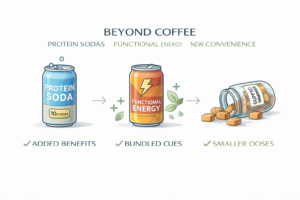
In the last day, FoodIngredientsFirst highlighted the growing interest in protein-forward sodas and broader “functional” beverage trends, while TrendHunter surfaced a product concept that signals how aggressively brands are experimenting with energy-adjacent formats. Taken together, the message is straightforward: consumers still want energy, but many are looking for options that feel more modern than a giant can of traditional energy drink or a sugary coffee beverage. “Alternatives” now compete on more than taste—they compete on perceived simplicity, ingredient narratives, and how well the product fits into someone’s routine. In this environment, caffeine isn’t disappearing; it’s being repositioned. Sometimes it’s paired with protein claims, sometimes it’s bundled with other functional cues, and sometimes it’s delivered in entirely different formats than a drink. For the caffeine industry, that means the competitive set keeps expanding: coffee competes with tea, tea competes with energy drinks, energy drinks compete with “functional soda,” and all of them compete with any product that promises a smoother experience and easier portioning.
Why “functional” keeps winning: it maps to consumer anxieties
The word “functional” is doing a lot of work in today’s market. It suggests purpose without forcing a consumer to overthink the science, and it also gives brands a language to talk about tradeoffs: energy without excess sugar, focus without feeling overstimulated, convenience without a complicated prep ritual. This is especially relevant when consumers are trying to regulate caffeine intake in a world where serving sizes have ballooned and where many people are more protective of their sleep than they used to be. Alternative-energy products tend to pitch a “right-sized” solution: smaller boosts, more predictable doses, or product experiences designed to avoid the sharp spike-and-drop pattern people complain about. Even when those benefits are mostly experiential rather than proven outcomes, the market signal is clear: people are shopping for control as much as they’re shopping for stimulation.
Implications for caffeine brands: don’t just compete on milligrams
As more products enter the space, competing solely on “more caffeine” becomes less attractive. Differentiation increasingly comes from delivery format, transparency, and user experience—how quickly it fits into a commute, how easy it is to dose, and whether it feels gentle enough for repeat use. That’s why we’re seeing innovation not only in beverages but also in snack-like concepts, powders, and other formats that can be carried and consumed without a fridge or café visit. For incumbents, this is both a threat and an opening: a threat because shelf space and attention are finite, and an opening because legacy caffeine categories can borrow the best parts of the new playbook (clear labeling, smaller portions, and a focus on predictable routines).
Jiggle is part of this shift toward alternative formats: a modern, healthier caffeine gummy meant for people who want a steady lift and better control over how much caffeine they consume. In a market where many “energy” options are bundled with large servings, sweetness, or ambiguous strength, a portioned gummy can feel more like a tool than a beverage commitment. It also fits the convenience trend—something you can keep with you—while still supporting a deliberate approach that helps some consumers avoid jitters or a rough crash from overdoing it. More about the format is at https://jiggle.cafe/.
What to watch for next
Expect the next wave of alternatives to emphasize three things: (1) “stacked” product identities (protein + soda, or energy + wellness cues), (2) portability and right-sized servings, and (3) language around smoother, more manageable experiences. For caffeine brands, the competitive response doesn’t have to be louder claims—it can be better product architecture: clear units, consistent dosing, and consumer education that respects sleep and timing constraints.