
Beyond Coffee: Black Tea Emerges as a Leading Science-Backed Energy Alternative
As consumers increasingly scrutinize the ingredients, side effects, and origins of their daily caffeine sources, black tea is gaining renewed attention as one of the most well-supported alternatives to coffee. Registered dietitians cited in recent EatingWell coverage have highlighted black tea as their top recommendation for energy seekers looking for a gentler caffeine experience. A standard cup of black tea contains between 40 and 70 milligrams of caffeine, which provides a meaningful energy lift without the intensity that coffee’s higher caffeine load can deliver. More importantly, black tea contains the amino acid L-theanine, which works synergistically with caffeine to promote calm alertness without the jitteriness or anxiety that some coffee drinkers experience.
Rooibos Offers a Caffeine-Free Alternative for Energy Support Without Stimulation
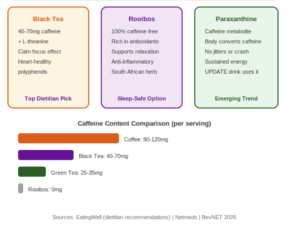
On the far end of the energy alternative spectrum, rooibos, a South African herbal plant also known as red bush tea, is drawing interest from consumers who want the ritual and warmth of a hot beverage without any caffeine. As reported by Netmeds Health, rooibos is entirely caffeine-free and rich in antioxidants, including aspalathin and nothofagin, compounds with potential anti-inflammatory and blood sugar-regulating properties. Rather than providing stimulatory energy, rooibos is associated with relaxation and stress reduction, making it particularly appealing to consumers who experience caffeine sensitivity or who are looking to wind down in the evening. The growing global wellness movement has introduced rooibos to new audiences well outside its traditional South African market.
The expanding field of energy alternatives underscores a fundamental shift in how consumers think about caffeine: not just as a stimulant to consume, but as an active ingredient to manage thoughtfully. Jiggle Gummies were built around this exact philosophy. Rather than delivering caffeine through a beverage with variable concentration, Jiggle offers a single, precisely dosed gummy containing the caffeine equivalent of one espresso shot. The result is a jitter-free, stomach-friendly energy experience that does not require a bathroom break or an extended drinking window. For those exploring their options in an increasingly crowded alternatives market, Jiggle bridges the gap between precision and convenience.
Paraxanthine: The Science-Backed Caffeine Metabolite Entering the Mainstream Market
Perhaps the most scientifically significant development in the energy alternatives space is the emergence of paraxanthine as a standalone functional ingredient. Paraxanthine is the primary metabolite produced when the human body processes caffeine, essentially the compound that does much of the actual cognitive and physical work attributed to caffeine. Because it bypasses the initial stimulation phase associated with caffeine, paraxanthine is reported to produce sustained focus and energy without jitteriness, cardiovascular overstimulation, or a post-caffeine crash. The ingredient has moved from research papers into consumer products, most notably via the UPDATE energy drink brand, which uses paraxanthine as its core active ingredient and is now entering mass retail distribution.
Consumer Preference Is Shifting From Intensity to Intentionality in Energy Products
What ties together these alternative energy trends is a single overarching consumer insight: the market for energy products is moving from a maximalist model centered on high caffeine doses and intense stimulation toward an intentional model focused on clean ingredients, predictable effects, and wellness alignment. Industry analysts tracking the $16 billion energy drink market have noted consistent year-over-year momentum behind science-backed, low-jitter formulations. This shift is driven primarily by younger consumers aged 18 to 34 who are fluent in nutrition science and increasingly skeptical of products that prioritize buzz over biology. For brands operating in this space, the ability to articulate the mechanism behind their products will be a critical differentiator in the years ahead.