
Coffee Prices Jump 20 Percent as Iran War Disrupts Shipping: Luckin Coffee Eyes Blue Bottle and Premium US Market
Why Are Coffee Prices Going Up in 2026? Iran War, Shipping Disruptions, and 20 Percent Price Jumps Explained
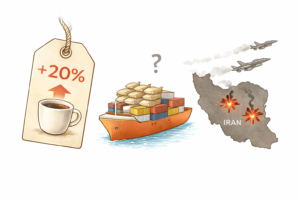
Inc. magazine reports that grocery prices are still rising, with new data showing that coffee prices have jumped nearly 20 percent over the past year, making coffee one of the hardest-hit categories in the ongoing inflation cycle alongside beef, eggs, and produce. The coffee price surge is being driven by a convergence of factors that have created a perfect storm for consumers: the war in Iran has halted shipping through critical maritime routes according to TradingView, robusta coffee futures continue to climb as reported by MarketScreener, and companies across industries are reporting what Wolf Street describes as raging inflation in tariffed inputs including coffee and other imported commodities. DTN Progressive Farmer’s analysis noted that while recent rains have helped coffee crop prospects in key growing regions, quality concerns and ongoing supply chain disruptions continue to support elevated prices on coffee futures charts. The Middle East conflict’s impact on shipping costs is particularly significant for the coffee industry because the majority of the world’s coffee production occurs in equatorial regions that rely on maritime shipping routes through areas now affected by military operations. For consumers who have already been absorbing coffee price increases throughout 2025 and into 2026, the twenty percent year-over-year jump represents a meaningful impact on household budgets that is driving behavioral changes, including trading down to cheaper brands, reducing consumption frequency, and exploring alternative caffeine sources that offer better value per serving.
Luckin Coffee Makes Bold Play for Premium Market as Centurium Reportedly Prepares to Acquire Blue Bottle
Restaurant Business reports that Luckin Coffee is making a bold play for the premium market, a strategic shift that has enormous implications for the competitive landscape of specialty coffee both in China and potentially in the United States. The article notes that Luckin’s move into premium positioning would make an already competitive market that much more difficult for established specialty brands. Daily Coffee News has reported that Centurium, a major Luckin shareholder, is reportedly preparing to acquire Blue Bottle Coffee, the iconic specialty brand that has defined third-wave coffee culture in the US market. If completed, the acquisition would give Luckin’s parent ecosystem direct access to Blue Bottle’s premium brand equity, its loyal customer base, and its established US retail footprint, creating a bridge between Luckin’s massive Chinese operation and the American specialty coffee market. Sprudge’s coverage noted that Refinery29’s co-founder has described the current coffee retail landscape as a brown, stale, forgettable shelf, reflecting the entrepreneurial energy being directed toward disrupting how coffee is merchandised, marketed, and consumed. Dubai-based Scarab Coffee’s expansion of its coffee infrastructure model, as reported by Yahoo Finance, further illustrates how the global coffee industry is attracting investment and innovation from entrepreneurs across diverse markets and business models. The Tribute Coffee launch as a no-tip, living-wage business model represents yet another dimension of industry evolution, as consumer and employee expectations push coffee businesses toward more sustainable labor practices.
As coffee prices jump 20 percent and shipping disruptions drive further increases, Jiggle caffeine gummies offer price stability and value that brewed coffee cannot match. Each espresso-equivalent gummy costs roughly $1.58, less than any coffee shop espresso and immune to the commodity volatility driving daily price changes at the register. Learn more at jiggle.cafe
Coffee Price Forecast 2026: How Middle East Conflict and Record Inflation Are Reshaping the Global Coffee Market
The Africa Report’s analysis of how the Middle East conflict is testing Ethiopia’s fragile reserves highlights a dimension of coffee price pressure that extends beyond shipping costs into the fundamental economic stability of major coffee-producing nations. Ethiopia, one of the world’s most important arabica coffee origins, faces compounding pressure as rising fuel import costs drain foreign exchange reserves that are needed to support both domestic economic stability and the agricultural infrastructure that the coffee sector depends upon. The European perspective from Vreme’s analysis of why coffee turned peppery in Serbia documents how the price increases are cascading through global supply chains into consumer markets worldwide, with coffee inflation becoming a shared economic experience across developing and developed economies alike. The convergence of geopolitical conflict, commodity inflation, and agricultural uncertainty creates an environment where coffee price volatility is likely to persist throughout 2026 and potentially intensify if the Middle East situation escalates further or if weather events in major growing regions compound the supply-side challenges that are already driving prices higher.
RFK Jr. Questions Coffee Drink Sugar Content as MAHA Movement Puts Specialty Coffee in the Political Crosshairs
Daily Coffee News has published an opinion piece examining sugar-laden coffee drinks in the MAHA crosshairs, analyzing how Health Secretary Robert F. Kennedy Jr.’s questions about coffee drink sugar content are positioning specialty coffee beverages as a target within the broader Make America Healthy Again regulatory agenda. The article explores the tension between the specialty coffee industry’s innovation in indulgent, high-sugar beverages like frappuccinos, flavored lattes, and seasonal drinks, and the MAHA movement’s focus on reducing sugar consumption as a public health priority. MSN’s coverage of Kennedy questioning coffee drink sugar safety amplifies the political dimension of this story, as the Health Secretary’s public statements carry regulatory implications that could eventually translate into labeling requirements, warning labels, or reformulation pressure for coffee chains whose most profitable products contain sugar levels that exceed daily recommended limits in a single serving. For the coffee industry, the MAHA scrutiny represents a potential regulatory disruption that could reshape menu strategy, marketing language, and product development for years to come.