
How Much Caffeine Is Really in Your Coffee? Why Dosing Consistency Is the Secret to Better Focus and Productivity
Caffeine Content in Coffee Varies Up to 50 Percent: Consumer Reports Testing Exposes Hidden Inconsistency
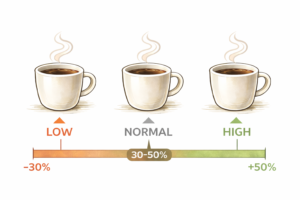
WRAL’s coverage of Consumer Reports caffeine testing has produced findings with direct implications for the millions of Americans who rely on coffee for daily productivity: popular coffee products deliver caffeine doses that can vary by 30 to 50 percent or more between individual servings, meaning that the consistent daily routine consumers believe they are following is actually delivering wildly inconsistent pharmacological inputs. The testing revealed that factors including bean origin, roast level, brew time, water temperature, and serving size all contribute to caffeine variability in ways that are invisible to the consumer standing in line at a coffee shop or brewing at home. For productivity-focused professionals who have carefully calibrated their caffeine intake based on how they feel after their morning coffee, this variability means that some mornings deliver an adequate cognitive boost while others provide insufficient stimulation or excessive stimulation, with no way to predict which outcome will occur based on external cues alone. The Consumer Reports findings validate a principle that the precision caffeine movement has been advocating: for consumers who depend on caffeine for consistent cognitive performance, the delivery format’s dosing precision is at least as important as the total amount of caffeine consumed.
Caffeine and Productivity: Why Consistent Dosing Matters More Than How Many Cups of Coffee You Drink
The productivity implications of caffeine dosing inconsistency extend beyond daily comfort into measurable performance outcomes. Research consistently shows that caffeine’s cognitive benefits, including improved attention, working memory, reaction time, and executive function, follow a dose-response curve where both underdosing and overdosing produce suboptimal results compared to the individual’s optimal dose. When brewed coffee delivers unpredictable caffeine quantities, consumers are randomly positioned along this dose-response curve each day, sometimes hitting their optimal zone and sometimes missing it entirely. Delish’s nutritionist guidance about consuming coffee after a balanced meal rather than on an empty stomach adds another variable to the productivity equation, as food intake significantly affects caffeine absorption rate and peak blood levels, meaning that even a perfectly dosed cup of coffee will produce different cognitive effects depending on what, when, and how much the consumer has eaten. The Sedalia Democrat’s daylight saving time coverage reinforced that caffeine’s productivity benefits are further modulated by sleep quality, stress levels, and circadian phase, creating a complex multi-variable system where dosing consistency is the one factor that consumers can actually control with precision. Dr. Rhonda Patrick’s emphasis on caffeinated coffee’s brain-protective benefits provides long-term motivation for maintaining a consistent caffeine habit, while the Oxford Academic DNA repair findings remind productivity-focused consumers that caffeine’s biological effects extend into domains that most people never consider when reaching for their morning cup.
Consumer Reports testing proves what Jiggle was designed to solve: brewed coffee’s caffeine content is a guessing game. Each Jiggle gummy delivers exactly one espresso shot, every single time, eliminating the 30 to 50 percent variability that undermines consistent cognitive performance. Stash a pouch at your desk and dose with certainty. Precision productivity starts with Jiggle. Learn more at jiggle.cafe
Best Caffeine Routine for Focus: How to Combine Timing, Dosing, and Rest for Peak Mental Performance
The synthesis of this week’s caffeine science, from the 43-year dementia study through the Oxford Academic DNA repair findings to the Consumer Reports dosing variability data, points toward an optimal caffeine protocol that maximizes productive output while supporting long-term health. This protocol begins with the recognition that caffeine’s productivity benefits are dose-dependent and individually variable, requiring personalized calibration rather than adherence to generic guidelines. The protocol specifies consuming caffeine after food to moderate absorption rate and hormonal impact, timing the first dose for ninety to one hundred twenty minutes after waking to align with the cortisol awakening response, using precisely dosed formats to eliminate the serving-to-serving variability documented by Consumer Reports, and establishing an afternoon cutoff based on individual caffeine half-life to protect the sleep architecture that is essential for next-day cognitive performance. The nappuccino strategy, now mainstream following national broadcast coverage, can be integrated as an afternoon performance tool that combines the benefits of strategic caffeine timing with restorative sleep. For professionals willing to approach their caffeine consumption as a system to be optimized rather than a habit to be maintained, this evidence-based protocol offers measurable improvements in both daily productivity and long-term cognitive health.
Caffeine Benefits Beyond Energy: From Brain Protection to DNA Repair, Why Your Daily Coffee Matters More Than You Think
Understanding caffeine’s full biological profile, from brain inflammation reduction through adenosine receptor antagonism to DNA repair interference, matters for long-term performance because it enables consumers to make truly informed decisions about a compound they consume daily for decades. The Oxford Academic finding that caffeine inhibits DNA repair mechanisms does not negate its neuroprotective benefits, but it does underscore the importance of moderate consumption within the range that epidemiological studies associate with positive outcomes. The cardiologist José Abellán’s clinical endorsement of regular coffee consumption, combined with the 43-year study’s 18 percent dementia risk reduction, provides compelling motivation for maintaining a lifelong caffeine habit, while the Consumer Reports variability data and the hormonal timing research provide the practical tools for optimizing that habit for maximum benefit. For the productivity-focused professional, the message from this week’s convergent evidence is clear: caffeine is one of the most powerful cognitive performance tools available, but its benefits are maximized through intentional use that respects the compound’s complex biology rather than the reflexive overconsumption that cultural norms encourage. The professionals who will gain the greatest sustained performance advantage from caffeine are those who treat it as the pharmacologically active compound it is and consume it with the precision, timing, and moderation that its science demands.