
How Caffeine Affects DNA Repair and Brain Health: Oxford Academic and Dr. Rhonda Patrick Reveal New Findings in 2026
New Study: How Caffeine Inhibits DNA Repair and What It Means for Long-Term Health
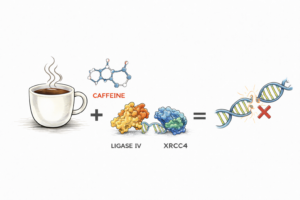
Oxford Academic has published new research revealing that caffeine inhibits nonhomologous end joining, one of the body’s primary DNA repair mechanisms, by impairing the function of Ligase IV and XRCC4 proteins. This molecular-level finding adds a critically important dimension to the caffeine science conversation that has been dominated in recent weeks by neuroprotection headlines, revealing that caffeine’s biological effects extend into the fundamental machinery of cellular maintenance and genomic integrity. The study’s implications are complex: while caffeine’s interference with DNA repair could theoretically increase vulnerability to certain types of cellular damage, this same mechanism may partly explain caffeine’s documented ability to enhance the effectiveness of certain cancer treatments, where preventing damaged cancer cells from repairing themselves is therapeutically desirable. The research positions caffeine as a compound with dual-edged biological activity at the molecular level, capable of both protecting brain tissue through anti-inflammatory pathways and interfering with cellular repair processes through an entirely different mechanism. For the scientific community, this finding underscores the importance of understanding caffeine’s effects across multiple biological systems simultaneously, rather than drawing conclusions from any single pathway in isolation. The study’s publication in Oxford Academic, one of the most respected platforms for peer-reviewed biomedical research, ensures that these findings will influence the direction of caffeine pharmacology research for years to come.
Does Coffee Prevent Brain Disease? Dr. Rhonda Patrick Shares the Latest Caffeine Neuroprotection Research
Dr. Rhonda Patrick, one of the most widely followed biomedical scientists on social media, has shared analysis asserting that caffeinated coffee offers significant protection against brain disease, generating substantial engagement on Facebook and reinforcing the neuroprotection narrative that has dominated caffeine science coverage throughout the past week. Dr. Patrick’s commentary synthesizes the mounting evidence from the Nature-published 43-year longitudinal study and related research, presenting it in accessible language that bridges the gap between peer-reviewed journals and public understanding. WNKY News 40 Television has amplified the brain health message with its own coverage, reporting that new findings confirm caffeine can benefit brain health while noting that Norton Health Care cautions the study is still not conclusive enough to constitute formal medical advice. The WNKY report quoted Dr. Cooper, who emphasized that while the findings are encouraging, consumers should not interpret them as license to dramatically increase caffeine consumption beyond moderate levels. Spectrum News’s coverage reinforced that caffeinated drinks contain bioactive ingredients that reduce inflammation and cellular damage while protecting brains from cognitive decline, but cautioned that these benefits are dose-dependent and can reverse at excessive intake levels. The Chronicle Live report on when headaches could signal more than just stress provided additional clinical context, with a GP advising that caffeine plays a complex role in headache management that can either alleviate or worsen symptoms depending on consumption patterns and individual physiology.
As science reveals caffeine’s complex dual nature, from brain protection to DNA repair modulation, precise dosing becomes more important than ever. Jiggle caffeine gummies deliver exactly one espresso shot per gummy, making it easy to stay within the moderate range that research associates with maximum benefit. Jiggle puts precision caffeine science in your pocket. Learn more at jiggle.cafe
Daylight Saving Time and Caffeine: How the Time Change Disrupts Your Coffee Routine and Sleep Cycle
The Sedalia Democrat’s reporting on how springing forward could affect health placed caffeine prominently in the discussion of daylight saving time’s physiological impacts, noting that caffeine is not recommended as a primary strategy for managing the transition because it can further disrupt the circadian recalibration that the body needs to complete. The coverage aligns with a growing body of sleep science research that positions caffeine as a tool that can either support or undermine circadian function depending entirely on when and how it is consumed. Health experts quoted in the article emphasized that while many Americans instinctively increase caffeine intake during the days surrounding the time change, this approach often backfires by delaying the circadian adjustment that would naturally restore normal energy levels within two to three days. The guidance has particular relevance for the estimated 85 percent of American adults who consume caffeine daily and who may be tempted to compensate for lost sleep with additional coffee rather than allowing their body clocks to reset naturally. For the caffeine industry, the daylight saving time period represents an annual case study in how caffeine dependency can amplify the health impacts of routine disruptions.
Does Caffeine Burn Calories? New Research on Caffeine, Metabolism, and Weight Loss in 2026
Research highlighted by the University of Vermont’s nutrition department has revealed that caffeine produces measurable calorie-burning effects that could support weight management when incorporated into an overall healthy lifestyle. The findings indicate that caffeine increases metabolic rate through thermogenesis, the body’s heat-production process, and enhances fat oxidation during both rest and exercise. Understanding this metabolic dimension of caffeine’s effects is important for consumers who may have previously considered caffeine solely as a cognitive stimulant, as it reveals additional physiological benefits that operate continuously in the background whenever caffeine is present in the system. The calorie-burning research aligns with the athletic performance evidence from Verywell Health and Men’s Health highlighted in earlier briefings, creating a comprehensive picture of caffeine as a compound that simultaneously enhances cognitive function, physical performance, and metabolic efficiency. However, researchers cautioned that caffeine’s metabolic benefits are relatively modest in absolute terms and should not be viewed as a substitute for proper nutrition and exercise, but rather as a complementary factor that can provide a small but consistent metabolic advantage when combined with other healthy behaviors.