
Daylight Saving Time Triggers Anxiety for 70 Percent of Coffee Drinkers as Survey Reveals Caffeine’s Cultural Grip
New Survey Finds 70 Percent of Coffee Drinkers Experience Anxiety About Daylight Saving Time Disruptions
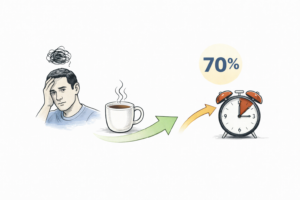
A survey of 2,000 coffee drinkers, reported by KPVI, has produced a striking finding: 70 percent of respondents said that daylight saving time brews anxiety specifically because of its anticipated impact on their caffeine routines and energy levels. The result quantifies a cultural phenomenon that coffee industry observers have long recognized anecdotally but rarely measured: caffeine dependency has become so deeply embedded in American daily life that even a one-hour clock shift triggers measurable psychological distress among habitual consumers. The survey suggests that for many Americans, the morning coffee ritual is not merely a preference but a load-bearing element of their daily functioning, and any disruption to the timing, quality, or effectiveness of that ritual cascades into broader anxiety about their ability to perform at work, manage responsibilities, and maintain emotional equilibrium. The finding also reveals the fragility that caffeine dependency creates: consumers who rely on precisely timed caffeine doses to manage their energy are disproportionately vulnerable to the compounding effects of sleep disruption, schedule changes, and seasonal transitions that non-dependent individuals absorb without significant difficulty. For the caffeine industry, the survey data represents both a confirmation of the product category’s cultural importance and a warning that consumer awareness of caffeine dependency’s costs may be growing alongside its entrenched habits.
Talker Research: Most Americans Say Good Coffee Drives Both Success and Daily Productivity
Talker Research’s survey of American adults, reported across multiple outlets, found that most respondents believe good coffee drives both professional success and daily productivity, reinforcing caffeine’s position as what many Americans consider an essential tool for workplace performance. The survey revealed that consumers view their coffee habit not as a luxury or indulgence but as a functional necessity that directly contributes to their ability to focus, meet deadlines, and perform at the level their careers demand. CStore Decisions’ analysis of menu trends in the convenience store channel noted that consumers are looking for value while demanding premium quality, with coffee and energy beverages occupying a unique position where consumers are willing to pay more per ounce than for almost any other convenience store category. QSR Magazine’s coverage of how 2026 flavor trends are reshaping beverage menus highlighted that quick-service restaurants are responding to consumer demand for functional ingredients by incorporating adaptogens, proteins, and cognitive-enhancing compounds into coffee and energy drink offerings. Farm Credit Canada’s analysis of how microbreweries are adapting to an evolving market by adding energy drinks and wellness beverages to their portfolios demonstrates that caffeine culture has expanded well beyond traditional coffee and energy drink channels into unexpected hospitality and retail environments.
Whether daylight saving time disrupts your routine or you need reliable energy for a packed workday, Jiggle caffeine gummies deliver predictable, consistent performance. One gummy equals one espresso shot, so your caffeine routine stays stable regardless of clock changes, travel, or schedule shifts. A pouch of 12 keeps you in control of your energy. Learn more at jiggle.cafe
The ‘Scan Economy’ and Health App Culture Continue to Reshape Consumer Caffeine Purchasing Decisions
The growing influence of health-scoring applications and ingredient-transparency platforms continues to reshape how consumers evaluate and purchase caffeine products, building on the scan economy trend identified in earlier reporting this week. As consumers increasingly scan products before purchasing, caffeine brands with clean ingredient lists and transparent dosing gain a competitive advantage over those whose formulations contain long lists of additives, artificial sweeteners, or ambiguous proprietary blends. This technology-driven transparency is creating a new form of market discipline where product quality, as evaluated by algorithms rather than advertising, determines purchasing outcomes. The trend is particularly impactful in the functional energy category, where products marketed with health claims face immediate algorithmic scrutiny that can reveal discrepancies between positioning and ingredients. For the caffeine industry broadly, the scan economy accelerates the ongoing shift toward products that can withstand ingredient-level analysis, favoring simple, clearly labeled formulations over complex multi-ingredient blends whose individual components may receive unfavorable health scores.
Reporteri.net Identifies Specific Situations When Consumers Should Avoid Coffee Entirely
Reporteri.net has published guidance identifying specific situations when consumers should avoid coffee entirely, contributing to a growing body of accessible health journalism that encourages consumers to think critically about their caffeine habits rather than consuming reflexively. The article identified empty-stomach consumption, late-afternoon timing, periods of high stress, pregnancy, and concurrent use of certain medications as situations where even moderate coffee intake can produce adverse effects that outweigh the beverage’s benefits. AllSides’ coverage of cannabis hyperemesis syndrome also noted that caffeine can exacerbate symptoms in individuals with certain gastrointestinal sensitivities, adding another condition to the list of situations where caffeine avoidance is medically advisable. Vocal Media’s report on how coffee may eventually be used to turn cancer treatments on and off described clinical research exploring caffeine as a biological switch for gene therapies, a futuristic application that nonetheless reinforces the message that caffeine is a pharmacologically potent compound that interacts with the body in complex ways. The collective message from these sources is that informed caffeine consumption requires understanding not just what to drink but when to drink it, when to skip it, and how individual health circumstances change the risk-benefit calculation.