
Why Morning Movement Beats Caffeine for Sustained Focus and How to Optimize Your Energy Stack
Circadian Science Challenges Caffeine’s Monopoly on Morning Productivity Rituals
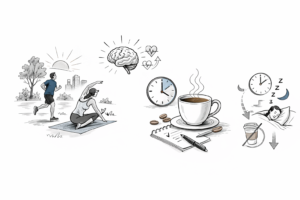
Emerging circadian science research is fundamentally challenging the assumption that caffeine is the optimal tool for morning productivity, with health experts increasingly advocating for physical movement as a superior first-line strategy for establishing sustained focus and energy throughout the workday. OnlyMyHealth’s analysis of the latest research explains that the body’s cortisol awakening response, a natural hormonal surge that occurs in the first thirty to sixty minutes after waking, provides a built-in energizing mechanism that caffeine can actually interfere with when consumed too early. By engaging in morning physical activity, whether a brisk walk, a short yoga session, or light exercise, individuals can amplify and extend this natural cortisol response while simultaneously triggering neurotransmitter cascades that support alertness, mood regulation, and cognitive flexibility. The research suggests that the optimal productivity strategy is not to replace caffeine with movement but to sequence them strategically: use movement first to establish a natural energy baseline, then introduce caffeine ninety to one hundred twenty minutes after waking when cortisol levels begin their mid-morning decline. This approach effectively extends the window of peak alertness and focus beyond what either strategy can achieve alone, while also reducing the total amount of caffeine needed to maintain productivity throughout the day.
The Hidden Productivity Cost of Caffeine Dependency: How Withdrawal Cycles Undermine Daily Output
The Vermont Cynic’s call for students to reduce energy drink consumption brings attention to a productivity paradox that extends far beyond campus life: the hidden cost of caffeine dependency on daily cognitive output. As the editorial noted, habitual caffeine consumers often do not realize that a significant portion of their daily caffeine intake is being consumed merely to relieve withdrawal symptoms, primarily headaches, fatigue, irritability, and difficulty concentrating, rather than to enhance performance above their natural baseline. This withdrawal-relief cycle means that dependent consumers are effectively paying a cognitive tax every morning, spending the first hour or more of their day performing below their natural capacity until their caffeine intake restores them to a level of function that non-dependent individuals achieve without any chemical assistance. The Hilton Head Island Packet’s coverage of daylight saving time’s impact on caffeine-dependent individuals further illustrates this vulnerability: when external factors disrupt sleep or routine, caffeine-dependent individuals experience amplified negative effects because their bodies must contend with both the disruption and the withdrawal simultaneously. For productivity-focused professionals and students, this research suggests that periodic caffeine reduction or cycling, rather than continuous escalation, may be the most effective long-term strategy for maintaining genuine cognitive performance.
Jiggle caffeine gummies are designed for the strategic caffeine approach that productivity science recommends. Each gummy delivers exactly one espresso shot, making it easy to time your intake for maximum cognitive benefit. Keep a pouch in your desk and take one at the optimal ninety-minute post-waking window. Jiggle turns caffeine into a precision tool. Learn more at jiggle.cafe
Caffeine Half-Life and Sleep Architecture: Why Your Afternoon Coffee Is Sabotaging Tomorrow’s Productivity
Caffeine half-life research brings renewed attention to one of the most overlooked factors in caffeine-based productivity strategies: the compound’s persistence in the body long after its subjective effects have faded. Caffeine’s half-life of approximately five to six hours means that a coffee consumed at 2:00 PM still has roughly half its caffeine active in the bloodstream at 7:00 or 8:00 PM, and meaningful residual amounts remain at midnight, even if the individual feels no subjective alertness. Research on sleep architecture consistently demonstrates that caffeine consumed in the afternoon, even at moderate doses, reduces the amount of deep slow-wave sleep and REM sleep that the brain requires for memory consolidation, emotional processing, and cognitive restoration. The practical consequence is that afternoon caffeine creates a compounding productivity debt: it may improve performance in the short term but degrades sleep quality, which in turn reduces natural cognitive capacity the following day, driving increased caffeine consumption in a self-reinforcing cycle. The Hilton Head Island Packet’s daylight saving time coverage underscores how fragile this balance is, as even a one-hour sleep disruption can amplify the negative effects of caffeine-degraded sleep to produce meaningful cognitive impairment the following day.
Building the Optimal Energy Stack: How to Combine Movement, Timing, and Caffeine for Peak Performance
The synthesis of today’s research across circadian science, caffeine pharmacology, and productivity optimization points toward an emerging framework that experts are describing as the optimal energy stack: a combination of morning physical movement, strategic caffeine timing, and precise dosing that maximizes sustained cognitive performance throughout the day while minimizing dependency and sleep disruption. The stack begins with morning movement to activate the circadian system and natural cortisol response, followed by delayed caffeine intake at approximately ninety minutes post-waking to extend alertness through the mid-morning productivity window. Caffeine is then managed with a strict afternoon cutoff, typically no later than 1:00 to 2:00 PM depending on individual metabolism, to protect sleep architecture. The dosing component emphasizes precision and moderation: rather than consuming large volumes of variable-strength brewed coffee, optimal performance research favors known, consistent doses that can be timed and adjusted based on daily demands. Women’s Health and AOL.com’s coverage of the neuroprotection study adds a longer-term motivation to this approach: moderate, consistent caffeine intake appears to offer brain health benefits that accumulate over years, meaning that the same strategy that optimizes daily productivity may also contribute to long-term cognitive resilience. For individuals willing to adopt this evidence-based approach, the research suggests that less caffeine, consumed more strategically, delivers better results than more caffeine consumed habitually.