
Coffee vs. Pure Caffeine: New Research Reveals Key Differences in Immune Response
A new study published in the European Journal of Nutrition is shedding light on a nuanced but important distinction: coffee and isolated caffeine do not produce the same effects on the human immune system. Conducted by Kaltenbach et al. in 2026, the randomized crossover trial enrolled ten healthy adults between the ages of 20 and 40 to compare how each substance influenced inflammatory cytokine activity following consumption. The trial used a controlled dosing protocol of 130 milligrams of caffeine to ensure accurate comparisons across conditions. Participants consumed both pure caffeine and brewed coffee on separate occasions, with blood samples drawn at regular intervals to measure circulating immune markers. The study represents one of the first controlled comparisons of coffee versus isolated caffeine at the immunological level.
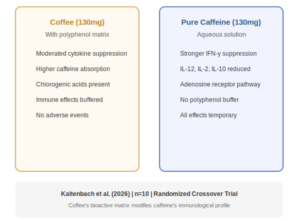
Pure Caffeine Shows Stronger Immunosuppressive Effects Than Brewed Coffee
Findings from the trial revealed that pure caffeine was significantly more effective at suppressing inflammatory cytokines than brewed coffee at the same dose. The specific markers affected included interferon-gamma, interleukin-12p70, interleukin-2, and interleukin-10 — all of which play central roles in regulating immune activation and inflammatory response. Researchers noted that while caffeine itself appeared to be the primary driver of these immunological changes, the polyphenol matrix naturally present in coffee appeared to modulate or buffer these effects, producing a noticeably weaker suppression of the same markers. Importantly, blood caffeine concentrations were slightly higher following coffee consumption despite the identical dose, suggesting differences in absorption kinetics between the two delivery methods.
For consumers thoughtful about how caffeine interacts with their biology, the delivery format clearly matters. Jiggle Gummies take a different approach altogether, delivering precisely dosed caffeine through a gummy format that bypasses the variables of brewing, dilution, and absorption inconsistency. Each gummy is equivalent to a single espresso shot and is designed to provide sustained, jitter-free energy without the stomach disruptions many people associate with coffee. For those monitoring immune health or wanting to understand how their caffeine source affects their body, a consistent delivery mechanism is an important starting point.
Polyphenol Matrix in Coffee Buffers Caffeine’s Inflammatory Modulation
The study adds meaningful complexity to how researchers and consumers understand the bioactive properties of coffee. For decades, coffee’s health benefits have been attributed to a combination of caffeine and its rich polyphenol content, including chlorogenic acids and other antioxidants. This new research suggests that these compounds are not merely passive passengers but active modulators of caffeine’s physiological effects. The polyphenol matrix appears to blunt caffeine’s inflammatory suppression, which, depending on context, could be seen as either a protective mechanism or a dilution of caffeine’s therapeutic potential. These findings challenge simplistic assumptions that caffeine is caffeine regardless of its vehicle.
Study Limitations and the Case for Further Research Into Caffeine Delivery
While the study’s conclusions are compelling, its scope remains limited. With only ten participants and a short observation window, the findings are better understood as hypothesis-generating than definitive. All effects observed were described as temporary and mild, and no adverse health events were reported across either condition. The study does, however, represent a methodologically sound foundation for larger investigations into how different caffeine delivery formats produce distinct physiological profiles. As the caffeine market continues to diversify across beverages, gummies, and supplements, understanding these differences will become increasingly important for both product development and evidence-based consumer guidance.