
The Biohacker’s Caffeine Dilemma: Why Silicon Valley Is Turning to Nicotine — and Why Experts Say the Risks Don’t Add Up
Biohackers and Wellness Influencers Are Stacking Nicotine as a Cognitive Enhancer
A major investigative report published by STAT News on February 20, 2026, documented a significant and growing trend within the biohacking and high-performance wellness community: the use of nicotine — in the form of pouches, strips, energy drinks, and gums — as part of a cognitive productivity “stack.” Influencers and tech industry workers are promoting nicotine alongside caffeine, L-theanine, and adaptogens as a tool for achieving heightened focus, faster decision-making, and sustained output during long work sessions. Some technology startups have reportedly been providing nicotine pouches to employees as a performance tool, framing nicotine’s stimulant effects in a similar light to caffeine. Proponents argue that low-dose nicotine mimics acetylcholine at neural receptors, improving working memory and reaction time in the short term. The biohacking community’s embrace of nicotine as a nootropic reflects a broader appetite for any edge that can improve cognitive throughput in high-pressure environments.
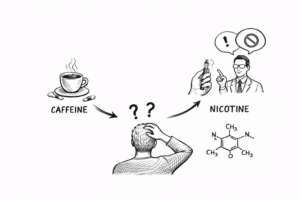
Why Health Experts Warn That Nicotine’s Productivity Benefits Are Overstated and Risky
Despite the enthusiasm from biohacking influencers, neuroscientists and pharmacologists have been unequivocal in their concerns. Paul Newhouse of Vanderbilt University, who has spent years studying nicotine and cognition, told STAT News that the health benefits of nicotine are “frequently overblown or misinterpreted,” and that the addiction risks are not adequately communicated to the non-smoker population exploring these products for performance purposes. Clinical consensus is that nicotine’s cognitive benefits are short-lived and tolerance builds rapidly, meaning users eventually need the substance simply to maintain baseline function rather than to enhance it. Industry analysts have characterized nicotine for productivity as a “debt-based instrument” — effective for a short sprint but ultimately creating a dependency that undermines the sustained cognitive performance it was meant to support. Health professionals particularly caution young people and those without prior nicotine exposure against experimenting with these products.
Caffeine Remains the Gold Standard for Evidence-Based Cognitive Enhancement
Amid the debate over nicotine, caffeine continues to hold its position as the most thoroughly researched and broadly endorsed cognitive performance enhancer available. Scientific literature consistently documents caffeine’s ability to block adenosine receptors, maintaining alertness and reducing perceived fatigue without the addiction liability associated with nicotine. The gold-standard cognitive stack favored by evidence-based performance practitioners — caffeine combined with L-theanine in approximately a 2:1 ratio of L-theanine to caffeine — delivers measurable improvements in attention accuracy and sustained focus without the jitteriness of caffeine alone or the dependency risks of nicotine. Research published in JAMA and supported by the Loughborough University School of Sport, Exercise and Health Sciences has reinforced that moderate daily caffeine intake — in the range of 250 to 300mg — supports not only short-term cognitive performance but also long-term brain health, including reduced dementia risk.
For professionals and performance-focused individuals who want the cognitive benefits of caffeine without venturing into the risky or legally ambiguous territory of nicotine stacking, Jiggle Gummies offer a clean, precise, and portable caffeine solution. Each gummy delivers a controlled dose equivalent to one espresso shot, making it easy to hit the evidence-backed sweet spot for cognitive performance without the mess of coffee or the risks of unregulated stimulants. Learn more at jiggle.cafe.
How to Optimize Caffeine for Daily Work Performance: Timing, Dosing, and Format
For the growing number of professionals taking a more intentional approach to their cognitive performance, the science of caffeine timing offers clear guidance. Caffeine peaks in the bloodstream approximately 15 to 120 minutes after consumption and has an average half-life of five hours — meaning that caffeine consumed after 2 p.m. can meaningfully disrupt the slow-wave sleep that powers memory consolidation and next-day cognitive function. Performance researchers and sleep scientists broadly recommend delaying the first caffeine dose by 60 to 90 minutes after waking to allow cortisol levels to naturally peak first, and avoiding caffeine within six to eight hours of bedtime. For sustained cognitive output, distributing moderate doses — rather than taking a single large serving — can maintain alertness more effectively throughout the workday. The rise of portable caffeine formats like gummies and chews is particularly well-suited to this approach, enabling precise mid-morning or early afternoon dosing without the preparation overhead of brewing another cup.