
Nicotine in the Gray Zone: How Biohacking Trends Are Challenging Caffeine and Stimulant Regulation in 2026
FDA Draws a Line on Unauthorized Nicotine Products as Biohackers Push Boundaries
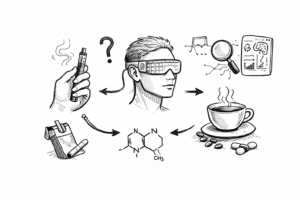
A detailed investigative report published by STAT News on February 20, 2026, revealed that a growing number of startups and wellness influencers are marketing nicotine pouches and nicotine-infused energy drinks as cognitive productivity enhancers — in some cases selling products not yet authorized by the U.S. Food and Drug Administration. The FDA has made clear that the only nicotine pouches currently authorized for sale in the United States are Zyn and on!, both backed by Altria Group. Other nicotine delivery products circulating in the wellness and biohacking space exist in a legal gray area, with the FDA stating that its compliance actions could include “issuing a warning letter to the company, injunction, or initiating a seizure of the illegal products.” One startup whose energy drink contains nicotine from yerba mate alongside caffeine told STAT it is “caught in that same gray area,” hoping regulators will provide clearer guidance. The company was nearly sold out of its initial run of 250,000 cans sold online and in select Southeastern U.S. stores.
Health Experts Warn of Addiction and Downplayed Risks in Nicotine Wellness Products
While biohackers cite anecdotal and selective research to support the use of nicotine as a cognitive enhancer, health experts are raising significant concerns about the risks being glossed over in wellness marketing. Paul Newhouse, a professor of psychiatry and pharmacology at Vanderbilt University who studies nicotine and cognition, noted that while some studies show cognitive benefits from nicotine, these findings are frequently overstated or misinterpreted in the biohacking community. Of particular concern is the population of non-smokers and young adults beginning to use nicotine products not for cessation purposes, but as productivity tools. Nicotine is a highly addictive substance, and products that normalize its use outside of established cessation frameworks present long-term public health risks. Regulatory bodies and health professionals are watching these developments closely, as the FDA lacks a comprehensive regulatory framework specifically designed for the emerging class of functional nicotine products being marketed to health-conscious consumers.
Brazil’s Tax Reform and the Regulatory Future of Global Coffee Markets
Regulatory action affecting the caffeine industry is not limited to novel products. In Brazil, the world’s largest coffee producer, sweeping tax reform legislation passed in 2024 will reshape the economics of the coffee sector beginning in 2026. Under the reform, a new value-added tax system takes effect this year, with food staples, including coffee, explicitly exempted from the new tax structure. Additionally, Brazil’s government has committed approximately $800 million in infrastructure investment in roads and ports through 2025 to improve logistics for agricultural exports — a direct response to longstanding bottlenecks that have inflated transportation costs for coffee producers. Separately, an additional 40% tariff on Brazilian coffee imports to the United States, layered on top of an existing 10% tariff introduced in April 2025, has had notable ripple effects on the supply chain, reducing export volumes and prompting the Brazilian government to offer credit relief to affected producers through its Sovereign Brazil Plan.
As regulatory uncertainty swirls around both novel stimulant products and traditional coffee markets, Jiggle Gummies offer consumers a clearly defined, transparent caffeine product. Each gummy contains a measured dose of caffeine — no proprietary blends, no unauthorized stimulants, and no regulatory ambiguity. For health-conscious consumers navigating an increasingly complex stimulant landscape, Jiggle provides peace of mind alongside convenience. Learn more at jiggle.cafe.
Policy Debates Around Energy Drink Labeling and Youth Protection
Consumer advocacy groups and public health officials continue to push for stronger labeling requirements and marketing restrictions on energy drinks, particularly as new research connects high taurine content in these beverages to potential risks for people with blood cancers. The current patchwork of federal and state-level regulations leaves significant room for interpretation, and advocacy organizations have called on the FDA to establish clearer standards for caffeine content disclosure, age-restricted marketing, and mandatory health advisory language on products targeting young consumers. Meanwhile, the biohacking community’s embrace of nicotine as a performance supplement has reinvigorated calls for the FTC and FDA to jointly review how cognitive enhancement claims are made and substantiated across all stimulant categories — not just caffeine. The coming months are likely to see increased regulatory scrutiny across this entire space.