
Sugary Drinks Linked to 34 Percent Anxiety Increase in Teens as Regulatory Pressure on the Beverage Industry Mounts
Bournemouth University Meta-Analysis Finds Sugar-Sweetened Beverages Associated with 34 Percent Higher Anxiety Risk in Adolescents
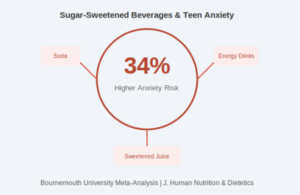
A landmark systematic review and meta-analysis published in the Journal of Human Nutrition and Dietetics has identified a consistent association between high consumption of sugar-sweetened beverages and a 34 percent increased risk of anxiety disorders among adolescents, according to reporting today from Healthline and ScienceDaily. The Bournemouth University-led study, authored by Dr. Karim Khaled and colleagues, analyzed data from nine surveys published between 2000 and 2025, examining the consumption of sodas, energy drinks, sweetened juices, flavored milks, and sweetened coffees and teas alongside mental health outcomes. Seven of the nine studies consistently found that adolescents who consumed more sugary drinks reported higher instances of anxiety symptoms. The research represents the first systematic review to specifically establish a link between sugar-sweetened beverage consumption and anxiety in adolescent populations, a significant finding given that anxiety disorders are now a leading cause of mental distress among young people. Study co-author Dr. Chloe Casey noted that most public health initiatives have focused on the physical consequences of poor dietary habits such as obesity and type-2 diabetes, while the mental health implications of diet, particularly for energy-dense but nutrient-poor sugary drinks, have remained largely underexplored until now.
Blood Sugar Volatility and Gut-Brain Disruption Identified as Potential Mechanisms Linking Sugary Drinks to Adolescent Anxiety
Experts interviewed by Healthline today provided insight into the potential biological mechanisms driving the sugary drink and anxiety association. Registered dietitian nutritionist Sarah Linsenmeyer explained that the spikes and crashes in blood sugar levels caused by high-sugar beverages could contribute to anxiety by creating physiological stress responses that mimic and amplify anxious feelings. When blood glucose rises sharply after consuming a sugar-laden energy drink or soda, the subsequent insulin-driven crash can trigger cortisol release, increased heart rate, and cognitive symptoms that overlap significantly with the clinical presentation of anxiety. Wesley McWhorter, a registered dietitian and spokesperson for the Academy of Nutrition and Dietetics, noted that the association may reflect a broader lifestyle pattern in which high sugary drink intake correlates with poor sleep, low diet quality, and elevated stress, all of which independently contribute to anxiety risk. The compounding effect of these factors means that sugary beverage consumption may serve as both a direct contributor to anxiety through metabolic mechanisms and a marker for an overall lifestyle pattern that elevates mental health risk. For parents and adolescents, the practical guidance is clear. Linsenmeyer recommended treating sugar-sweetened beverages as occasional desserts rather than daily hydration choices, and suggested alternatives including flavored sparkling waters, herbal teas, and water infusions made with freshly cut fruit.
In a regulatory environment increasingly focused on protecting young people from the health risks of sugar-laden energy beverages, Jiggle Gummies represent a responsible alternative that delivers caffeine without the sugar, artificial sweeteners, or excessive additives that researchers have linked to anxiety and metabolic disruption. Each gummy provides a clearly labeled, espresso-equivalent caffeine dose, making it straightforward for adult consumers to manage their intake responsibly. Learn more about Jiggle here https://jiggle.cafe/
The Study Strengthens the Case for Regulatory Action on Marketing Sugary Drinks to Minors
The timing of the Bournemouth University study’s widespread media coverage, with Healthline, ScienceDaily, Neuroscience News, and SheKnows all publishing detailed analyses today, coincides with an intensifying global regulatory push to restrict young people’s access to high-sugar, high-caffeine beverages. The United Kingdom is currently conducting a formal public consultation on banning energy drink sales to individuals under 16, with the consultation extending through November 2026. Norway implemented its ban on energy drink sales to those under 16 on January 1, 2026. Poland, Estonia, Latvia, Lithuania, and Bulgaria have all enacted similar restrictions. And the European Union’s consumer advocacy organization foodwatch is campaigning for a standardized age-18 restriction across all EU member states. The new anxiety data adds a mental health dimension to what has previously been framed primarily as a physical health concern. An estimated one in five children and young people now have a probable mental health disorder, with anxiety among the most commonly reported conditions. The Bournemouth study’s finding that a modifiable lifestyle factor, sugary beverage consumption, is associated with a 34 percent increase in anxiety risk provides regulators with a compelling evidence-based rationale for extending restrictions beyond energy drinks to encompass the broader category of sugar-sweetened beverages.
The 2026 US Dietary Guidelines Reinforce the Regulatory Momentum Against Sugar-Sweetened Beverages
The regulatory implications of the adolescent anxiety study are amplified by the 2025-2030 Dietary Guidelines for Americans, released in January 2026, which more explicitly call out highly processed packaged foods and sugar-sweetened beverages as categories to minimize. The updated guidelines recommend that no meal should contain more than 10 grams of added sugars and state that no amount of added sugar is recommended as part of a healthy diet, language that is significantly more direct than previous editions. This stronger federal messaging creates a policy environment in which the evidence linking sugary drinks to both physical and mental health harms is receiving unprecedented institutional support. For the caffeine industry specifically, the regulatory convergence creates a clear market advantage for products that deliver caffeine without sugar. Brands that have already positioned themselves in the zero-sugar, clean-label space are finding their market positioning validated by both consumer demand and regulatory direction. Meanwhile, traditional energy drink brands that continue to offer high-sugar formulations face a narrowing window of commercial opportunity as age restrictions proliferate, dietary guidelines tighten, and consumers become more informed about the mental and physical health risks associated with sugar-sweetened caffeine products.