
From Plastic-Free Brewers to Powdered Wellness Mixes: How Alternative Formats Are Redefining Daily Caffeine
True Lemon Elevate Enters the Clean Energy Space with L-Theanine, GABA, and Green Tea Caffeine
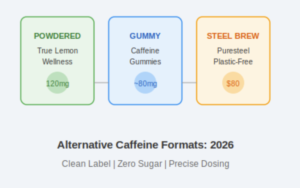
True Citrus’s launch of True Lemon Wellness Elevate, reported by BevNET and PR Newswire today, represents one of the most significant entries into the alternative energy space from an established consumer brand. The powdered drink mix combines 120 milligrams of natural caffeine from green tea with L-Theanine, a compound widely studied for its ability to promote calm alertness without the jitters that accompany high-caffeine beverages. The formula also incorporates GABA, a neurotransmitter precursor associated with stress reduction, and a full complement of B vitamins to support metabolic energy production. At zero sugar with no artificial sweeteners, Elevate competes directly with energy drinks on functional benefit while dramatically undercutting them on potential health risks. The product’s powdered format offers distinct advantages for consumers seeking caffeine alternatives. A single packet transforms a glass of water into a functional energy beverage in seconds, requires no refrigeration or brewing equipment, and generates zero single-use packaging waste beyond the paper packet itself. For consumers who have grown frustrated with the limited choice between coffee, tea, and canned energy drinks, the emergence of high-quality powdered energy mixes with transparent ingredient profiles represents a genuinely new category in the caffeine landscape.
The Puresteel Coffee Maker Addresses a Hidden Health Risk Most Coffee Drinkers Have Never Considered
The launch of the Puresteel plastic-free coffee maker, reported today by Inc. Magazine, addresses an emerging consumer concern that is reshaping how people think about their daily caffeine ritual. Former SpaceX engineer JC Foster’s decision to leave aerospace and build what he describes as an affordable, convenient, plastic-free coffee maker speaks to the growing body of research linking microplastic exposure to adverse health outcomes. A ConsumerAffairs investigation earlier this year found that high brewing temperatures, especially those above 170 degrees Fahrenheit, can accelerate the breakdown of plastic components inside conventional coffee makers, releasing microplastic particles into beverages through water reservoirs, tubing, and internal filters. The concern extends beyond coffee makers to single-serve pod systems, where plastic capsules are exposed to heat and pressure during every brew cycle. Research has documented that hot liquids in contact with plastic components can release hundreds to thousands of microplastic particles per liter. The Puresteel’s all-metal construction at an 80-dollar price point democratizes access to plastic-free brewing, which previously required investing in specialty equipment costing hundreds or thousands of dollars. For the alternative caffeine format market, the microplastic conversation is creating unexpected tailwinds for non-brewed caffeine products that eliminate the hardware-related contamination risk entirely.
Functional Coffee Market Growth Creates a Massive Runway for Non-Traditional Caffeine Delivery Systems
The openPR market report projecting functional coffee will reach 51 billion USD by 2035 provides crucial context for understanding why alternative caffeine formats are experiencing such rapid adoption. The broader functional beverages market is valued at approximately 281 billion USD in 2025 and is projected to reach 682 billion USD by 2035 at a 9.4 percent compound annual growth rate, according to InsightAce Analytic. Within this landscape, consumers are not simply switching from one caffeine format to another but rather assembling personalized daily energy routines from multiple products. The morning coffee, mid-morning gummy, afternoon powdered energy mix, and pre-workout gel can all coexist within a single individual’s routine, expanding the total addressable market for caffeine far beyond what any single product category could capture. The brands that are winning in this environment share common characteristics: transparent ingredient labels, precisely dosed caffeine content, zero or minimal sugar, functional ingredients beyond caffeine alone, and packaging formats optimized for portability and convenience. The transition from a beverage-dominated caffeine landscape to a multi-format ecosystem represents the most significant structural shift in the caffeine industry since the emergence of energy drinks in the early 2000s.
Jiggle Gummies occupy a distinctive position in this expanding alternative caffeine landscape, delivering the clean energy that health-conscious consumers demand in a format that eliminates every friction point associated with traditional caffeine. No brewing equipment means no microplastic risk, no spills, and no cleanup. Each resealable pouch contains 12 gummies that fit in a pocket or bag, making consistent caffeine intake possible in any environment. Learn more about Jiggle here https://jiggle.cafe/
The Multi-Format Caffeine Consumer Demands Transparency, Portability, and Precise Dosing Above All Else
The convergence of today’s news stories, from True Citrus’s powdered wellness mixes to Puresteel’s plastic-free brewer to the functional coffee market’s explosive growth projections, reveals a consumer base that has fundamentally recalibrated its expectations for caffeine products. The modern caffeine consumer treats their daily intake as a health-informed decision, evaluating products not just on taste and price but on ingredient transparency, sugar content, functional benefit, environmental impact, and even the materials their brewing equipment is made from. This represents a dramatic evolution from the era when caffeine consumption was driven primarily by habit, convenience, and brand loyalty. For the caffeine industry, the implications are clear. Products that can demonstrate clean ingredient profiles, precise caffeine dosing, alignment with the moderate intake levels supported by current research, and convenient formats optimized for modern lifestyles are capturing market share from traditional offerings that rely on marketing rather than substance. The functional beverage market’s projected growth from 281 billion to 682 billion USD by 2035 quantifies the commercial opportunity available to brands that meet these elevated consumer expectations, while the struggles of brands that cannot adapt serve as a cautionary reminder of the cost of complacency.