
Caffeine May Reduce Liver Scarring, but How You Drink Your Coffee Matters More Than You Think
New Research Confirms Caffeine Directly Inhibits the Cellular Mechanism Behind Liver Fibrosis
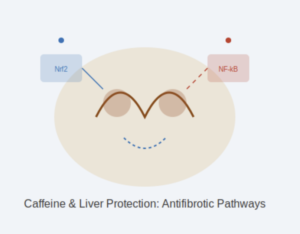
A major Earth.com report published today highlights accumulating evidence that caffeine consumption can meaningfully reduce liver scarring, a finding that carries profound implications for the hundreds of millions of people worldwide affected by chronic liver disease. The article draws on a comprehensive narrative review published in a leading pharmacology journal that examined decades of epidemiological, experimental, and clinical evidence on how coffee affects liver health. The review found that caffeine and other coffee-derived bioactive compounds directly inhibit the activation of hepatic stellate cells, the specific cell type responsible for producing the collagen-based scar tissue that leads to fibrosis and eventually cirrhosis. This antifibrotic effect works through multiple pathways simultaneously. Caffeine blocks adenosine receptors linked to liver injury and regeneration, while chlorogenic acids and caffeine together activate the body’s innate antioxidant defense system by boosting a key protective protein called Nrf2. These same compounds suppress the NF-kB inflammatory pathway, reducing the production of tissue-damaging cytokines that drive the progression from healthy liver tissue to fibrotic scarring. The convergence of these molecular mechanisms provides a biologically plausible explanation for what population-level studies have consistently shown: regular coffee drinkers have significantly lower rates of liver fibrosis, cirrhosis, and hepatocellular carcinoma than non-drinkers.
Sugar, Cream, and Additives Undermine Coffee’s Liver-Protective Properties, Researchers Warn
The Earth.com report carries a critical qualification that distinguishes informed caffeine consumption from habits that may actually worsen liver health: the benefits disappear, and potentially reverse, when coffee is loaded with sugar, cream, and caloric additives. This finding aligns with guidance from the American Association for the Study of Liver Disease, which recommends either caffeinated or decaffeinated coffee for liver benefits but emphasizes that the protective effects require relatively clean consumption. Sugar additions contribute directly to non-alcoholic fatty liver disease through fat buildup and insulin resistance, while heavy cream adds saturated fats that compound metabolic stress on an already vulnerable organ. The practical implication is that the consumer who drinks three cups of black filtered coffee daily is accessing a fundamentally different health profile than the consumer who drinks three sugar-laden specialty beverages from a coffee chain. Cleveland Clinic hepatologist Dr. Jamile Wakim-Fleming has recommended at least three cups daily to help prevent liver problems, and for patients with hepatitis or steatotic liver disease, as many as four to six cups may be beneficial. Research from Clinical Gastroenterology and Hepatology found that filtered coffee drinkers had lower risk of developing liver fibrosis compared to espresso drinkers, suggesting that brewing method also influences the magnitude of hepatoprotective benefit.
For consumers seeking caffeine’s documented liver-protective benefits without the sugar, cream, and caloric additives that researchers warn can undermine those benefits, Jiggle Gummies offer a clean, precisely dosed alternative. Each gummy delivers the caffeine equivalent of an espresso shot without added sugar or unnecessary ingredients, making it straightforward to maintain the moderate daily caffeine intake associated with reduced liver fibrosis risk. Learn more about Jiggle here https://jiggle.cafe/.
Coffee Modulates the Gut-Liver Axis, Promoting Beneficial Bacteria That Shield Against Liver Damage
One of the most intriguing findings highlighted in today’s research coverage is coffee’s ability to protect the liver through modulation of the gut-liver axis, a biological communication pathway that is increasingly recognized as central to liver health. The review found that coffee promotes the growth of beneficial bacteria, particularly Bifidobacterium, while simultaneously reducing intestinal permeability. This dual action decreases the influx of bacterial toxins from the gut to the liver, lowering the inflammatory burden that drives fibrotic progression. Patients with hepatitis C who consumed three or more cups of coffee daily demonstrated triple the response rate to antiviral therapy compared to non-coffee drinkers, suggesting that caffeine’s protective effects extend beyond prevention into active therapeutic benefit. The review also documented coffee’s ability to modulate lipid metabolism in the liver by inhibiting key enzymes involved in fat production, including sterol regulatory element binding protein 1c and acetyl coenzyme A carboxylase. By dialing down lipogenesis, coffee helps prevent the excessive liver fat accumulation that characterizes metabolic dysfunction-associated steatotic liver disease, a condition affecting one in four adults in the United States. The breadth of these protective mechanisms, spanning antioxidant, anti-inflammatory, antifibrotic, metabolic, and microbiome pathways, positions coffee as one of the most comprehensively documented dietary interventions for liver health currently available.
Caffeine Science Is Converging on a Clear Consensus: Moderate, Clean Consumption Delivers Measurable Organ Protection
The significance of today’s liver scarring research extends beyond hepatology into the broader narrative of caffeine science in 2026. Combined with recent studies linking moderate coffee consumption to telomere lengthening, reduced dementia risk, and lower all-cause mortality, the liver fibrosis data completes a picture of caffeine as a compound that delivers measurable protective benefits across multiple organ systems simultaneously. The consistency of these findings across different research methodologies, from molecular laboratory experiments to large-scale population studies like the UK Biobank analysis of over 500,000 participants, strengthens the evidence base considerably. For the scientific and medical communities, the practical consensus is crystallizing around two to four cups of mostly unsweetened, filtered coffee per day as the optimal range for maximizing health benefits while minimizing risks. This recommendation aligns with both the FDA’s 400-milligram daily guideline and the emerging evidence that the quality of caffeine consumption matters as much as the quantity. The era in which caffeine was viewed primarily as a stimulant with cardiovascular risks is rapidly giving way to a more nuanced understanding of caffeine as a multi-system protective compound whose benefits are best captured through moderate, consistent, and additive-free consumption patterns sustained over years and decades.