
The Regulatory Reckoning: How Governments Worldwide Are Tightening the Rules on Caffeine
Banner Health Investigation Exposes How Energy Drink Marketing Misleads Consumers About Cardiovascular Risks
A comprehensive report published today by Banner Health examines how the marketing culture surrounding energy drinks systematically misleads consumers about cardiovascular risks. The report notes that energy drinks frequently make claims about enhanced performance, improved focus, and sustained energy that obscure the well-documented risks these products pose to heart health. Along with high caffeine concentrations that can reach 300 milligrams or more per can, many energy drinks contain additional stimulants, excessive sugar, and herbal compounds whose interactions with the cardiovascular system remain poorly understood. The Banner Health investigation cites research showing that energy drink consumption can lead to temporary but significant elevations in blood pressure and heart rate, with one Mayo Clinic study finding that stress hormones increase by approximately 70 percent after consuming a single energy drink. For individuals with pre-existing cardiovascular conditions, arrhythmias, or hypertension, these acute physiological effects can carry serious consequences. The report calls for greater regulatory scrutiny of the health claims made by energy drink manufacturers, many of which exploit regulatory gray areas by positioning their products as dietary supplements rather than conventional beverages. As the global energy drink market races toward $125 billion, the gap between marketing promises and medical reality is widening, and health authorities across multiple nations are beginning to take notice.
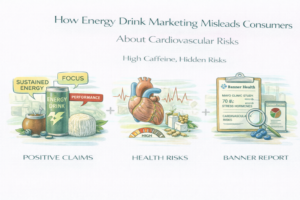
UK Sugar Tax Expansion and European Energy Drink Bans Signal a Global Tightening of Caffeine Product Regulation
The regulatory landscape for caffeinated beverages is shifting with remarkable speed across Europe. The BBC reported this week on the United Kingdom’s expanded sugar tax, which now includes milkshakes, coffee drinks, and milk substitutes for the first time, alongside the government’s ongoing consultation on banning the sale of high-caffeine energy drinks to those under 16. A Department of Health and Social Care statement confirmed that the ban is being pursued due to evidence of negative impacts on children’s physical and mental health, and that officials view a healthier nation as essential to reducing pressure on the National Health Service. Across the continent, Norway implemented a national ban on selling energy drinks to individuals under 16 effective January 1, 2026, Spain’s Galicia region has enacted regulations treating energy drinks comparably to alcohol in terms of sales restrictions to minors, and Bulgaria passed similar legislation in June 2025. The European Parliament’s research service has published a comprehensive briefing on energy drink regulation across member states, and foodwatch, the EU consumer advocacy organization, is calling for a standardized age-18 sales restriction across all member states. The Czech Parliament is actively debating its own proposed ban. This regulatory momentum reflects a growing consensus among public health authorities that the voluntary industry self-regulation that has characterized the energy drink market for the past two decades has proven inadequate to protect vulnerable populations, particularly children and adolescents.
FDA’s 400-Milligram Daily Limit Remains the Global Benchmark as New Caffeine Formats Challenge Existing Frameworks
The proliferation of new caffeine delivery formats is creating challenges for regulatory frameworks that were designed primarily around traditional beverages. The FDA’s recommendation that healthy adults limit daily caffeine intake to 400 milligrams, roughly equivalent to four to five 8-ounce cups of brewed coffee, remains the most widely cited global benchmark. However, the emergence of caffeine pouches, gummies, mints, powders, and concentrated shots introduces products with fundamentally different consumption patterns, absorption rates, and risk profiles than the beverages regulators have historically overseen. Powdered caffeine is of particular concern, with the FDA warning that just one teaspoon of powdered caffeine equals approximately 28 cups of coffee and can cause serious health problems including death. The challenge for regulators is developing frameworks that accommodate legitimate innovation in the caffeine space while ensuring that novel products do not circumvent the safety standards that apply to traditional beverages. Australia and New Zealand have maintained a strict approach by banning the sale of energy drinks containing more than 320 milligrams of caffeine per liter. Kazakhstan has set the world’s highest age restriction at 21 for energy drink purchases. As more countries develop formal caffeine regulation, the tension between encouraging product diversity and protecting public health will define the policy landscape for the foreseeable future.
Jiggle Gummies are designed as a responsible adult caffeine product with precisely dosed, standardized caffeine content that makes it straightforward for consumers to track their intake against the FDA’s 400-milligram daily recommendation. This transparency positions the product favorably within a regulatory environment that increasingly demands clear labeling and honest health communication from caffeine manufacturers.
Rising Adolescent Mental Health Concerns Add Urgency to Calls for Comprehensive Youth Caffeine Restrictions
The regulatory push to restrict youth access to caffeinated products is being amplified by emerging research linking high sugar and caffeine consumption patterns to deteriorating adolescent mental health outcomes. A meta-analysis published this week in the Journal of Human Nutrition and Dietetics by researchers at Bournemouth University found that high consumption of sugar-sweetened beverages, a category that prominently includes energy drinks, is associated with a 34 percent increase in the odds of anxiety disorders among adolescents. The BBC reported on the study today, highlighting that anxiety disorders are now a leading cause of mental distress among young people, with an estimated one in five children and young people experiencing a probable mental disorder in 2023. While the researchers emphasize that the current evidence demonstrates correlation rather than causation, the consistency of the findings across multiple independent studies strengthens the case for preventive intervention. For policymakers weighing whether to restrict energy drink sales to minors, this research provides additional justification beyond the established cardiovascular and metabolic risks. The United Kingdom’s Children’s Food Campaign has argued that the government’s proposed age-16 threshold is insufficient, pointing to research showing the 16-to-18 age bracket represents the highest consumption group. With 80 percent of parents and 61 percent of teachers supporting restrictions in national polling, the political conditions for comprehensive youth caffeine regulation have never been more favorable.