
Beyond the Can: How Plant-Based Beverages and Clean Caffeine Are Reshaping the Energy Category
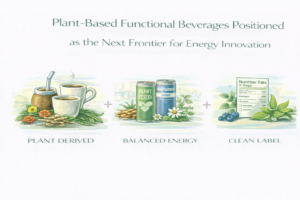
Plant-Based Functional Beverages Positioned as the Next Frontier for Energy Innovation
A major industry report published today by Food Manufacture explores the rapidly evolving landscape of plant-based functional beverages and concludes that the category is poised to be one of the defining growth stories in the food and beverage industry over the coming years. The report highlights a fundamental shift in how consumers conceptualize energy, moving away from traditional stimulant-heavy formulations toward beverages that leverage plant-derived compounds for sustained alertness, mood support, and cognitive enhancement. Ingredients like yerba mate, guayusa, matcha, lion’s mane mushroom, cordyceps, and adaptogenic herbs such as ashwagandha and rhodiola are increasingly appearing in mainstream products rather than being confined to specialty health food stores. This shift is driven by a consumer base that has grown deeply skeptical of artificial ingredients, synthetic caffeine, and the sugar-loaded formulations that have historically dominated the energy drink market. Manufacturers are responding with innovations that combine plant-based caffeine sources with complementary functional compounds designed to smooth out the energy curve, reduce jitteriness, and provide auxiliary benefits such as gut health support and stress reduction. The timing of this transition is significant, as expanding sugar levies in the United Kingdom and Europe are creating regulatory tailwinds that favor cleaner, lower-sugar formulations over the high-sugar energy drinks that currently dominate convenience store shelves.
Barron Trump’s Yerba Mate Venture Signals Growing Mainstream Appeal of South American Caffeine Alternatives
The announcement that Barron Trump is a co-director of SOLLOS Yerba Mate Inc. has brought unprecedented mainstream media attention to a caffeine alternative that has been steadily building a devoted following among health-conscious American consumers. Yerba mate, derived from the leaves of the Ilex paraguariensis plant native to South America, delivers caffeine alongside a unique blend of theobromine, theophylline, and polyphenols that proponents say produces a smoother, more sustained energy experience than coffee. The SOLLOS venture, described by its co-founders on LinkedIn as a lifestyle beverage brand built around clean and functional ingredients, has already raised $1 million through a private placement with the Securities and Exchange Commission and plans to launch to consumers in the spring of 2026. The company’s co-founder Spencer Bernstein, a Villanova University student, has taken a semester off to focus entirely on the brand, while co-founder Stephen Hall, a University of Notre Dame student and former classmate of Trump’s at Oxbridge Academy, has done the same. The entry of young, well-connected entrepreneurs into the yerba mate space reflects a broader generational shift in caffeine preferences. For Gen Z consumers who have grown up surrounded by wellness culture and clean-label branding, yerba mate’s positioning as a natural, functional, and culturally distinctive alternative to coffee and energy drinks holds significant appeal, and the market is responding accordingly.
Within this expanding universe of energy alternatives, Jiggle Gummies occupy a distinctive middle ground for consumers who want caffeine but prefer a format that is cleaner, more portable, and more precisely dosed than traditional beverages. The gummy delivers sustained, jitter-free energy in a resealable pouch that requires no brewing, no refrigeration, and no cleanup, making it one of the most practical caffeine alternatives available on the market today.
Caffeine-Free Energy Products Reach a $2 Billion Market as Consumers Seek Stimulation Without Stimulants
One of the most counterintuitive developments in the energy category is the explosive growth of caffeine-free energy drinks, a segment that barely existed five years ago but has now reached estimated market valuations of up to $2.06 billion according to industry research. These products leverage compounds such as B vitamins, adaptogens, amino acids, and natural botanicals to deliver perceived energy and focus benefits without any caffeine content whatsoever. For consumers who are sensitive to caffeine, who have been advised by physicians to limit stimulant intake, or who simply prefer to avoid the tolerance and withdrawal dynamics associated with regular caffeine use, these products represent a genuinely new category rather than a reformulation of existing ones. Brands like Bubbl’r, headquartered in Wisconsin, have gained meaningful market traction by offering clean-label energy beverages that provide a steady state of alertness through non-stimulant pathways. The rise of this segment reflects a sophisticated understanding among modern consumers that energy is a multifactorial experience influenced by hydration, nutrition, sleep quality, and stress management, not merely the presence or absence of a stimulant molecule. For the broader caffeine industry, the growth of caffeine-free energy products represents both a competitive challenge and a validation of the functional beverage premise, demonstrating that consumers are willing to pay premium prices for products that promise better energy management regardless of caffeine content.
Multi-Format Caffeine Stacking Becomes the Norm as Consumers Build Personalized Daily Energy Routines
Consumer research continues to confirm that the era of single-source caffeine loyalty is ending, replaced by a new paradigm in which individuals assemble personalized daily energy routines from multiple caffeine products and formats. Research from Neuro, the caffeinated nootropic gum and mints brand, conducted in partnership with Numerator found that 92 percent of its customers also drink coffee and over 78 percent also consume energy drinks, meaning these products are not substitutes but complements within a broader energy ecosystem. This behavior, described by industry analysts as caffeine stacking, reflects consumers treating different caffeine formats as tools for different occasions throughout the day: coffee for the morning ritual, a gummy or mint for the mid-morning focus boost, an energy drink for the afternoon workout, and perhaps a caffeinated tea for the evening wind-down. For manufacturers and retailers, the implications are significant. Products are no longer competing in a zero-sum market where one format’s gain is necessarily another’s loss. Instead, the total addressable market for caffeine products is expanding as consumers increase their overall number of caffeine touchpoints. The companies best positioned to benefit from this trend are those that offer distinctive formats that fit naturally into moments the existing beverage-heavy landscape leaves underserved, moments that demand speed, discretion, portability, or precise dosing over volume and ritual.