
Consumer Behavior & Culture: Caffeine Stacking Becomes the Dominant Consumer Trend as Enthusiasts Build Multi-Format Energy Routines
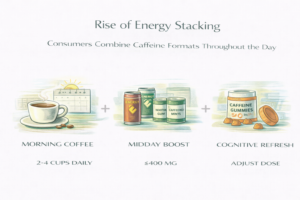
A fundamental shift in consumer behavior is reshaping the caffeine industry as an increasing number of consumers adopt multi-format energy routines, combining traditional coffee, energy drinks, caffeinated mints, nootropic gums, and other novel products into personalized daily stacks. Research conducted by Neuro in partnership with consumer data platform Numerator revealed that 92 percent of Neuro’s caffeinated gum and mint customers also drink coffee, and over 78 percent also consume energy drinks, with these consumers actually consuming more caffeine products than the average person. Rather than replacing one caffeine source with another, consumers are layering different products across different moments and contexts throughout their day, a behavior that Jennifer Chang, Neuro’s vice president of innovation and product strategy, describes as building energy stacks. This trend reflects a broader cultural shift in how people think about energy management. Caffeine is no longer viewed as a single-source solution but as a toolkit that consumers assemble based on their specific needs at any given moment, whether that is a morning coffee ritual for focus, a midday energy drink for physical performance, or an afternoon mint for a quick cognitive refresh. For the industry, this behavioral evolution means that different caffeine product categories are not competing in a zero-sum game but are collectively expanding the addressable market as consumers increase their total caffeine touchpoints throughout the day.
Two-Thirds of Americans Now Drink Coffee Daily as the Culture of Caffeine Consumption Deepens
Coffee culture in America continues to deepen and broaden, with data from the National Coffee Association showing that two-thirds of Americans now drink coffee every single day. This figure represents a significant and sustained increase from 57 percent in 2016 to 62 percent in 2017 and continuing upward, reflecting the beverage’s entrenched position in American daily life. The cultural significance of coffee extends far beyond its functional role as a stimulant. For millions of Americans, the morning coffee ritual serves as a psychological anchor, a moment of personal routine and comfort that signals the start of the productive day. The specialty coffee movement has further elevated coffee from a commodity to an experience, with consumers increasingly interested in single-origin beans, artisanal roasting methods, and ethically sourced products. However, rising prices are beginning to test consumer loyalty. With ground roast averaging over $9 per pound and the median restaurant cup reaching $3.59, consumers are making more deliberate choices about where and how they spend their caffeine budgets. This price sensitivity, combined with growing health awareness, is driving some consumers to explore alternative caffeine formats that offer comparable or superior energy benefits at a lower per-serving cost. The cultural landscape of caffeine is evolving from one dominated by a single beverage to one characterized by diversity, personalization, and value consciousness.
Health-Conscious Consumers Drive Demand for Sugar-Free and Naturally Sourced Caffeine Products
Consumer health consciousness has emerged as the single most powerful force shaping purchasing decisions in the caffeine category, with a growing majority of buyers prioritizing clean ingredients, natural caffeine sources, and sugar-free formulations. The days when consumers selected energy products based primarily on taste, brand recognition, or caffeine intensity are giving way to a new paradigm in which ingredient transparency, functional benefits, and alignment with personal health goals drive choice. This shift is evident across every segment of the market, from the rise of clean-label energy drinks like Bloom Sparkling Energy and Celsius to the growing popularity of caffeinated teas, functional waters, and nootropic supplements. Clinical dietitians have noted that the largest health concerns associated with caffeine consumption are often less about caffeine itself and more about the habits surrounding caffeinated beverages, including the excessive sugar, cream, and artificial additives that consumers add to or that manufacturers include in their products. A single specialty coffee beverage from a chain can contain up to 50 grams of sugar, which represents the entire daily recommended limit set by the FDA for individuals consuming 2,000 calories per day. As consumers become more educated about these hidden health costs, demand for products that deliver caffeine in a straightforward, health-forward manner without unnecessary caloric baggage is accelerating rapidly across demographic groups and geographic markets.
Portable Caffeine Solutions Gain Cultural Traction Among Remote Workers and On-the-Go Professionals
The shift toward remote and hybrid work arrangements that accelerated during the pandemic has had a lasting impact on caffeine consumption patterns, with professionals increasingly seeking portable, efficient caffeine solutions that fit their flexible lifestyles. Without the built-in coffee culture of a traditional office, remote workers are looking for alternatives that do not require brewing equipment, kitchen access, or the time commitment of preparing and consuming a full beverage. On-the-go professionals including salespeople, healthcare workers, gig economy participants, and frequent travelers face similar challenges, needing reliable energy that can be accessed quickly in any environment without the risk of spills or temperature degradation. This cultural shift has fueled the growth of compact caffeine formats including single-serve packets, caffeinated pouches, energy shots, and gummy-format products that prioritize convenience and portability above all else. The resealable pouch format has proven particularly popular, as it allows consumers to carry a multi-day supply in a pocket or bag and consume individual servings without interrupting their workflow. Market research suggests that convenience is now ranked alongside health and efficacy as one of the top three purchase drivers in the energy category, reflecting a consumer base that values not just what their caffeine does for them but how seamlessly it integrates into their increasingly mobile, technology-driven, and time-constrained daily lives.
Caffeine gummies are engineered to meet the exact consumer demands that are driving the most significant behavioral shifts in the caffeine industry today. For the growing population of caffeine stackers who build multi-format energy routines, Jiggle gummies serve as an ideal complement to morning coffee or an afternoon replacement for a second or third liquid caffeine source, delivering an espresso shot’s worth of energy in seconds without any preparation. For health-conscious consumers who are increasingly wary of the hidden sugars and calories in specialty coffee beverages and energy drinks, Jiggle offers a clean, straightforward caffeine delivery system that eliminates the nutritional compromises associated with traditional options. For remote workers and on-the-go professionals, the resealable pouch format provides precisely the portability and convenience that modern lifestyles demand, fitting into a pocket or laptop bag and requiring no refrigeration, no brewing, and no cleanup. Consumers have been talking about Jiggle based on the steady energy boost they experience and the sheer convenience of integrating it into their routines, suggesting that the product has found a resonant fit with the cultural moment in caffeine consumption.