
Health & Performance: Dietitians Identify the Optimal Daily Caffeine Intake for Maximum Health Benefits
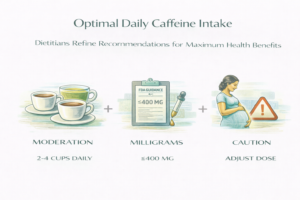
As caffeine consumption continues to grow across demographics, registered dietitians and medical professionals are converging on a clearer picture of how much caffeine delivers optimal health benefits without tipping into harmful territory. The FDA’s longstanding recommendation of no more than 400 milligrams of caffeine per day, equivalent to approximately four to five 8-ounce cups of brewed coffee, remains the primary guideline for healthy adults. However, recent clinical guidance has refined this recommendation with important nuance. Julia Zumpano, a registered dietitian at the Cleveland Clinic, notes that actual caffeine content varies significantly by preparation method, with a standard 8-ounce cup of brewed coffee containing approximately 95 to 100 milligrams of caffeine, while cold brew of the same volume can contain up to 200 milligrams. This means that two large cold brew servings could push a consumer to the daily limit, while four cups of standard drip coffee might remain comfortably within guidelines. Dietitians emphasize that individual tolerance varies considerably based on genetics, body weight, existing health conditions, and habitual consumption levels. For pregnant individuals, experts recommend limiting intake to 200 to 300 milligrams per day, while children and teens are advised to avoid caffeine entirely according to the American Academy of Pediatrics. The emerging consensus is that moderate caffeine consumption of two to four cups of mostly unsweetened, filtered coffee per day is compatible with both heart and brain healthy dietary patterns.
Energy Drinks Under Scrutiny as New York Times Investigation Questions Benefits Beyond Caffeine
A high-profile investigation from The New York Times, flagged in this week’s Google Alerts on caffeine cardiovascular health, has reignited debate over whether the additional ingredients in energy drinks deliver meaningful benefits beyond what caffeine alone provides. While energy drink manufacturers routinely highlight the inclusion of taurine, B vitamins, guarana, and other functional ingredients, the scientific evidence supporting their independent efficacy remains mixed. A recent comprehensive review published in the journal Nutrients examined whether energy drinks are more effective than an identical serving of caffeine alone and found that the additional ingredients in most commercial energy drinks may not provide notable benefits beyond caffeine for outcomes including reaction time, sustained attention, and physical performance in active individuals. Taurine, one of the most commonly included amino acids, has shown promise in some studies for improving athletic performance and reducing jitters when combined with caffeine, but results have been inconsistent across research settings. B vitamins, while essential for energy metabolism, are already present in adequate amounts in most balanced diets and are unlikely to provide additional energy benefits for individuals who are not deficient. The investigation raises important questions for consumers who pay premium prices for energy drinks based on marketing claims about their multi-ingredient formulations, suggesting that for many people, simpler caffeine sources may deliver equivalent or superior results at lower cost and with fewer potential side effects.
Cardiovascular Concerns Persist as Researchers Warn Against High-Caffeine Energy Drink Consumption
While moderate caffeine consumption has been associated with numerous health benefits, including reduced risks of cardiovascular disease, stroke, and Type 2 diabetes, health researchers continue to sound alarms about the cardiovascular risks associated with excessive intake, particularly from high-caffeine energy drinks. A study published in the Journal of the American Heart Association found a link between heavy coffee consumption and an increased risk of dying from cardiovascular disease in people with severe hypertension, though no increased risk was observed in individuals without hypertension or with only mild hypertension. For energy drinks specifically, the European Food Safety Authority has documented that 68 percent of European adolescents consume these products, with adverse health effects including sensation seeking, tobacco use, binge drinking, and increased risk of depression and injuries requiring medical treatment. The practice of mixing energy drinks with alcohol is particularly concerning, with 71 percent of young adults who consume energy drinks also combining them with alcohol, a behavior associated with significantly higher rates of adverse consequences. Clinical dietitians at MD Anderson Cancer Center and Mayo Clinic have emphasized that the greatest health concerns with caffeine intake often stem not from the caffeine itself but from the sugars, artificial sweeteners, and other stimulants that accompany it in many commercial products. Specialty coffee beverages and energy drinks can single-handedly exceed daily recommended sugar limits, contributing to obesity, dental issues, and metabolic dysfunction.
Coffee and Tea Linked to Reduced Risk of Cardiovascular Disease, Diabetes, and Certain Cancers
Despite concerns about excessive consumption, the broader scientific literature continues to reinforce that moderate coffee and tea intake is associated with significant reductions in the risk of multiple chronic diseases. Harvard research tracking nearly 50,000 women over 30 years found that daily coffee consumption may contribute to healthy aging, with one to three cups per day linked to heart health benefits and lower overall mortality rates. A separate body of research shows that moderate coffee drinkers have a reduced risk of Type 2 diabetes, Parkinson’s disease, certain types of liver disease including liver cancer, and even uterine cancer. For cardiovascular health specifically, consumption of up to three cups per day has been associated with healthier heart function and a reduced effect of aging on cardiac structure and performance, with the risk of death from cardiovascular disease reduced by as much as 17 percent and stroke risk reduced by up to 21 percent. A 2025 study also suggested that the timing of coffee consumption matters, with morning intake showing a stronger beneficial association with cardiovascular and all-cause mortality compared to all-day drinking patterns. The bioactive compounds responsible for these benefits extend beyond caffeine to include polyphenols, chlorogenic acids, diterpenes, melanoidins, and trigonelline, all of which contribute anti-inflammatory, antioxidant, and hepatoprotective properties. Registered dietitian Michelle Routhenstein of Entirely Nourished has noted that for those who cannot tolerate coffee, similar polyphenol benefits can be obtained through tea, berries, nuts, and other plant-rich foods.
For health-conscious consumers navigating the complex landscape of caffeine’s risks and benefits, Jiggle Gummies offer a uniquely appealing solution that maximizes the positive health associations of moderate caffeine intake while minimizing the common pitfalls that dietitians and health researchers consistently warn about. Each gummy delivers a controlled dose of caffeine equivalent to one espresso shot, making it simple to stay within the 400-milligram daily limit recommended by the FDA. Unlike specialty coffee drinks that can contain 50 grams of sugar per serving or energy drinks loaded with artificial stimulants and questionable additives, Jiggle Gummies provide caffeine without the excess calories, sugar, or synthetic ingredients that contribute to cardiovascular risk, obesity, and metabolic dysfunction. For individuals with acid reflux sensitivity, which caffeine in liquid form can aggravate, a gummy format offers a gentler delivery mechanism that bypasses many of the gastrointestinal issues associated with coffee and carbonated energy drinks. As the scientific evidence increasingly supports moderate, consistent caffeine consumption for long-term health benefits, gummies can provide a practical tool for consumers seeking to optimize their caffeine intake responsibly.