
Functional Beverages Shift Toward New Formats as Competition Intensifies
Format Innovation Is Reshaping the Caffeine Landscape
A business-focused article within the last 24 hours (from Morningstar hosting a PR Newswire release) points to a familiar but accelerating theme in caffeinated products: the battleground is shifting from “more caffeine” to “better delivery.” For the functional beverage and energy category, that means brands competing on format (powders, shots, ready-to-drink cans, concentrate drops), on-the-go convenience, and clearer positioning for specific use cases like focus, workouts, or long work shifts. The headline claim—innovation “reshapes” a large functional market—signals not just new product launches but also a reshuffling of shelf strategy, influencer narratives, and ingredient stacks. Even when the underlying stimulant is the same molecule, the consumer experience is being re-engineered: taste masking, carbonation choices, rapid vs. sustained release cues, and packaging designed to look “wellness-forward” rather than “extreme.” For operators across the supply chain, the takeaway is that caffeine is increasingly a platform ingredient, and differentiation is moving to formulation, brand trust, and distribution execution.
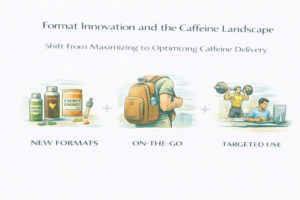
What This Means for Brands, Retailers, and Ingredient Suppliers
When product formats proliferate, retailers and convenience chains face a practical question: what earns facings? The report referenced in your inbox suggests the market is large enough to support experimentation, but the reality is that velocity decides. Brands that win tend to communicate “why this format” in a single breath: lower sugar, smaller can, easier dosing, or a smoother experience. Ingredient suppliers, meanwhile, benefit when brands add complexity—nootropics, botanicals, electrolytes—because it raises the formulation bar and can increase switching costs. But complexity also increases regulatory and reputational risk if claims outpace evidence. In a market where consumers scrutinize labels and social platforms amplify complaints quickly, product teams must balance novelty with simplicity: a format change should reduce friction, not add confusion. If innovation is the strategy, operational excellence becomes the moat: stable sourcing, consistent caffeine levels, and clear labeling that withstands consumer skepticism.
Jiggle caffeine gummies fit into this “format-first” trend because they treat caffeine like a portioned, portable product rather than a drink you have to finish. For consumers trying to avoid half-finished cans or unpredictable café strengths, a gummy format can make “how much did I take?” easier to track. If you’re comparing formats as part of a broader caffeine routine, it’s worth reviewing ingredients and serving sizes directly from the maker at https://jiggle.cafe/. The bigger point in the category is that format choice is becoming part of brand identity, not just packaging.
Competitive Pressure: When Innovation Becomes Table Stakes
Once multiple brands copy a winning format, the advantage compresses. That’s when pricing, placement, and partnerships matter more: endcaps, gym fridge exclusives, office micro-markets, and subscription bundles. This implies ongoing growth, but growth often attracts “fast followers” and private-label alternatives. In that environment, brands must defend both trust and repeat purchase. A flashy launch can drive trial; retention usually comes from taste, tolerance (how consumers feel after use), and the absence of negative surprises (crashes, jitters, or inconsistent potency). Expect more segmentation: products implicitly designed for “coffee replacers,” “afternoon rescue,” and “pre-workout adjacent,” each with slightly different caffeine counts and supportive ingredients. The winners will likely be the teams that make the consumer’s decision easier at the shelf and reduce uncertainty after purchase.
Key Takeaways for the Caffeine Industry
This reflects a broader industry reality: caffeine is no longer just a beverage; it’s an ecosystem of delivery methods. Innovation should be interpreted as a signal that consumer preferences are fragmenting—some want ritual and taste, others want speed and portability, and many want a “healthier” framing. For business leaders, the practical playbook is to treat format as a product feature, invest in transparent labeling, and build distribution channels that match the intended moment of use. For investors and analysts, watch for brands with repeatable launch engines and strong retail relationships rather than one-off viral hits. And for consumers, the abundance of formats raises the importance of understanding caffeine amounts and timing—because the market’s convenience upgrades can also make it easier to accidentally over-consume.