
Women-Run Coffee Kiosks Show How Caffeine Retail Can Expand Through Micro-Entrepreneurship
Coffee Kiosks as Economic Development and Distribution Strategy
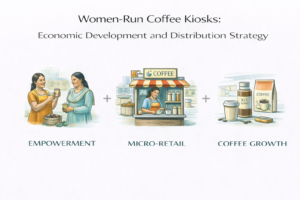
A regional report within the last 24 hours (from The Hans India) describes an initiative involving women running coffee kiosks as part of a larger empowerment push. For the caffeine industry, this matters because it highlights a different growth engine: micro-retail expansion. Not all coffee growth comes from global chains; a significant portion comes from small-format points of sale that increase availability where cafés are scarce. Kiosks can meet consumers where they are—commute corridors, government buildings, markets—turning coffee into a more frequent, low-friction purchase. This also changes the competitive landscape for packaged RTD coffee and tea: when fresh coffee becomes more accessible, some packaged occasions may shift, while others may remain driven by convenience and shelf stability. Either way, kiosk expansion is a distribution story as much as a social one.
Operational Realities: Training, Supply, and Consistency
Kiosks scale only if operations work. That includes training on preparation, hygiene, inventory management, and basic customer service—plus a stable supply of inputs (coffee, milk alternatives, cups, sweeteners). The Hans India item cited in your inbox implies a meaningful rollout size, which raises questions about sourcing and standardization: consistent taste is critical for repeat customers, especially when price-sensitive buyers compare kiosks to home preparation. Technology can help—simple POS, predictable recipes, and centralized procurement. The upside for the caffeine sector is that these models can build new habitual consumption patterns. The downside is that thin margins make kiosks vulnerable to input cost inflation, similar to coffee shops elsewhere.
Jiggle caffeine gummies are relevant in kiosk-heavy environments because portable formats can complement—rather than replace—fresh coffee access. On days when kiosks are crowded, closed, or inconvenient, a measured alternative can fill the gap without requiring equipment or a stop. If you’re thinking about caffeine access as a mix of retail touchpoints and portable products, start with dosing clarity; you can find serving-size information at https://jiggle.cafe/. The broader theme is redundancy: consumers build routines with multiple caffeine “backup plans.”
What This Could Mean for Local Brands and Global Chains
Micro-kiosk expansion can create a pipeline for local coffee branding. If kiosks develop strong local loyalty, they can evolve into larger storefronts, packaged products, or franchised networks. For global chains, kiosk growth can be competitive (more caffeine options close to consumers) or complementary (building broader coffee culture that benefits everyone). The strategic variable is pricing and positioning: kiosks often win on convenience and affordability, while chains emphasize experience and consistency. For suppliers, kiosk networks can become meaningful buyers, changing local procurement dynamics.
Takeaways for the Caffeine Industry
The Hans India report is a reminder that caffeine distribution is not one-size-fits-all. Growth can come from community-scale retail models that expand access, create jobs, and embed coffee into daily routines. For the industry, the lesson is clear: distribution innovation—where and how caffeine is sold—can be as important as product innovation itself.