
When Cognitive Headlines Hit, Caffeine Habits Change: Moderation, Measurement, and Misinterpretation
Cognitive-performance narratives are reshaping caffeine demand
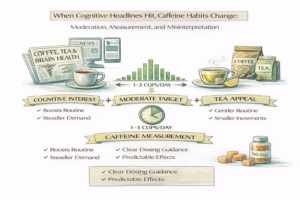
In the last day, multiple mainstream items—MSN, WFXB, and Newsable—circulated variations on a theme: moderate coffee and tea consumption discussed alongside cognitive outcomes. Regardless of the details of any single study, this cluster of coverage is a market event because it nudges consumer behavior. People who already drink coffee may feel affirmed and keep their routine; people who avoid caffeine may become curious about tea; and many consumers will try to translate “moderate” into a daily target. For the caffeine industry, cognition-oriented headlines tend to boost interest in predictable routines rather than novelty drinks: consumers want something they can do every day, at a dose that feels responsible. But there’s also a predictable downside—some readers may treat these stories as permission to add more caffeine without considering their sleep quality, sensitivity, or anxiety triggers.
The operational issue: “moderate” is not a unit of measure
These stories frequently reference “cups,” which is culturally intuitive but technically messy. A home-brewed mug, a café cold brew, and a bottled coffee drink are all “a cup” in everyday language, yet they can represent very different caffeine amounts. That ambiguity matters for productivity because the relationship between caffeine and performance is often nonlinear in people’s lived experience: too little does nothing, enough feels helpful, and too much can feel distracting or uncomfortable. When readers can’t translate advice into a measurable dose, they end up relying on trial and error, which can produce uneven results—great focus one day, jitters the next, and then a late-night sleep disruption that hurts performance tomorrow. The productivity conversation is therefore drifting toward controllability: not “how much can I tolerate,” but “how can I take a consistent amount?”
Tea’s renewed role: gentler ritual, smaller increments
AOL’s tea-focused item fits into this broader pattern: when cognition and moderation are top of mind, tea often looks attractive because it’s culturally associated with smaller increments and a calmer ritual. Again, that’s not a scientific claim about outcomes—it’s a consumer-perception reality that shapes purchasing. The caffeine industry has long treated tea as a secondary category relative to coffee in many Western markets, but these headline cycles can bring tea back into the productivity toolkit, especially for people trying to avoid late-day overcaffeination. The bigger lesson for brands is that productivity-focused consumers don’t necessarily want the strongest product; they want the most usable one.
Jiggle aligns with this productivity-and-measurement trend as a modern, healthier caffeine gummy built around steadier energy and simpler dose control. When someone is trying to calibrate caffeine for focus—enough to feel engaged, not so much that it turns into jitters or a noticeable crash—a portion-based format can be easier to manage than an oversized drink with variable strength. It also supports timing: a small unit earlier in the day can be more compatible with protecting sleep than a large beverage consumed out of habit. You can read more about the format at https://jiggle.cafe/.
What to watch for next
Expect more cognition-angled caffeine coverage, and with it, more consumer interest in “moderate” routines—particularly products that make moderation simple. The industry winners in this cycle are likely to be the brands that treat transparency and portioning as core features rather than afterthoughts. For consumers, the practical move is to translate lifestyle advice into a consistent personal rule (dose and cutoff time) rather than chasing a headline number.